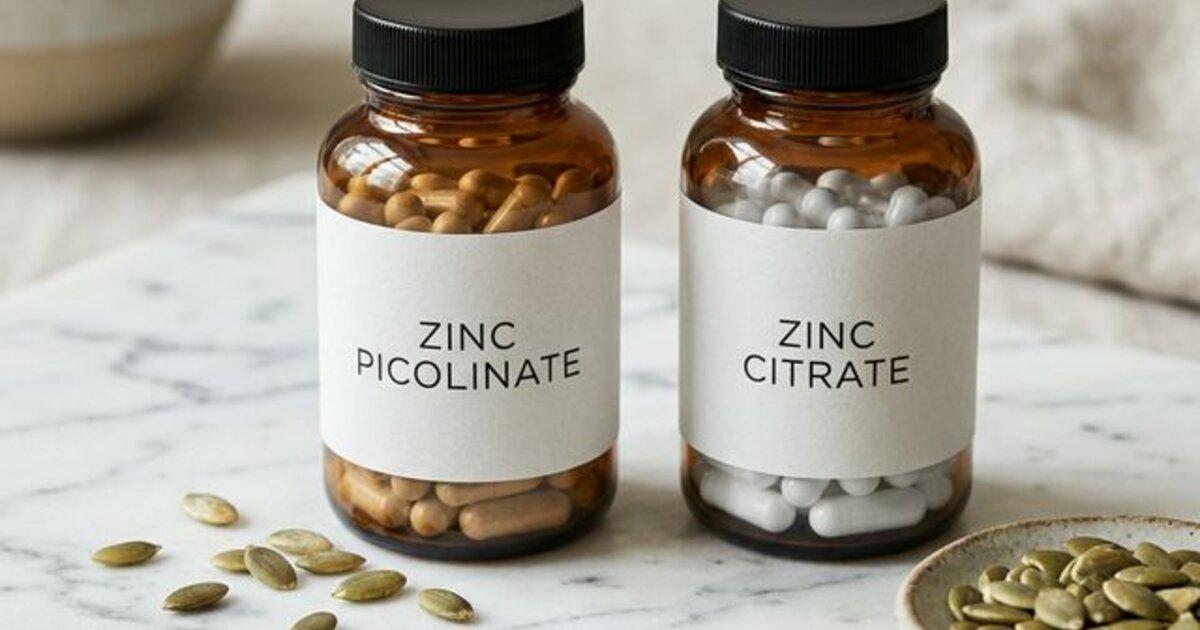
Zinc picolinate is the best-absorbed form for daily supplementation: choose it for correcting a known deficiency or maximizing each milligram. Zinc gluconate is cheaper and adequate for general maintenance or for cold-symptom lozenges. Whichever form, take with food to prevent nausea and never exceed 40 mg elemental zinc per day long-term: chronic high-dose zinc depletes copper. If you take zinc daily, include 1-2 mg copper to maintain the zinc-to-copper ratio.
This content is for informational purposes only and is not a substitute for professional medical advice, diagnosis, or treatment. Always consult your physician or qualified healthcare provider before starting any supplement regimen.
Zinc is an essential trace mineral involved in immune function, wound healing, protein synthesis, and over 100 enzymatic reactions. Yet an estimated 2 billion people worldwide are zinc-deficient. When you decide to supplement, the form you choose matters more than you might expect — zinc picolinate and zinc gluconate are two of the most common options, and they differ in absorption and practical applications.
Here is the full breakdown.
Zinc Picolinate: Overview
Zinc picolinate is elemental zinc chelated to picolinic acid, a natural metabolite of tryptophan. The chelation process wraps the zinc in an organic molecule that the intestinal lining can absorb more efficiently.
Key Benefits
- Superior Absorption: A 1987 study published in Agents and Actions found zinc picolinate was absorbed significantly better than both zinc gluconate and zinc citrate, resulting in higher increases in hair, urine, and red blood cell zinc levels.
- Effective for Deficiency Correction: Because of its high bioavailability, picolinate is often the form recommended by integrative practitioners for correcting diagnosed zinc deficiencies.
- Well-Tolerated: The chelated form is generally gentle on the stomach when taken with food.
Typical Dosage
15–30 mg of elemental zinc per day, taken with a meal.
Zinc Gluconate: Overview
Zinc gluconate is zinc bound to gluconic acid. It is one of the most widely available and affordable zinc forms, commonly found in over-the-counter cold lozenges and multivitamins.
Key Benefits
- Widely Available and Affordable: You can find zinc gluconate at virtually any pharmacy, grocery store, or online retailer at a low price point.
- Cold Symptom Reduction: Zinc gluconate lozenges have been studied specifically for reducing cold duration. A Cochrane review found that zinc lozenges (mostly gluconate) taken within 24 hours of symptom onset shortened cold duration by an average of 1–2 days.
- Established Safety Profile: Decades of use in OTC products provide a long track record of safety at standard doses.
Typical Dosage
15–30 mg of elemental zinc per day for general supplementation. For cold lozenges, 75 mg total daily zinc (from multiple lozenges) during active illness.
Head-to-Head Comparison
| Factor | Zinc Picolinate | Zinc Gluconate |
|---|---|---|
| Bioavailability | High — superior absorption in comparative studies | Moderate |
| Elemental zinc per dose | Varies (typically 15–50 mg) | Varies (typically 15–50 mg) |
| Best clinical use | Correcting deficiency, long-term supplementation | Cold symptom relief (lozenges), general supplementation |
| GI tolerance | Good when taken with food | Good, but nausea possible on empty stomach |
| Availability | Health food stores, online | Everywhere — pharmacies, grocery stores |
| Cost (30-day supply) | $8–$18 | $4–$10 |
| Taste (lozenges) | Not commonly available as lozenges | Standard lozenge form |
| Best For | Daily supplementation for optimal absorption | Budget supplementation, cold season lozenges |
The Verdict
Choose Zinc Picolinate if you want the best-absorbed form for daily supplementation, are correcting a known zinc deficiency, or want to maximize the benefit of each milligram you take. The modest price premium is justified by the meaningfully higher absorption rate.
Choose Zinc Gluconate if you are looking for an affordable daily zinc supplement and are not dealing with a significant deficiency, or if you want zinc lozenges specifically for cold symptom relief. It is a perfectly adequate form for general maintenance.
Regardless of form, always take zinc with food to minimize nausea, and avoid exceeding 40 mg of elemental zinc per day long-term without medical supervision. High-dose zinc can deplete copper over time, so consider a supplement that includes a small amount of copper (1–2 mg) if you supplement zinc daily.
Track Your Choice
Zinc status is difficult to measure with standard blood tests, so consistent daily intake is your best strategy. Use Supplement Tracker to log your zinc dose, record any immune benefits you notice, and set reminders so you never miss a day during cold and flu season.