The most evidence-backed sleep stack is magnesium glycinate (200-400 mg taken 30-60 min before bed), L-theanine (100-200 mg for racing thoughts), and glycine (3 g, which lowers core body temperature as a sleep signal). Add ashwagandha KSM-66 (300-600 mg) over 4-8 weeks if elevated cortisol is keeping you wired at night. Use melatonin at 0.5-1 mg (not the 5-10 mg sold in stores) only for jet lag or circadian reset, not chronic insomnia. Valerian, CBD, and 5-HTP have weaker or inconsistent evidence. Consistency matters more than dose: log your stack nightly.
This content is for informational purposes only and is not a substitute for professional medical advice, diagnosis, or treatment. Always consult your physician or qualified healthcare provider before starting any supplement regimen.
Poor sleep affects everything — your mood, focus, immune function, and even your ability to absorb nutrients. Before reaching for prescription sleep aids, a number of well-researched supplements can make a meaningful difference.
Magnesium Glycinate
Magnesium is the most underrated sleep supplement. Studies show that magnesium deficiency is directly linked to insomnia and restless sleep — and roughly 50% of adults in Western countries don't get enough from diet alone.
Why glycinate? Magnesium comes in many forms. Magnesium glycinate is bonded to glycine, an amino acid that has its own calming effects on the nervous system. It's also gentler on the stomach than magnesium citrate or oxide.
Dose: 200–400 mg taken 30–60 minutes before bed.
Timing tip: Take it consistently at the same time each night. Magnesium builds up in tissue over days, so the effects compound.
Melatonin — Less Is More
Melatonin is the most popular sleep supplement, but most people take far too much. The standard 5–10 mg doses sold in pharmacies are 5–10× higher than what research actually supports.
Effective dose: 0.5–1 mg is enough for most people. Higher doses can cause grogginess the next morning, vivid dreams, or actually disrupt your sleep architecture over time.
Best use case: Melatonin works best for resetting your circadian rhythm — jet lag, shift work, or adjusting to a new sleep schedule. It's less effective as a nightly long-term sleep aid.
Timing: Take it 30–60 minutes before your target sleep time, in a dimly lit environment.
L-Theanine
L-theanine is an amino acid found naturally in green tea. It promotes relaxation without sedation — meaning you feel calm and mentally quiet, but not drugged or drowsy.
It works by increasing GABA, serotonin, and dopamine levels in the brain while reducing cortisol. The result is a quieter mind that's easier to switch off at bedtime.
Dose: 100–200 mg, taken 30–60 minutes before bed.
Stack well: L-theanine pairs exceptionally well with magnesium glycinate. Together they create a calming effect that's noticeably stronger than either alone — without any sedative side effects.
Ashwagandha (KSM-66)
Ashwagandha is an adaptogen that lowers cortisol levels — the primary stress hormone that keeps your nervous system in fight-or-flight mode at night. High evening cortisol is one of the most common reasons people can't "switch off" despite being tired.
A 2019 randomized controlled trial found that KSM-66 ashwagandha (600 mg/day) significantly improved sleep quality, sleep onset latency, and morning alertness compared to placebo.
Dose: 300–600 mg of a standardized KSM-66 extract, taken with dinner or before bed.
Note: Ashwagandha takes 4–8 weeks of consistent use to reach full effect. It's a long-term investment, not a quick fix.
Glycine
Glycine is a simple amino acid that lowers core body temperature — which is a key signal to your brain that it's time to sleep. Research from Japan found that 3 g of glycine before bed improved sleep quality, reduced fatigue, and improved daytime performance, even when total sleep time was shortened.
Dose: 3 g, 30–60 minutes before bed. It's slightly sweet, so it mixes well in water.
What Doesn't Work (Or Is Overhyped)
Valerian root: Mixed evidence. Some studies show modest benefit, others show none. The effect size is small and inconsistent.
CBD: Promising, but current human research is still limited for sleep specifically. May help with anxiety that causes sleep issues, but direct sleep evidence is weak.
5-HTP: Can increase serotonin and potentially melatonin, but requires careful consideration if you take any SSRIs or antidepressants due to serotonin syndrome risk.
Building a Sleep Stack
You don't need all of these. A simple, effective starting point:
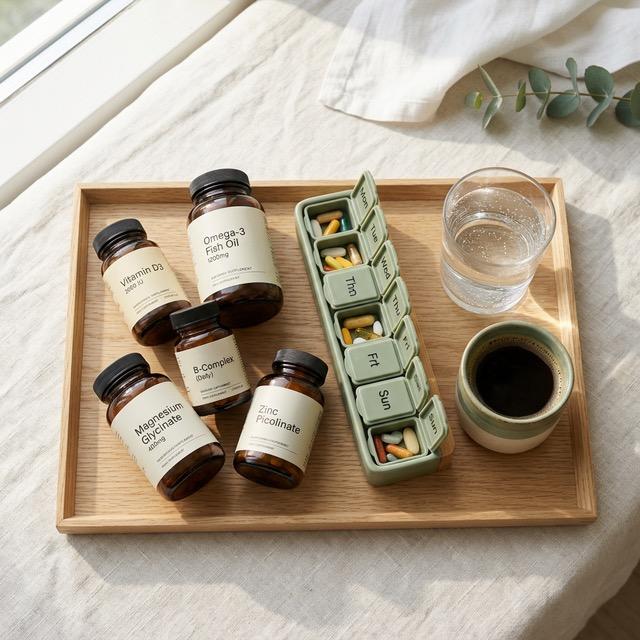
- Magnesium glycinate (300 mg) — the foundation
- L-theanine (200 mg) — if your mind races at night
- Ashwagandha KSM-66 (300 mg) — if stress or cortisol is your issue
- Melatonin (0.5 mg) — only when resetting your schedule
Tracking Consistency Is Key
The biggest reason supplements fail for sleep is inconsistency. Most sleep supplements — especially magnesium and ashwagandha — need to be taken daily for several weeks before their full effect is felt.
Use a supplement tracker to log your evening stack every night. After 2–3 weeks, you'll have real data on your adherence and can start correlating it with how you feel each morning.
Pro tip: Set your evening supplement reminder for 45 minutes before your target bedtime. That way the supplements are already working by the time you're ready to sleep.