Les vitamines et les compléments alimentaires périment, mais en général pas comme des aliments. Aux États-Unis, la date de péremption des compléments est facultative ; lorsqu'un fabricant en imprime une, elle devrait s'appuyer sur des données. Pour la plupart des produits, la principale crainte après la date est de recevoir moins que ce qu'indique l'étiquette, mais il n'existe aucune prolongation sûre et universelle, et on ne peut pas juger la teneur à l'œil nu. Les gummies, les liquides, les probiotiques et les huiles demandent le plus d'attention pour la conservation et les consignes après ouverture. La chaleur et l'humidité, comme dans une armoire de salle de bains embuée, peuvent user un produit avant sa date. Cessez d'utiliser tout produit dont l'odeur, la couleur ou la texture a changé, ne comptez pas sur un vieux flacon pour un apport recommandé par un professionnel de santé et ne prenez jamais davantage pour compenser une teneur perdue. En cas de doute, demandez au fabricant ou à un pharmacien, ou remplacez le produit.
Vous trouvez un flacon entamé au fond du placard. Les comprimés ressemblent toujours à des comprimés. La date sous le flacon date du printemps dernier, de l'an dernier ou de 2019. Vaut-il encore la peine d'être pris, ou faut-il le jeter ?
Les vitamines périment. Pour la plupart des produits, pourtant, « périmé » veut surtout dire que vous n'obtenez peut-être plus ce que promet l'étiquette, et non qu'un interrupteur transforme un comprimé en poison à minuit. Il n'existe pas non plus de six mois supplémentaires universels pendant lesquels tout vieux flacon reste correct. Ce qui décide, c'est ce que la date signifie, la façon dont le flacon a été conservé, s'il a changé et pourquoi vous le prenez.
Une fois que vous avez un produit qui vaut la peine d'être pris, lire l'étiquette et choisir un flacon de qualité comptent plus que de prolonger une date.
Ce que la date sur le flacon signifie vraiment
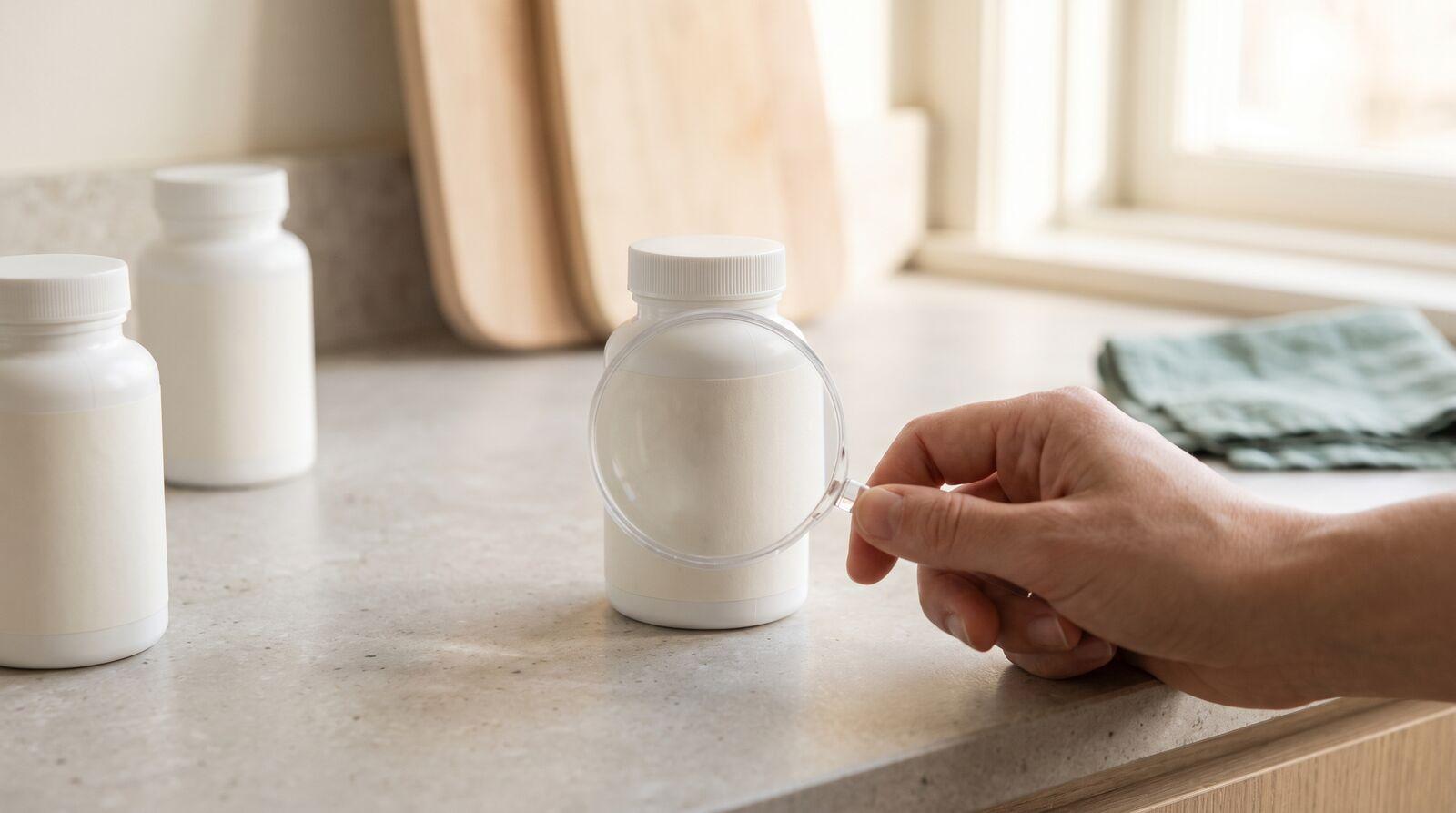
Aux États-Unis, la FDA n'impose pas de date de péremption sur les compléments alimentaires. Beaucoup de flacons en portent une quand même, et si un fabricant imprime une date, elle devrait s'appuyer sur des données valables. C'est une déclaration de l'entreprise elle-même, pas un test ni une garantie de la FDA.
Vérifiez le libellé exact :
- Date de péremption ou « Exp » : la date que le fabricant garantit pour le produit tel qu'il est étiqueté, s'il est conservé comme indiqué.
- Date de fabrication : le moment où il a été fabriqué. Ce n'est pas une date de péremption.
- À utiliser dans un délai après ouverture : certains liquides, poudres et probiotiques ont une durée d'utilisation qui peut se terminer bien avant la date imprimée.
Si un code n'est pas clair, contactez le fabricant avec le nom du produit et le numéro de lot plutôt que de deviner.
Un flacon sans date est légal aux États-Unis. Cela ne prouve pas une mauvaise qualité, mais il vous manque une information utile : un flacon daté est donc plus facile à gérer pour tout ce que vous prenez au quotidien. Notre guide de l'étiquette des compléments aide à distinguer ces mentions du marketing.
Les vitamines périmées sont-elles dangereuses, ou simplement moins efficaces ?
Pour la plupart des compléments, la principale crainte après la date est que le produit ne contienne plus ce qu'indique le tableau Supplement Facts. C'est pourquoi une multivitamine périmée est plus souvent de l'argent gaspillé qu'une urgence. Mais « elle s'est probablement juste affaiblie » est une supposition, pas un test de sécurité.
Vous ne pouvez pas mesurer la teneur en regardant ou en sentant, donc un aspect normal ne prouve pas qu'un produit convient encore. Un changement, en revanche, est un signal clair : dégâts visibles, humidité dans le flacon, scellé brisé ou odeur inhabituelle signifient qu'il faut arrêter et demander au fabricant ou à un pharmacien.
L'enjeu monte quand un professionnel de santé a recommandé un apport précis, par exemple pour une carence diagnostiquée en fer, en B12 ou en vitamine D, ou pendant la grossesse. Il vous faut alors un produit qui contient encore ce que dit l'étiquette : utilisez un flacon dans sa date, bien conservé, et demandez avant d'en remplacer un par un vieux.
Et ne prenez pas davantage pour compenser une teneur perdue. La synthèse des NIH sur les compléments (en anglais) rappelle que les compléments peuvent avoir des effets indésirables et des interactions, et que plus n'est pas forcément mieux. Si la teneur est inconnue, remplacez le produit au lieu d'improviser la dose.
Quels compléments demandent le plus de soin
L'étiquette reste toujours la première référence, mais certaines formes méritent plus d'attention.
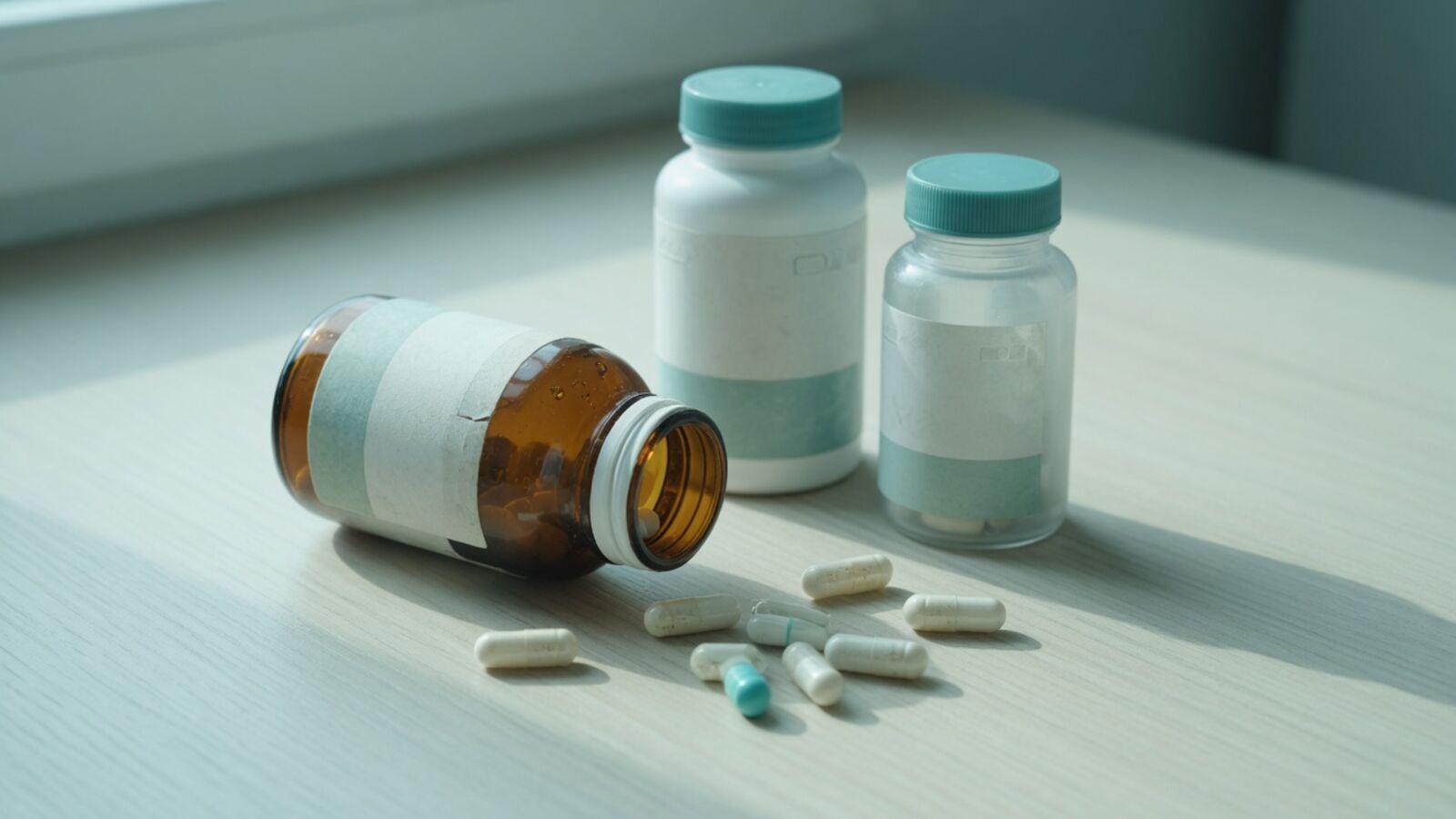
Comprimés et gélules. Les comprimés secs dans un contenant fermé sont généralement les plus faciles à garder en bon état. Les ingrédients et les enrobages varient toutefois, donc un aspect sec ne vous offre pas de prolongation fixe au-delà de la date.
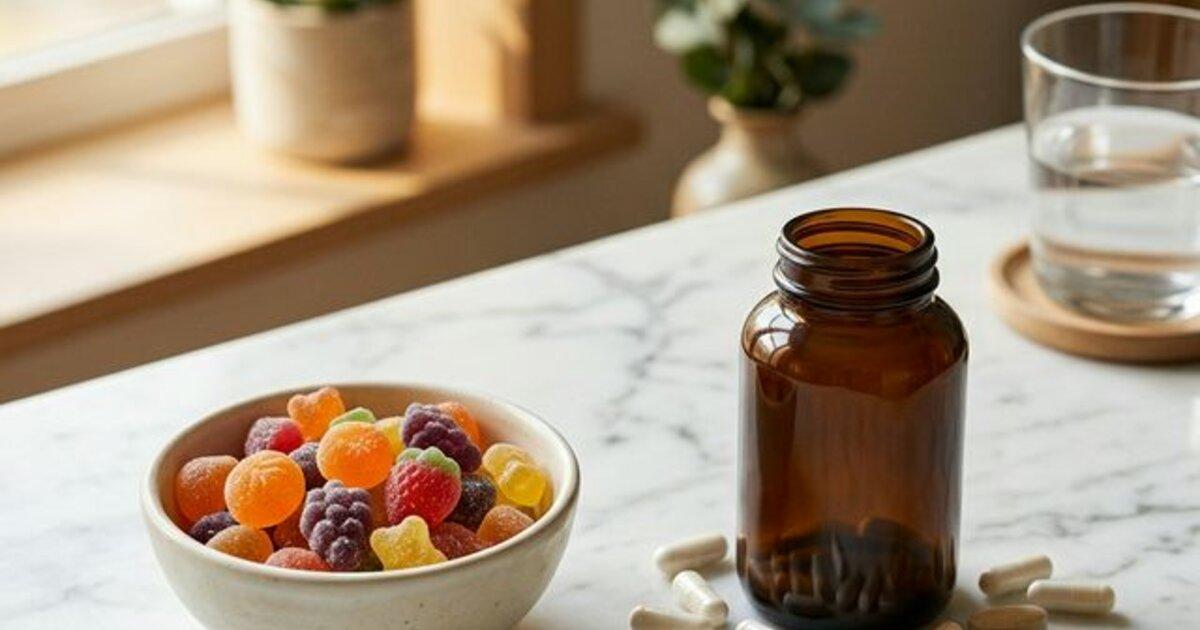
Gummies et comprimés à croquer. Les gummies sont mous et humides, donc la conservation compte. Une fonte, des gummies collés entre eux, une croûte blanche ou un changement de couleur ou de texture sont une raison d'arrêter, quelle que soit la date. Notre guide sur les vitamines gummies comparées aux comprimés traite les autres compromis.
Liquides et gouttes. Cherchez les consignes après ouverture, y compris la réfrigération. Un liquide ouvert peut avoir une durée d'utilisation plus courte que la date imprimée. Une séparation qui ne se remélange pas, un aspect trouble ou une mauvaise odeur sont une raison de demander conseil ou de remplacer.
Probiotiques. Ce sont des micro-organismes vivants, et leur nombre peut diminuer pendant le stockage. La fiche des NIH sur les probiotiques (en anglais) conseille de chercher le nombre d'organismes viables jusqu'à la fin de la durée de conservation, et pas seulement à la fabrication, et de suivre les conditions de stockage. Voyez dans quels cas les probiotiques valent vraiment la peine avant de garder de vieilles gélules.
Huiles, dont l'huile de poisson. Les huiles peuvent rancir. Une odeur âcre, de peinture ou très poissonneuse est une raison d'arrêter, pas d'« avaler vite ». Un flacon daté que vous finirez en quelques mois reste plus facilement frais qu'un énorme pot.
Poudres et verts. Des grumeaux, une odeur aigre ou de moisi, ou un nouveau changement de couleur suffisent pour arrêter.
Comment conserver les vitamines pour qu'elles tiennent jusqu'à la date
La date imprimée suppose que le flacon a été conservé comme indiqué, et la chaleur et l'humidité peuvent user un produit avant. Les conseils de la FDA sur les médicaments (en anglais) avertissent qu'une armoire de salle de bains humide peut réduire l'efficacité avant la péremption et recommandent un endroit frais et sec. Ils sont écrits pour les médicaments, mais la logique vaut aussi pour le flacon de compléments rangé à côté.
- Gardez le contenant d'origine, avec le sachet déshydratant éventuel, et le bouchon fermé.
- Choisissez un endroit frais, sec et sombre, hors de portée des enfants, comme un tiroir de chambre ou un placard de cuisine éloigné de la cuisinière et de l'évier.
- Ne laissez pas les flacons dans une voiture ni près de la chaleur ou de la vapeur.
- Ne réfrigérez que si l'étiquette l'indique.
- Remplissez un pilulier hebdomadaire une semaine à la fois et gardez le reste fermé.
- Achetez un format que vous finirez bien avant la date.
En voyage, gardez les compléments dans des contenants étiquetés dans votre bagage à main. Si un produit est resté hors de ses conditions indiquées, demandez au fabricant si la durée de conservation s'applique toujours.
Garder, finir ou jeter : une décision rapide
- Identifiez la date. Péremption, fabrication ou limite après ouverture ?
- Vérifiez l'historique de conservation. Au frais et au sec, dans le respect des consignes de l'étiquette ?
- Cherchez les changements. Des dégâts, de l'humidité ou un changement d'odeur, de couleur ou de texture signifient qu'il faut arrêter et demander.
- Pensez à l'objectif. Ne comptez pas sur une teneur inconnue pour un apport recommandé par un professionnel de santé.
- Demandez ou remplacez. Si personne ne peut confirmer que le produit convient encore, le remplacer évite de deviner.
Cessez de l'utiliser tout de suite s'il sent le rance, l'aigre ou le chimique ; si les gummies ont fondu ou se sont collés ; si un liquide ne se remélange pas ; s'il a passé longtemps à la chaleur ou dans une salle de bains embuée ; ou si vous en avez besoin pour une carence diagnostiquée et qu'il est périmé.
Ne mélangez pas d'anciens et de nouveaux lots dans un même flacon, pour savoir de quel lot il s'agit en cas de rappel. Demandez à un pharmacien ou au service de gestion des déchets de votre commune comment éliminer les produits dont vous ne voulez plus.
Une règle en une ligne : si vous ne mangeriez pas un aliment qui avait cet aspect ou cette odeur, n'avalez pas non plus le complément.
Questions fréquentes
Les vitamines périment-elles ?
Oui. De nombreux compléments portent une date de péremption ou de durabilité minimale, même si elle est facultative aux États-Unis. Passé cette date, la principale crainte est généralement de recevoir moins que ce que promet l'étiquette, mais il n'existe aucune prolongation sûre et universelle.
Combien de temps les vitamines se conservent-elles après la date de péremption ?
Il n'existe pas de chiffre fiable pour tous les produits, car les ingrédients, l'emballage et le stockage diffèrent. Un flacon scellé et bien conservé, un peu dépassé, n'est pas comparable à un flacon ouvert resté dans une salle de bains embuée. Si la dose compte, demandez à un pharmacien ou remplacez-le.
Est-il sûr de prendre une multivitamine périmée ?
C'est plus souvent un produit affaibli qu'un produit dangereux, mais on ne peut pas le confirmer à l'œil. Ne la prenez pas si elle a changé, ne prenez pas davantage pour compenser, et utilisez un produit dans sa date en cas de carence diagnostiquée.
Les vitamines gummies périment-elles plus vite ?
Les gummies sont sensibles à la chaleur et à l'humidité, donc la conservation compte davantage. Cessez d'utiliser des gummies qui ont fondu, se sont collés ou ont changé de texture, quelle que soit la date.
Peut-on prendre de l'huile de poisson périmée ?
L'huile de poisson peut rancir. Si elle sent l'âcre, la peinture ou le poisson de façon inhabituelle, arrêtez d'en prendre et achetez un flacon frais que vous finirez en quelques mois.
Quelle est la meilleure façon de conserver les vitamines ?
Dans leur contenant d'origine fermé, dans un endroit frais et sec, hors de portée des enfants. Évitez la salle de bains, la voiture et les rebords de fenêtre, et ne réfrigérez que si l'étiquette l'indique.
Notez le flacon que vous prenez vraiment
Un rappel enregistre que vous avez coché une dose. Il ne vérifie pas le produit que vous avez en main. Si vous cherchez à savoir si le magnésium aide votre sommeil ou si la vitamine D a fait bouger une prise de sang, un flacon dégradé rend le résultat difficile à lire.
Quand vous ouvrez un nouveau flacon, notez la date et le numéro de lot avec une photo de l'étiquette ou une courte note. Quand vous jetez ou mettez un flacon en pause, cessez de le cocher. Quand vous changez de marque ou de taille de portion, enregistrez-le comme un nouveau produit. C'est la même discipline que suivre ses compléments de façon régulière, et une application de suivi de compléments comme Supplements Tracker s'occupe des rappels.
L'essentiel à retenir
Les vitamines périment. Pour la plupart des produits, cela veut dire que vous recevez peut-être moins que ce que dit l'étiquette, pas que le flacon est devenu toxique, mais il n'existe aucun nombre de mois supplémentaires sûr sur lequel compter. Les gummies, les liquides, les probiotiques et les huiles demandent le plus de soin, et la chaleur et l'humidité peuvent user n'importe quel produit trop tôt. Quand quelque chose a changé, ou que la dose compte pour votre santé, remplacez le flacon ou demandez à un pharmacien au lieu de négocier avec lui.