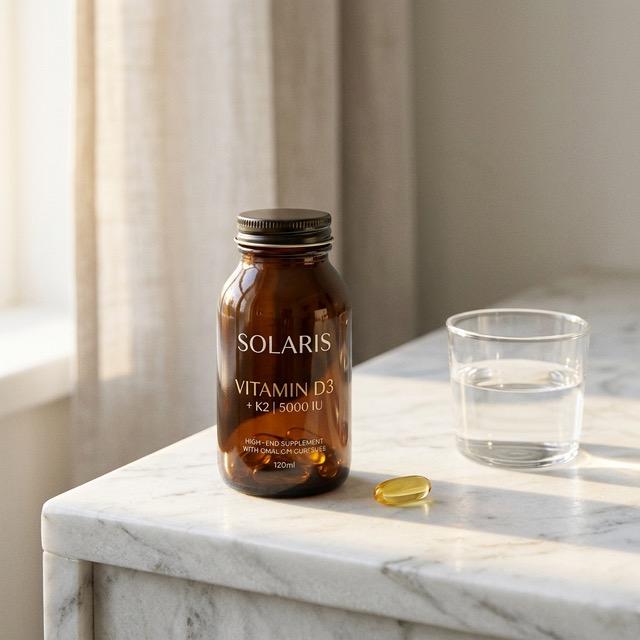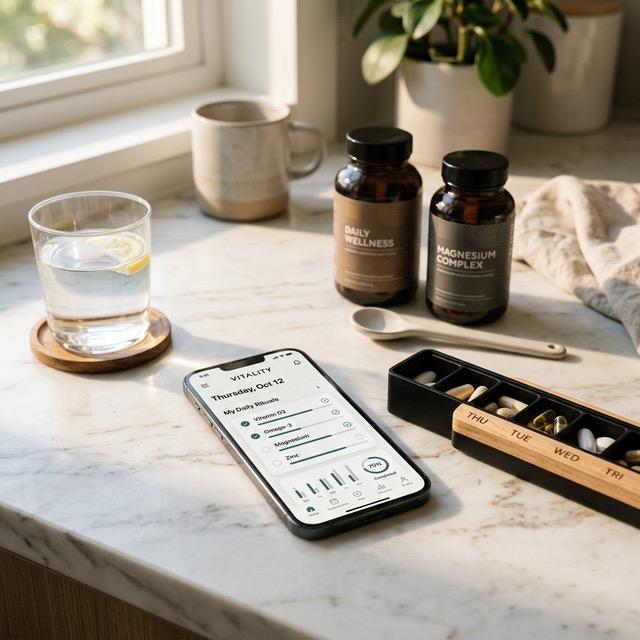
La maggior parte degli adulti trae beneficio da 1.000-5.000 UI di D3 al giorno. Inizia con 2.000 UI; sali a 4.000-5.000 UI se hai la pelle più scura, vivi sopra i 40° di latitudine, hai più di 60 anni o presenti un esame del sangue 25(OH)D di partenza basso. Punta a un valore sierico di 25(OH)D di 40-60 ng/mL. La RDA di 600-800 UI basta appena a prevenire il rachitismo, non a raggiungere valori ottimali. Testa la 25(OH)D ogni 6-12 mesi se superi le 4.000 UI/giorno. Abbina la vitamina K2 (100-200 mcg di MK-7) per indirizzare il calcio verso le ossa anziché verso le arterie.
La vitamina D è l'integratore più strano del tuo armadietto. È l'unico nutriente per cui quasi tutte le fonti sanitarie serie concordano sul fatto che gran parte della popolazione ne sia carente, ed è allo stesso tempo l'integratore che le persone assumono nella gamma di dosi più ampia, con la minima idea di averne davvero bisogno. Il fabbisogno giornaliero ufficiale è di poche centinaia di UI. Il flacone sullo scaffale ne riporta 5.000. L'influencer ne prende 10.000. Il tuo medico, se glielo hai chiesto, ti ha probabilmente dato un'ennesima risposta diversa.
Questa confusione esiste soprattutto perché la vitamina D è l'integratore per cui il divario tra "prevenire una carenza" e "ottimale per tutto" è il più ampio, e per cui l'unico modo per chiudere davvero la questione, cioè un esame del sangue, è il passaggio che le persone saltano più spesso. Il risultato: milioni di persone che tirano a indovinare per anni.
Questa è la guida onesta su cosa fa il tuo corpo con la vitamina D, su quanta ne serve davvero, su chi è più probabile che ne sia carente, su quando vale la pena fare il test e sulle fasce di dosaggio che corrispondono a situazioni diverse, anziché al marketing più rumoroso.
Perché la vitamina D conta (senza il battage)
La vitamina D è un ormone in senso tecnico, non semplicemente una vitamina. Il tuo corpo la usa per:
- Regolare il calcio e il fosfato. È il suo ruolo originario e incontestato: la vitamina D è necessaria a una sana mineralizzazione ossea. Una carenza prolungata provoca il rachitismo nei bambini e l'osteomalacia negli adulti.
- Sostenere la funzione immunitaria. I recettori della vitamina D sono presenti su un'ampia gamma di cellule immunitarie. Una carenza grave è associata, nei dati osservazionali, a infezioni respiratorie più frequenti e più gravi.
- Influenzare la forza muscolare e le cadute negli anziani. È uno dei risultati più solidi al di fuori della salute ossea: correggere una carenza nelle persone anziane riduce il rischio di cadute.
- Modulare l'umore, in particolare nelle stagioni poco soleggiate. Qui i dati sono più confusi di quanto suggerisca il marketing, ma un segnale reale esiste nelle popolazioni carenti.
I ruoli che la vitamina D non svolge chiaramente, nonostante il marketing: non è un comprovato agente preventivo contro il cancro, non è un protettore cardiovascolare confermato ad alte dosi e non "potenzia" l'immunità nelle persone già ben fornite. Diversi grandi studi randomizzati condotti su popolazioni ben nutrite non sono riusciti a trovare benefici clamorosi dal megadosaggio oltre la sufficienza. Il quadro è coerente: correggere una carenza ha un valore reale, mentre il megadosaggio oltre la sufficienza per lo più no.
Mantenere una routine quotidiana di integratori è molto più semplice con un'app dedicata, e abbiamo confrontato le principali app per il tracciamento degli integratori per aiutarti a scegliere quella giusta.
D3 vs D2, sole vs integratore
Due distinzioni contano prima di poter scegliere una dose.
D3 (colecalciferolo) vs D2 (ergocalciferolo). La D3 è la forma che la tua pelle produce dalla luce solare e la forma presente negli alimenti di origine animale. La D2 proviene da lieviti e funghi ed è la forma da prescrizione in alcuni Paesi. A dosi equivalenti in UI, la D3 aumenta i livelli ematici di 25(OH)D in modo più affidabile e li mantiene elevati più a lungo. A meno che tu non abbia un motivo specifico per usare la D2 (preferenza vegana, prescrizione), scegli la D3.
Sole vs integratore. La pelle produce vitamina D quando i raggi UVB colpiscono il 7-deidrocolesterolo nella parte inferiore dell'epidermide. Alcune realtà pratiche:
- I raggi UVB sono abbastanza forti solo quando il sole è alto nel cielo, all'incirca tra le 10 e le 15 in estate alle medie latitudini. In inverno, sopra i ~40 gradi di latitudine (gran parte dell'Europa e la metà settentrionale degli Stati Uniti), l'intensità degli UVB è troppo bassa per produrre quantità significative di vitamina D, per quanto il cielo sia limpido.
- Il vetro delle finestre blocca gli UVB. Un ufficio assolato produce zero vitamina D.
- La crema solare riduce in modo sostanziale la sintesi indotta dagli UVB. Non è un argomento contro la protezione solare; è un argomento per ricordare che "prendo il sole" non è la stessa cosa di "produco vitamina D".
- Le carnagioni più scure contengono più melanina, che compete con gli stessi UVB. Le persone con pelle molto scura alle alte latitudini hanno bisogno di un'esposizione al sole molto più lunga o di un'integrazione per raggiungere lo stesso livello di una vicina dalla pelle chiara.
In sintesi: per gran parte degli adulti dei climi temperati, "la produco da solo grazie al sole" è nel migliore dei casi una storia di sei mesi, e per molti non è vero nemmeno in estate se la vita si svolge soprattutto al chiuso.
Cosa significa "abbastanza": RDA vs ottimale
È qui che vive gran parte della confusione, perché due numeri diversi vengono continuamente confusi.
La RDA (razione dietetica raccomandata): nella maggior parte dei Paesi è fissata a circa 600-800 UI al giorno per gli adulti. Questa dose è calcolata per prevenire una malattia da carenza conclamata (rachitismo, osteomalacia) nella quasi totalità delle persone sane. È un pavimento, non un obiettivo.
Valore sierico ottimale di 25(OH)D: il livello al quale i benefici più ampi (immunitari, muscolari, densità ossea oltre la semplice prevenzione del rachitismo) sembrano raggiungere un plateau. La maggior parte dei clinici basati sull'evidenza punta a 30-50 ng/mL (75-125 nmol/L), anche se il limite superiore di questa fascia è dibattuto.
La dose necessaria per raggiungere la fascia ottimale è quasi sempre superiore alla RDA, soprattutto nelle persone con scarsa esposizione solare, pelle più scura, peso corporeo elevato o età avanzata. È esattamente per questo che la fascia da 1.000 a 4.000 UI esiste sullo scaffale: la RDA previene la malattia da carenza, ma mantenere la fascia dei benefici più ampi richiede di più.
Due numeri pratici da ricordare:
- Il livello massimo tollerabile di assunzione (UL) per gli adulti: 4.000 UI/giorno secondo la maggior parte delle linee guida ufficiali, anche se molti clinici considerano sicure a breve termine dosi fino a 10.000 UI per correggere una carenza.
- Fascia di tossicità: assunzioni protratte oltre le ~10.000 UI/giorno per mesi, che portano la 25(OH)D oltre i ~150 ng/mL, possono provocare ipercalcemia, problemi renali e altre complicanze. È raro e riguarda quasi sempre persone che si automedicano con dosi molto elevate senza fare test.
Chi è realmente carente
I dati di popolazione sono sorprendenti. In molti Paesi sviluppati, tra il 30% e il 50% degli adulti ha una 25(OH)D inferiore a 30 ng/mL almeno stagionalmente, e nei gruppi a rischio più elevato la percentuale può essere molto maggiore.
I gruppi più a rischio di avere valori bassi:
- Le persone che vivono a latitudini superiori a circa 37 gradi in inverno. Questo include gran parte dell'Europa, il Canada, il nord degli Stati Uniti, la Russia, il nord dell'Asia. La sintesi cutanea è praticamente nulla per mesi.
- I lavoratori al chiuso. Impieghi d'ufficio, turni di notte, chiunque veda la luce del giorno soprattutto attraverso un vetro.
- Le carnagioni più scure alle alte latitudini. La melanina riduce l'efficienza della sintesi, per cui la stessa esposizione solare produce meno vitamina D.
- Gli anziani. La capacità di sintesi cutanea cala notevolmente dopo i 70 anni circa, e sia l'assorbimento sia la conversione diminuiscono.
- Le persone con peso corporeo elevato. La vitamina D è liposolubile e si distribuisce nel tessuto adiposo, abbassando la frazione circolante. Un IMC più alto richiede in genere una dose più elevata per raggiungere lo stesso valore ematico.
- Le persone con condizioni di malassorbimento. Celiachia, morbo di Crohn, bypass gastrico, pancreatite cronica: tutte riducono l'assorbimento delle vitamine liposolubili.
- Le persone che indossano abiti molto coprenti per ragioni culturali o religiose. Stesso principio di UVB sulla pelle: meno pelle esposta significa meno sintesi.
- I vegani rigorosi senza integrazione. Gli alimenti vegetali non contengono quasi vitamina D. Senza un integratore di D3 (o di D3 vegana), il livello crolla in fretta in inverno.
- I forti consumatori di alcol. Il fegato esegue la prima fase di idrossilazione che trasforma la vitamina D nella sua forma circolante misurabile, e un consumo cronico e abbondante compromette questa fase, insieme allo stato nutrizionale generale. Se ridurre il consumo fa parte del quadro, un tracker di abitudini come Sober Tracker è un utile strumento di accompagnamento a un piano di vitamina D.
- Gli utilizzatori a lungo termine di alcuni farmaci. Gli antiepilettici, i glucocorticoidi e alcuni farmaci contro l'HIV aumentano il metabolismo della vitamina D o ne riducono l'attività.
Se non rientri in nessuno di questi gruppi, segui un'alimentazione varia che include pesce grasso e passi regolarmente del tempo al sole senza vetro in estate, potresti comunque stare bene senza integrazione. Se rientri in due o più, è molto probabile che tu sia sotto l'ottimale almeno per una parte dell'anno.
L'esame del sangue che mette fine alle supposizioni
Il dibattito su quanta vitamina D assumere esiste soprattutto perché le persone non fanno il test. Un singolo esame del sangue, poco costoso, risolve la questione: la 25-idrossivitamina D, indicata anche come 25(OH)D.
Due cose da sapere:
- Le unità. La maggior parte dei laboratori statunitensi riporta i valori in ng/mL; la maggior parte dei laboratori europei in nmol/L. Conversione: 1 ng/mL = 2,5 nmol/L. Quindi 30 ng/mL = 75 nmol/L.
- La fascia obiettivo. Una fascia ottimale ragionevole è tra 30 e 50 ng/mL (75-125 nmol/L). Sotto i 20 ng/mL si parla di carenza; da 20 a 29 ng/mL di insufficienza. Sopra i 60 ng/mL non c'è alcun beneficio aggiuntivo chiaro; sopra i 100 ng/mL si entra nel superfluo.
Il test è ampiamente disponibile, poco costoso nella maggior parte dei sistemi sanitari e risponde alla domanda meglio di qualsiasi articolo di blog. Se assumi vitamina D per anni senza mai misurare la 25(OH)D, stai tirando a indovinare, e la supposizione può essere sbagliata in entrambe le direzioni: troppo bassa per aiutare, oppure più alta del necessario.
Dosaggio in base alla situazione
Una volta che sai più o meno a che punto sei, la dose ne consegue. Questi sono punti di partenza allineati alla pratica clinica, non un consiglio medico personale.
| Situazione | Dose giornaliera ragionevole di D3 |
|---|---|
| Adulto sano, esposizione solare regolare, estate | 0-1.000 UI (alimentazione e sole possono bastare) |
| Adulto sano, poco sole, inverno | 1.000-2.000 UI |
| Residente alle alte latitudini, lavoro al chiuso, nessun test recente | 2.000 UI come valore di default sensato |
| Insufficienza confermata (20-29 ng/mL) | 2.000-4.000 UI per 8-12 settimane, poi nuovo test |
| Carenza confermata (sotto i 20 ng/mL) | 4.000-5.000 UI per 8-12 settimane sotto controllo medico, poi nuovo test |
| Peso corporeo elevato | Aggiustamento per chilogrammo, spesso la parte alta della fascia |
| Anziano (70+) | 1.000-2.000 UI tutto l'anno, con attenzione a calcio e proteine |
| Gravidanza o allattamento | Segui le indicazioni ostetriche, spesso 1.000-2.000 UI |
Un piano semplice e diffuso per gli adulti dei climi temperati consiste nell'assumere 2.000 UI di D3 al giorno, tutto l'anno, con un test della 25(OH)D una volta all'anno per verificare che la dose ti collochi nella fascia obiettivo. Se sei nettamente sopra i 50 ng/mL, abbassa la dose; se sei sotto i 30, aumentala.
Qualche aggiunta pratica:
- Prendila con dei grassi. La vitamina D è liposolubile. L'assorbimento da una compressa a stomaco vuoto è scarso; l'assorbimento con un pasto che contiene un po' di grassi è buono. La nostra guida al momento giusto per assumere gli integratori affronta la questione mattina vs sera, e la parte pasto vs stomaco vuoto tratta lo schema in modo più ampio.
- Abbinala alla K2 se ti integri a lungo termine, soprattutto sopra le 3.000 UI. La D3 aumenta l'assorbimento del calcio; la K2 indirizza quel calcio verso le ossa anziché verso i tessuti molli. Il ragionamento e gli abbinamenti di dose si trovano nella nostra guida vitamina D3 + K2.
- Attenzione al magnesio. Il magnesio è un cofattore dell'attivazione della vitamina D. Una carenza grave di magnesio può attenuare l'aumento della 25(OH)D ottenuto dall'integrazione.
Segni che potresti essere carente
La carenza di vitamina D è notoriamente asintomatica a lungo. Quando i sintomi compaiono, il valore è di solito ben al di sotto dei 20 ng/mL. Manifestazioni comuni:
- Una stanchezza persistente e una spossatezza sorda e diffusa che non corrisponde al sonno
- Una debolezza muscolare, in particolare nelle cosce e nelle spalle; difficoltà a salire le scale
- Dolori muscolari o ossei diffusi, spesso attribuiti erroneamente all'età o all'allenamento
- Infezioni respiratorie più frequenti o più durature
- Umore basso o peggioramento stagionale dell'umore
- Fratture a guarigione lenta o dolori ossei inspiegabili
Nessuno di questi sintomi è specifico della vitamina D. Tutti hanno molte altre possibili cause. È esattamente per questo che l'esame del sangue è più utile dell'elenco dei sintomi.
Un protocollo sensato per tutto l'anno
Mettendo insieme il tutto:
- Fai un test della 25(OH)D. Idealmente a fine inverno o a inizio primavera, quando la maggior parte delle persone è al minimo annuale. Questo singolo dato cambia la lettura di tutto il resto.
- Scegli una dose che corrisponda al tuo punto di partenza e al tuo profilo di rischio. Per la maggior parte degli adulti dei climi temperati senza test, 2.000 UI di D3 al giorno sono un valore di default ragionevole. Con un risultato del test, puoi scegliere con più precisione.
- Prendila con regolarità e con un pasto che contiene dei grassi.
- Aggiungi la K2 (MK-7) alla dose di 100-200 mcg/giorno se ti integri a lungo termine o a dosi più elevate.
- Rifai un test dopo circa 12 settimane con una nuova dose, poi una volta all'anno una volta trovata la tua fascia.
- Aggiusta in base alla stagione. Alcune persone scendono a 1.000 UI in estate e salgono a 2.000-3.000 UI in inverno. Altre restano costanti. L'esame del sangue ti dice quale schema fa per te.
- Non superare in modo prolungato le 4.000 UI/giorno senza un test. Dosare più in alto perché un podcast l'ha suggerito, senza conoscere il proprio valore, è il modo più comune di ritrovarsi inutilmente alti.
Tieni traccia di ciò che assumi, poi verifica che funzioni
La vitamina D è un integratore di lungo respiro. I valori si muovono nell'arco di settimane, non di ore, il che significa che l'unico modo onesto per sapere se la tua dose funziona è prenderla con regolarità per due o tre mesi e rifare il test. La costanza diventa così l'intera partita, e la costanza senza un registro è perlopiù un pio desiderio.
Usa un tracker di integratori per annotare la tua dose giornaliera di D3 e la data di ogni test della 25(OH)D. Dopo un paio di cicli di test conoscerai la tua curva personale dose-valore: quante UI ti servono, con il tuo peso corporeo e la tua esposizione solare, per collocarti comodamente nella fascia di 30-50 ng/mL. È un'informazione personale molto più utile di qualsiasi raccomandazione generale, e un tracker di abitudini come quello descritto in tracciare gli integratori con costanza è pensato esattamente per questo tipo di integratore a feedback lento.
La vitamina D è davvero uno degli integratori più utili per il maggior numero di persone, soprattutto alle alte latitudini e in una vita trascorsa per lo più al chiuso. È anche l'integratore più spesso assunto col pilota automatico, a una dose indovinata, per anni. Conoscere il tuo valore di partenza, scegliere una dose adatta e rifare un test una volta all'anno trasforma un rituale del benessere in una correzione reale e misurabile. Vale molto più di un altro flacone di perle da 10.000 UI.
Questo articolo ha finalità educative e non costituisce un consiglio medico. Se soffri di una malattia renale, di sarcoidosi, di iperparatiroidismo o assumi farmaci che influenzano il metabolismo del calcio o della vitamina D, consulta un professionista sanitario qualificato prima di integrare.