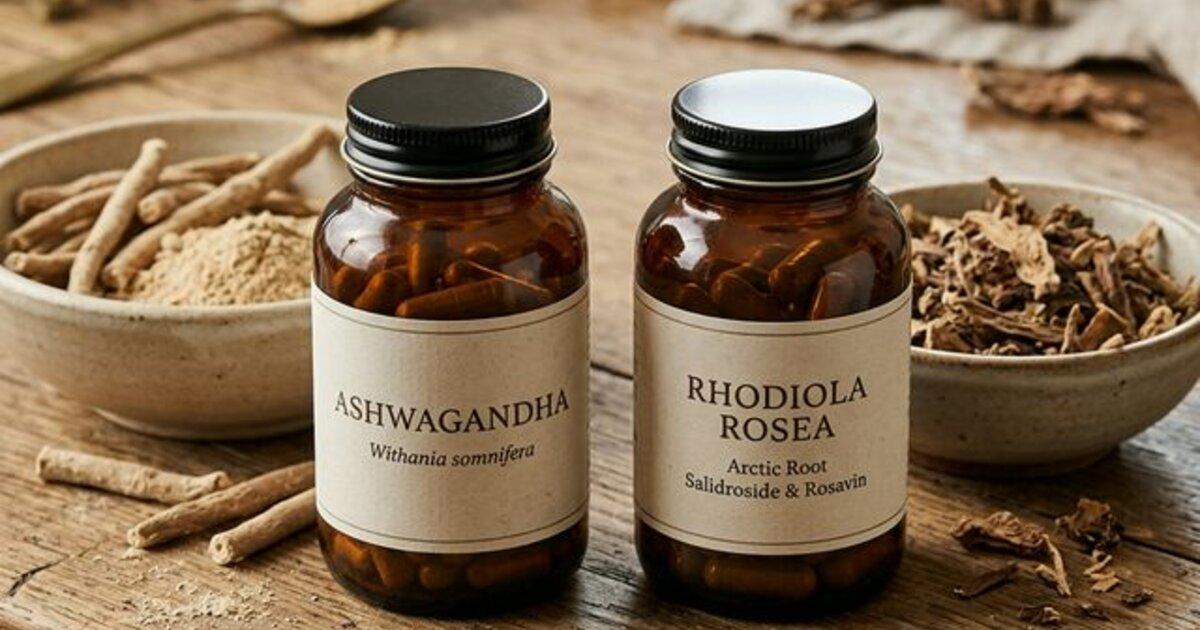
Ashwagandha ist das beruhigende Adaptogen (300–600 mg KSM-66, abends), am besten bei chronischem Stress, Angstzuständen, schlechtem Schlaf und Burnout: senkt Cortisol um etwa 28%. Rhodiola ist das aktivierende Adaptogen (200–600 mg Rosavine/Salidrosid, morgens), am besten bei mentaler Erschöpfung, Tagesmüdigkeit und Ausdauer unter Stress, mit Wirkung innerhalb von Tagen statt Wochen. Beide kombinieren bei Stress und Müdigkeit: Rhodiola morgens, Ashwagandha abends. Kosten sind ähnlich (12–25 $ / 30 Tage).
Dieser Inhalt dient ausschließlich zu Informationszwecken und ersetzt keine professionelle medizinische Beratung, Diagnose oder Behandlung. Konsultieren Sie immer Ihren Arzt oder qualifizierten Gesundheitsdienstleister, bevor Sie mit der Einnahme von Nahrungsergänzungsmitteln beginnen.
Adaptogene sind eine Klasse von Heilpflanzen, die dem Körper helfen, physischem und psychischem Stress besser standzuhalten und sich davon zu erholen. Die beiden beliebtesten — und am besten klinisch erforschten — sind Ashwagandha (Withania somnifera) und Rhodiola Rosea. Beide senken Cortisol und verbessern die Widerstandsfähigkeit, doch sie wirken auf deutlich unterschiedliche Weise und eignen sich für verschiedene Arten von Stress.
Dieser Vergleich hilft Ihnen bei der Wahl des richtigen Adaptogen (oder bei der Entscheidung, ob Sie beide brauchen).
Ashwagandha: Überblick
Ashwagandha ist eine Wurzel, die seit über 3.000 Jahren in der ayurvedischen Medizin verwendet wird. Moderne Extrakte wie KSM-66 und Sensoril standardisieren die Wirkstoffe (Withanolide) für eine gleichbleibende Wirksamkeit.
Wichtigste Vorteile
- Cortisolsenkung: Eine randomisierte kontrollierte Studie aus dem Jahr 2012 ergab, dass 300 mg KSM-66 zweimal täglich das Serumcortisol über 60 Tage um 27,9 % senkte.
- Angst und Schlaf: Ashwagandha reduziert wahrgenommenen Stress und Angstwerte signifikant, und die GABAerge Aktivität der Withanolide fördert einen tieferen Schlaf.
- Kraft und Erholung: Mehrere Studien zeigen moderate Steigerungen der Muskelkraft und des Testosterons bei Männern in Kombination mit Krafttraining.
Typische Dosierung
300–600 mg pro Tag eines Wurzelextrakts, standardisiert auf 5 % Withanolide. Wird wegen seiner beruhigenden Eigenschaften oft abends eingenommen.
Rhodiola Rosea: Überblick
Rhodiola Rosea ist ein Höhenkraut, das in arktischen und gebirgigen Regionen Europas und Asiens heimisch ist. Seine Wirkstoffe — Rosavine und Salidrosid — beeinflussen die Serotonin-, Dopamin- und Noradrenalin-Signalwege.
Wichtigste Vorteile
- Mentale Energie und Fokus: Rhodiola eignet sich hervorragend zur Bekämpfung geistiger Erschöpfung. Eine Studie aus dem Jahr 2012 zeigte eine signifikante Verbesserung der kognitiven Leistung bei längerer Arbeit unter Stress.
- Körperliche Ausdauer: Mehrere Studien belegen eine verbesserte Trainingsleistung und reduzierte wahrgenommene Anstrengung, insbesondere bei Ausdaueraktivitäten.
- Schnell wirksam: Im Gegensatz zu vielen Adaptogenen, deren Aufbau Wochen dauert, bemerken Rhodiola-Anwender oft schon in den ersten Tagen eine gesteigerte Konzentration.
Typische Dosierung
200–600 mg pro Tag eines Extrakts, standardisiert auf 3 % Rosavine und 1 % Salidrosid. Wird am besten morgens oder am frühen Nachmittag eingenommen.
Direktvergleich
| Faktor | Ashwagandha | Rhodiola Rosea |
|---|---|---|
| Hauptwirkung | Beruhigend, cortisolsenkend | Anregend, ermüdungsbekämpfend |
| Wirkungseintritt | 2–4 Wochen für volle Wirkung | Tage bis 1 Woche |
| Beste Einnahmezeit | Abends | Morgens |
| Angstreduktion | Starke klinische Evidenz | Moderate Evidenz |
| Körperliche Leistung | Kraftzuwachs (mit Training) | Ausdauer und weniger Ermüdung |
| Kognitive Vorteile | Moderat | Stark — Fokus unter Stress |
| Schlafunterstützung | Ja — fördert tieferen Schlaf | Nein — kann bei später Einnahme anregend wirken |
| Cortisolsenkung | ~28 % Reduktion in Studien | Moderate Reduktion |
| Kosten (30-Tage-Vorrat) | 12–25 $ | 12–25 $ |
| Am besten geeignet für | Chronischen Stress, Angst, Schlaf, Erholung | Geistige Erschöpfung, Fokus, Ausdauer, akuten Stress |
Das Fazit
Wählen Sie Ashwagandha, wenn Sie unter chronischem Stress, erhöhter Angst, schlechtem Schlaf oder Burnout leiden. Seine nachhaltige cortisolsenkende Wirkung macht es ideal für Menschen, die sich gleichzeitig aufgedreht und erschöpft fühlen und deren Nervensystem beruhigt werden muss.
Wählen Sie Rhodiola, wenn Ihre Hauptbeschwerden geistiger Nebel, Tagesmüdigkeit oder geringe Motivation unter Stress sind. Es ist die bessere Wahl für Studierende, Schichtarbeiter und Sportler, die scharfen Fokus und körperliche Ausdauer ohne Sedierung brauchen.
Kombinieren Sie beide, wenn Sie unter einer Kombination aus chronischem Stress und geistiger Erschöpfung leiden. Nehmen Sie Rhodiola morgens für Tagesenergie und Ashwagandha abends für Erholung und Schlaf. Diese Kombination wird gut vertragen und bekämpft Stress von beiden Seiten.
Verfolgen Sie Ihre Wahl
Adaptogene wirken am besten bei regelmäßiger Einnahme, doch ihre Effekte können subtil sein. Protokollieren Sie Ihre tägliche Dosis im Supplement Tracker und bewerten Sie täglich Ihr Stressniveau, Ihre Energie und Schlafqualität. Nach vier Wochen überprüfen Sie die Trends, um zu sehen, welches Adaptogen bei Ihnen den Unterschied macht.