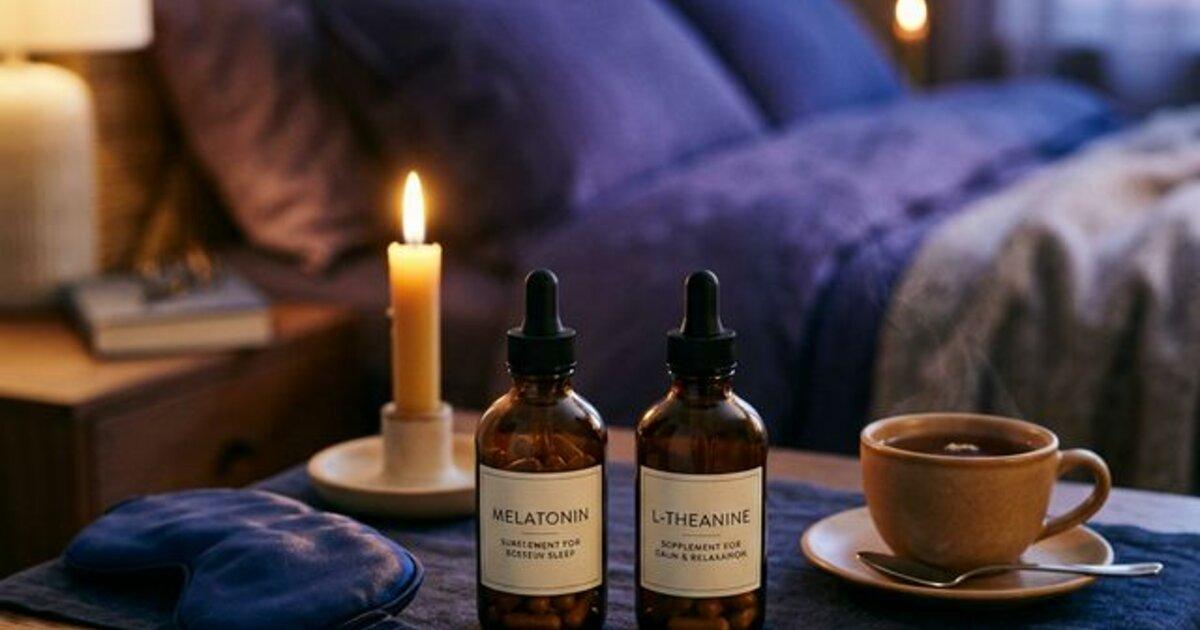
Melatonin is for sleep TIMING issues: jet lag, shifted circadian rhythm, falling asleep at the wrong hour. Use the lowest effective dose (0.3-1 mg) at consistent times. L-theanine is for a RACING MIND: physically tired but mentally wired. 100-200 mg works within 30-60 minutes via alpha-wave increase, and it is also usable during the day for stress relief. Combine both for the one-two punch: melatonin signals bedtime, L-theanine quiets mental noise. Safe together and a popular evening stack.
This content is for informational purposes only and is not a substitute for professional medical advice, diagnosis, or treatment. Always consult your physician or qualified healthcare provider before starting any supplement regimen.
Trouble falling asleep or staying asleep is one of the most common reasons people turn to supplements. Melatonin and L-theanine are two of the most popular natural options, but they work through entirely different mechanisms. Choosing the wrong one — or using the right one incorrectly — can mean the difference between restful nights and frustrating trial-and-error.
Here is how they actually compare.
Melatonin: Overview
Melatonin is a hormone produced by the pineal gland in response to darkness. It does not make you sleepy directly — instead, it signals to your body that it is time to transition into sleep mode by lowering core body temperature and promoting drowsiness.
Key Benefits
- Circadian Rhythm Reset: Melatonin is highly effective for jet lag, shift work, and delayed sleep phase disorder because it directly shifts your internal clock.
- Faster Sleep Onset: A meta-analysis in PLOS ONE found melatonin reduced the time to fall asleep by an average of 7 minutes.
- Short-Term Safety: When used at appropriate doses (0.3–1 mg), melatonin is well-tolerated with minimal side effects.
Typical Dosage
0.3–1 mg taken 30–60 minutes before your target bedtime. Higher doses (3–10 mg) are commonly sold but are often unnecessarily high and can cause grogginess.
L-Theanine: Overview
L-theanine is an amino acid found almost exclusively in tea leaves (Camellia sinensis). It crosses the blood-brain barrier and increases alpha brain wave activity — the same relaxed-but-alert state associated with meditation.
Key Benefits
- Calms Without Sedation: L-theanine reduces anxiety and racing thoughts without making you drowsy. This makes it effective for people whose insomnia is driven by an overactive mind.
- Improves Sleep Quality: A 2019 randomized trial found 200 mg of L-theanine improved sleep quality scores, reduced nighttime awakenings, and increased sleep efficiency.
- Zero Dependency Risk: L-theanine does not affect hormonal pathways and carries no risk of tolerance or dependency.
Typical Dosage
100–400 mg taken 30–60 minutes before bed. Can also be used during the day for calm focus without drowsiness.
Head-to-Head Comparison
| Factor | Melatonin | L-Theanine |
|---|---|---|
| Mechanism | Hormone — signals circadian sleep timing | Amino acid — increases calming alpha waves |
| Primary effect | Shifts sleep onset timing | Reduces anxiety, quiets the mind |
| Sleep onset | Faster time to fall asleep | Indirect — by reducing mental arousal |
| Sleep quality | Modest improvement | Significant improvement in multiple trials |
| Daytime use | No — causes drowsiness | Yes — promotes calm focus |
| Side effects | Grogginess, vivid dreams (at high doses) | Essentially none at recommended doses |
| Dependency risk | Low, but tolerance can develop at high doses | None |
| Best dose | 0.3–1 mg (less is more) | 200–400 mg |
| Cost (30-day supply) | $5–$12 | $10–$20 |
| Best For | Jet lag, shift work, circadian disruption | Racing thoughts, anxiety-driven insomnia |
The Verdict
Choose Melatonin if your sleep issue is about timing — you cannot fall asleep at the right hour, you are adjusting to a new time zone, or your circadian rhythm is shifted. Use the lowest effective dose (start at 0.3 mg) and take it at a consistent time.
Choose L-Theanine if you lie in bed with a racing mind, feel physically tired but mentally wired, or want something you can also use during the day for stress relief. L-theanine is the better long-term, daily-use option with virtually no downside.
Combine Both for a powerful one-two punch: melatonin signals "it is bedtime" while L-theanine quiets the mental noise that keeps you from actually drifting off. This stack is a popular part of an evening supplement routine and is safe to use together.
Track Your Choice
Sleep improvements are best measured over time, not night by night. Use Supplement Tracker to log your dose and bedtime, and rate your sleep quality each morning. After two weeks, the data will clearly show whether your chosen supplement — or combination — is delivering results.