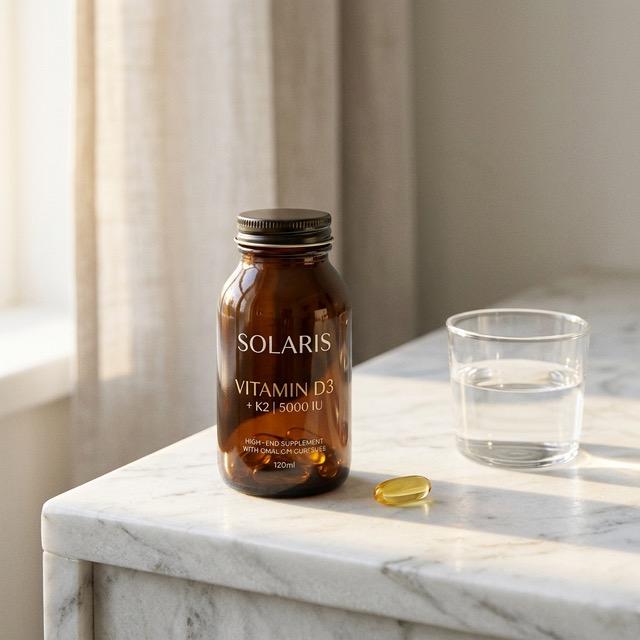
Vitamin D3 wins in nearly every scenario: raises blood 25(OH)D more efficiently, stays active longer, and is now available in vegan-friendly lichen-derived options. Choose D2 only if you are strictly vegan and cannot find lichen D3, or if your doctor has prescribed a specific D2 protocol. Pair D3 with K2 (to direct calcium to bones, not arteries) and take with a fat-containing meal for absorption. Most adults benefit from 2,000-5,000 IU daily; a 25(OH)D blood test dials in your personal dose.
This content is for informational purposes only and is not a substitute for professional medical advice, diagnosis, or treatment. Always consult your physician or qualified healthcare provider before starting any supplement regimen.
Vitamin D deficiency affects an estimated one billion people worldwide, making it one of the most common nutritional gaps on the planet. When you reach for a supplement, you will encounter two forms: vitamin D2 (ergocalciferol) and vitamin D3 (cholecalciferol). They are not interchangeable — one is meaningfully more effective at raising and maintaining your blood levels.
Here is the full comparison.
Vitamin D2 (Ergocalciferol): Overview
Vitamin D2 is produced by fungi and yeast when exposed to UV light. It is the form most commonly found in fortified foods like plant milks and cereals, and it has historically been the default prescription-strength vitamin D in many countries.
Key Benefits
- Plant-Derived: D2 is suitable for strict vegans since it does not come from animal sources.
- Prescription Availability: In the US, high-dose 50,000 IU D2 capsules are available by prescription for rapid repletion.
- Lower Cost at High Doses: Prescription D2 is often covered by insurance.
Typical Dosage
1,000–2,000 IU daily for maintenance, or 50,000 IU weekly for prescribed repletion protocols.
Vitamin D3 (Cholecalciferol): Overview
Vitamin D3 is the form your skin naturally produces when exposed to UVB sunlight. Supplemental D3 is typically derived from lanolin (sheep's wool oil), though vegan D3 sourced from lichen is now widely available.
Key Benefits
- Superior Potency: Multiple studies confirm D3 raises serum 25(OH)D levels 70–87% more effectively than an equivalent dose of D2.
- Longer Half-Life: D3 maintains elevated blood levels for a longer period after each dose, providing more stable day-to-day status.
- Better Shelf Stability: D3 degrades more slowly during storage, so the potency listed on the label is more likely to reflect what you actually get.
Typical Dosage
1,000–5,000 IU daily for most adults, taken with a fat-containing meal. Read our guide on the best time to take vitamin D for timing tips.
Head-to-Head Comparison
| Factor | Vitamin D2 | Vitamin D3 |
|---|---|---|
| Source | Fungi / yeast (UV-irradiated) | Lanolin or lichen (UV-irradiated) |
| Effect on blood levels | Moderate | 70–87% more effective at same dose |
| Half-life in blood | ~15 days | ~25 days |
| Shelf stability | Degrades faster | More stable |
| Vegan-friendly | Yes | Only lichen-derived D3 |
| Cost (OTC, 30-day) | $5–$10 | $5–$12 |
| Prescription options | 50,000 IU capsules widely available | Less common as prescription |
| Best For | Vegans without lichen D3 access | Everyone else — superior efficacy |
The Verdict
Choose Vitamin D3 in almost every scenario. It raises your blood levels more efficiently, stays active longer, and is now available in vegan-friendly lichen-derived options. The evidence overwhelmingly favors D3 for both correcting deficiency and long-term maintenance.
Choose Vitamin D2 only if you are following a strict vegan lifestyle and cannot find lichen-sourced D3, or if your doctor has prescribed a specific D2 repletion protocol.
Pair your vitamin D with vitamin K2 and take it alongside a meal containing dietary fat to maximize absorption. Most adults benefit from 2,000–5,000 IU of D3 daily, but a blood test for 25(OH)D is the best way to dial in your personal dose.
Track Your Choice
Vitamin D levels shift slowly — it can take 8–12 weeks to see meaningful changes on lab work. Use Supplement Tracker to log your daily dose and record periodic blood test results so you can fine-tune your intake with real data instead of guesswork.