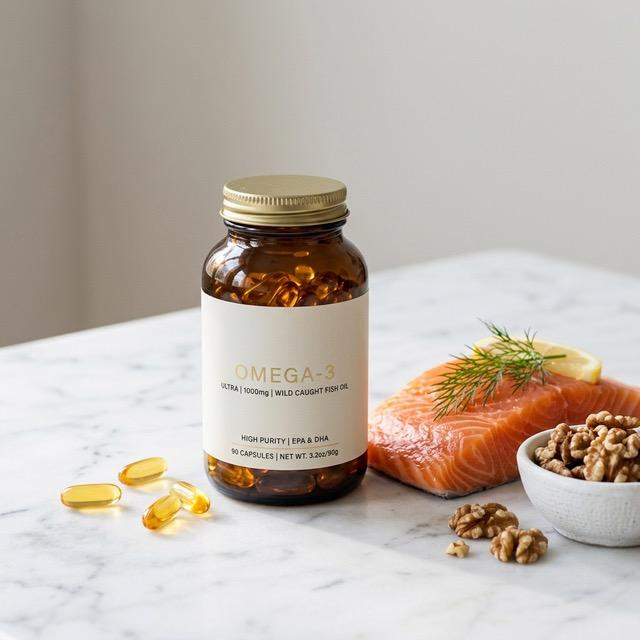
El omega-3 (2.000-4.000 mg de EPA/DHA combinados) tiene la base de evidencia cardiovascular más profunda: el ensayo REDUCE-IT mostró una reducción del 25% en eventos mayores con dosis altas. Combínalo con CoQ10 (100-300 mg de ubiquinol) para la energía mitocondrial cardíaca, especialmente con estatinas (que reducen el CoQ10). El magnesio (300-400 mg en glicinato o taurato) apoya el ritmo y la presión arterial. La vitamina K2 MK-7 (100-200 mcg) previene la calcificación arterial: el Estudio Rotterdam vinculó alta ingesta de K2 con un 57% menos de mortalidad cardíaca. La vitamina D3 (2.000-4.000 UI) corrige el riesgo por deficiencia. Evita el calcio sin K2 y la levadura de arroz rojo sin monitorización.
Este contenido es solo para fines informativos y no sustituye el consejo médico profesional, el diagnóstico ni el tratamiento. Consulta siempre a tu médico o proveedor de salud calificado antes de comenzar cualquier régimen de suplementos.
Las enfermedades cardiovasculares siguen siendo la principal causa de muerte a nivel mundial. Aunque el ejercicio, la dieta, el control de la presión arterial y no fumar son los pilares de la salud cardíaca, suplementos específicos han demostrado beneficios cardiovasculares significativos en ensayos clínicos bien diseñados. La clave está en separar los compuestos con evidencia sólida de los que solo se basan en la publicidad.
Estos son los suplementos con la mejor evidencia para apoyar la salud del corazón, clasificados por la fuerza y consistencia de la investigación.
Los mejores suplementos para la salud del corazón
1. Ácidos grasos omega-3 (EPA/DHA)
Los ácidos grasos omega-3 tienen la base de evidencia más profunda y robusta de cualquier suplemento cardiovascular. El ensayo REDUCE-IT (8.179 pacientes, 4,9 años de seguimiento) demostró una reducción del riesgo relativo del 25% en eventos cardiovasculares mayores con suplementación de EPA a dosis altas.
Cómo funciona: EPA y DHA reducen los triglicéridos (15–30% a dosis terapéuticas), disminuyen la inflamación arterial, mejoran la función endotelial (el revestimiento de los vasos sanguíneos), reducen la agregación plaquetaria (tendencia a la coagulación) y tienen efectos modestos sobre la presión arterial. Estos mecanismos trabajan sinérgicamente para reducir el riesgo cardiovascular global.
Dosis: 2.000–4.000 mg de EPA/DHA combinados diariamente para beneficio cardiovascular. Las dosis usadas en los grandes ensayos clínicos son más altas de lo que la mayoría toma — consulta nuestra guía de dosificación de omega-3 para detalles. Para reducción de triglicéridos específicamente, el rango basado en evidencia es 3.000–4.000 mg diarios.
Cuándo tomarlo: Con comidas que contengan grasas, dividido en dos dosis diarias. El omega-3 de prescripción (Vascepa, Lovaza) está disponible para triglicéridos muy altos — consúltalo con tu médico.
2. CoQ10 (Coenzima Q10)
La CoQ10 es particularmente relevante para la salud cardíaca porque el corazón es uno de los órganos más metabólicamente activos del cuerpo, y las células del músculo cardíaco contienen la mayor concentración de mitocondrias. La CoQ10 es esencial para la producción de energía en estas mitocondrias.
Cómo funciona: La CoQ10 apoya la producción de ATP en las células cardíacas, actúa como un potente antioxidante liposoluble (protegiendo el LDL de la oxidación) y mejora la función endotelial. El ensayo Q-SYMBIO (420 pacientes con insuficiencia cardíaca, 2 años) encontró que la suplementación con CoQ10 redujo los eventos cardiovasculares mayores un 43% y redujo la mortalidad cardiovascular a la mitad. La CoQ10 también es crítica para quienes toman estatinas, que agotan la CoQ10 al inhibir la misma vía de síntesis.
Dosis: 100–300 mg de ubiquinol (la forma reducida y biodisponible) diariamente. Para insuficiencia cardíaca activa o uso de estatinas, 200–300 mg son apropiados. La ubiquinona es una alternativa menos biodisponible.
Cuándo tomarla: Con una comida que contenga grasas para absorción óptima. Puede dividirse en dos dosis diarias.
3. Magnesio
El magnesio es esencial para el ritmo cardíaco normal, la relajación de los vasos sanguíneos y la regulación de la presión arterial. Los estudios poblacionales muestran consistentemente que una mayor ingesta de magnesio se asocia con menor riesgo cardiovascular, y la deficiencia es alarmantemente común — afectando aproximadamente al 50% de los adultos en países desarrollados.
Cómo funciona: El magnesio regula la actividad eléctrica del corazón (prevención de arritmias), relaja el músculo liso en las paredes de los vasos sanguíneos (reduciendo la presión arterial) y disminuye la calcificación vascular. Un metaanálisis de 40 ensayos encontró que la suplementación con magnesio redujo la presión arterial sistólica en 2–4 mmHg y la diastólica en 1–3 mmHg. El glicinato de magnesio se absorbe bien y es suave con el sistema digestivo.
Dosis: 300–400 mg de magnesio elemental diariamente. Glicinato, taurato y citrato son las mejores formas para apoyo cardiovascular. El taurato de magnesio específicamente combina dos compuestos que apoyan el corazón (magnesio + taurina).
Cuándo tomarlo: La dosis nocturna apoya el sueño y permite un efecto calmante. Para beneficios sobre la presión arterial, la ingesta diaria consistente es más importante que el momento.
4. Vitamina K2 (MK-7)
La vitamina K2 está emergiendo como uno de los nutrientes cardiovasculares más importantes, aunque sigue siendo subestimada. Su papel principal es dirigir el calcio hacia donde pertenece (huesos y dientes) y alejarlo de donde causa daño (arterias y tejidos blandos).
Cómo funciona: La vitamina K2 activa la proteína Gla de la matriz (MGP), el inhibidor más potente de la calcificación arterial del cuerpo. Sin K2 adecuado, el calcio se acumula en las paredes arteriales — un proceso llamado calcificación vascular — que endurece las arterias y aumenta dramáticamente el riesgo de enfermedad cardíaca. El Estudio del Corazón de Rotterdam (4.807 sujetos, 7 años de seguimiento) encontró que la alta ingesta de vitamina K2 se asoció con una reducción del 57% en la muerte por enfermedad cardíaca.
Dosis: 100–200 mcg de MK-7 (menaquinona-7) diarios. MK-7 tiene una vida media más larga que MK-4, proporcionando protección vascular de 24 horas con una dosis diaria. Especialmente importante si suplementas vitamina D, que aumenta la absorción de calcio — combina D3 con K2 para asegurar que el calcio vaya a los lugares correctos. Lee más en nuestra guía de vitamina D3 + K2.
Cuándo tomarla: Con una comida que contenga grasas (K2 es liposoluble). Tómala al mismo tiempo que la vitamina D por conveniencia.
Importante: Si tomas anticoagulantes (warfarina/Sintrom), consulta a tu médico antes de suplementar vitamina K2, ya que puede afectar los niveles de INR. La vitamina K no interfiere con los anticoagulantes más nuevos (ACODs) como apixabán o rivaroxabán.
5. Vitamina D3
La deficiencia de vitamina D se asocia independientemente con un mayor riesgo cardiovascular, incluyendo hipertensión, insuficiencia cardíaca y eventos cardíacos. Aunque la suplementación no ha mostrado una reducción dramática del riesgo en personas con niveles adecuados, corregir la deficiencia parece ser protector.
Cómo funciona: La vitamina D regula el sistema renina-angiotensina (que gobierna la presión arterial), apoya la función endotelial y reduce los marcadores inflamatorios asociados con la aterosclerosis. Los beneficios cardiovasculares son más pronunciados en personas deficientes (por debajo de 20 ng/mL) — lo que incluye una gran proporción de la población.
Dosis: 2.000–4.000 UI diarias. Siempre combinar con K2 para seguridad cardiovascular, y verificar tus niveles de 25(OH)D para guiar la dosificación.
Cuándo tomarla: Con una comida que contenga grasas. Se prefiere mañana o mediodía — consulta nuestra guía de momento de vitamina D.
Cómo armar tu stack
Los suplementos para la salud cardíaca funcionan mejor como un sistema coordinado:
Base esencial:
- Omega-3 (2.000+ mg EPA/DHA) — el suplemento cardiovascular de mayor impacto
- Magnesio (300–400 mg) — presión arterial, ritmo y salud vascular
- Vitamina D3 + K2 (2.000–4.000 UI D3 + 100–200 mcg K2) — dirección del calcio y protección vascular
Si tomas estatinas o tienes más de 50: 4. CoQ10 (200 mg ubiquinol) — reponer lo que las estatinas agotan, apoyar la energía cardíaca
Este stack aborda los principales factores de riesgo modificables: inflamación (omega-3), deficiencia mineral (magnesio), calcificación vascular (K2) y energía mitocondrial (CoQ10).
Qué evitar
Suplementos de calcio sin K2: La suplementación con calcio a dosis altas (especialmente sin K2) se ha asociado con mayor número de eventos cardiovasculares en algunos metaanálisis. Si tomas calcio, siempre combínalo con vitamina K2.
Arroz de levadura roja sin monitoreo: El arroz de levadura roja contiene monacolina K natural (idéntica a lovastatina). Reduce efectivamente el colesterol LDL pero conlleva los mismos riesgos que las estatinas recetadas — incluyendo daño muscular y efectos hepáticos. Si lo usas, trátalo como un medicamento y hazte análisis de sangre regulares.
Niacina para colesterol: Aunque la niacina eleva el colesterol HDL, ensayos clínicos (AIM-HIGH, HPS2-THRIVE) mostraron que este aumento de HDL no se tradujo en menos eventos cardiovasculares. Combinado con efectos secundarios (rubor, estrés hepático, elevación de glucosa), la niacina ha caído en desgracia para la prevención cardiovascular.
Ignorar las opciones farmacéuticas: Los suplementos complementan pero no reemplazan los medicamentos basados en evidencia cuando son necesarios. Si tienes presión arterial alta, colesterol LDL alto o enfermedad cardíaca establecida, trabaja con tu médico en tratamientos farmacéuticos apropiados junto con la suplementación.
Empieza a registrar tu stack
Los suplementos cardiovasculares son un compromiso a largo plazo — sus beneficios se acumulan durante meses y años de uso consistente. Un rastreador de suplementos ayuda a asegurar que mantengas la consistencia diaria que impulsa los resultados. Registra tu stack junto con cualquier biomarcador disponible (presión arterial, paneles lipídicos) para medir objetivamente el impacto de tu protocolo con el tiempo.