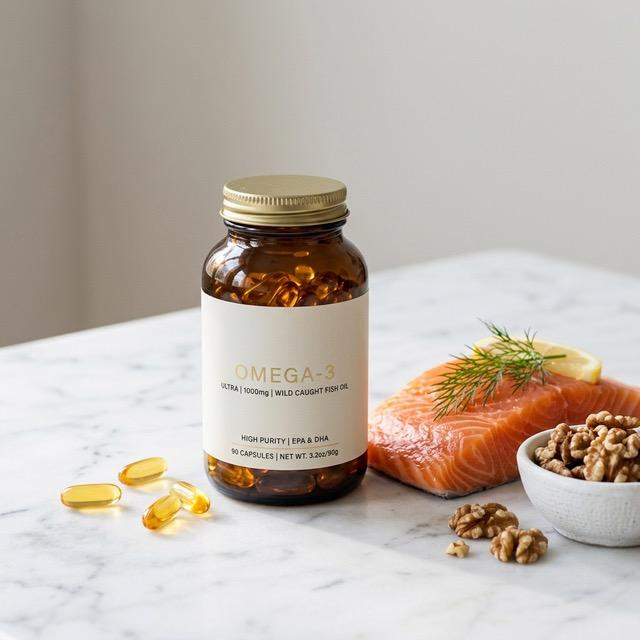
Collagen peptides (10-15 g hydrolyzed daily with vitamin C) or undenatured type II collagen (40 mg daily) reduce osteoarthritis pain in meta-analyses. Omega-3 (2,000-3,000 mg EPA/DHA, EPA-dominant) lowers joint stiffness and NSAID use by generating pro-resolving mediators. Curcumin (500-1,000 mg bioavailable form with piperine or phytosome) matched ibuprofen for knee OA without GI side effects. Vitamin D3 (2,000-4,000 IU with K2) protects cartilage cells. Glucosamine SULFATE (1,500 mg, crystalline form) slowed knee OA progression in European trials, unlike the weaker HCl form. Allow 8-12 weeks before assessing.
This content is for informational purposes only and is not a substitute for professional medical advice, diagnosis, or treatment. Always consult your physician or qualified healthcare provider before starting any supplement regimen.
Joint health is one of those things you don't think about until something goes wrong. Whether you're dealing with existing joint discomfort, trying to prevent age-related cartilage loss, or protecting your joints from the demands of an active lifestyle, the right supplements can support the structural and inflammatory components of joint function.
Joints are complex structures involving cartilage, synovial fluid, ligaments, and tendons — all of which have specific nutritional needs. Here are the supplements with the most compelling evidence.
Top Supplements for Joint Health
1. Collagen Peptides (Type II)
Collagen is the most abundant protein in cartilage, tendons, and ligaments. As we age, collagen production declines by roughly 1% per year after age 25. Supplementing with collagen peptides provides the specific amino acids (glycine, proline, hydroxyproline) that your body uses as building blocks for cartilage repair.
How it works: Hydrolyzed collagen peptides are broken down into small enough fragments to be absorbed intact and accumulated in joint cartilage. A 2019 meta-analysis of 5 RCTs found that collagen supplementation significantly reduced joint pain and improved function in people with osteoarthritis. Type II collagen (specifically UC-II, undenatured type II collagen) works through a different mechanism — it modulates the immune response that attacks joint cartilage.
Dose: 10–15 g of hydrolyzed collagen peptides daily, or 40 mg of UC-II (undenatured type II collagen) daily. These are different products with different mechanisms — you can use either, or both.
When to take: Hydrolyzed collagen with vitamin C (50 mg) to support collagen synthesis. UC-II is best taken on an empty stomach before bed.
2. Omega-3 Fatty Acids (EPA/DHA)
Chronic low-grade inflammation is a primary driver of joint degeneration. Omega-3 fatty acids are the most well-researched natural anti-inflammatory compounds, with direct relevance to joint health.
How it works: EPA is converted into resolvins and protectins that actively resolve inflammation in joint tissues. Multiple meta-analyses confirm that omega-3 supplementation reduces joint stiffness, tenderness, and NSAID usage in people with inflammatory joint conditions. Even in healthy, active individuals, omega-3s help manage the exercise-induced inflammation that can accumulate in joints over time. Our omega-3 dosage guide covers this in detail.
Dose: 2,000–3,000 mg of combined EPA/DHA daily. Higher EPA ratios are preferred for anti-inflammatory effects.
When to take: With meals containing fat for better absorption.
3. Turmeric/Curcumin
Curcumin, the active compound in turmeric, is one of the most studied natural anti-inflammatory agents. It targets multiple inflammatory pathways simultaneously, making it particularly effective for the complex inflammation involved in joint disorders.
How it works: Curcumin inhibits NF-kB (a master inflammatory regulator), COX-2 (the same enzyme targeted by ibuprofen), and multiple cytokines involved in cartilage breakdown. A 2016 meta-analysis found curcumin to be as effective as ibuprofen for knee osteoarthritis pain — without the gastrointestinal side effects.
Dose: 500–1,000 mg of curcumin daily, in a bioavailable formulation. Standard curcumin is poorly absorbed — look for formulations enhanced with piperine (BioPerine), phospholipids (Meriva), or nanoparticle technology (Theracurmin). These can improve absorption 10–30x.
When to take: With meals. Split into two doses (morning and evening) for more consistent anti-inflammatory coverage.
4. Vitamin D3
Vitamin D is essential for bone health, but its role in joint health is equally important and often underappreciated. Vitamin D receptors are present in chondrocytes (cartilage cells), and adequate levels are required for normal cartilage metabolism.
How it works: Low vitamin D accelerates cartilage loss and is associated with increased risk and progression of osteoarthritis. Vitamin D also supports calcium absorption needed for the subchondral bone that underlies joint cartilage. Pair with vitamin K2 to ensure calcium is directed to bones rather than soft tissues.
Dose: 2,000–4,000 IU daily. Test your 25(OH)D levels and aim for 40–60 ng/mL.
When to take: With a fat-containing meal. See our guide on the best time to take vitamin D.
5. Glucosamine Sulfate
Glucosamine has been one of the most popular joint supplements for decades, though the evidence is more nuanced than marketing suggests. The key distinction is between glucosamine sulfate (better evidence) and glucosamine hydrochloride (weaker evidence).
How it works: Glucosamine is a precursor to glycosaminoglycans, the molecules that form the structural matrix of cartilage. Glucosamine sulfate at prescription-strength doses has been shown in European trials to slow the progression of knee osteoarthritis over 2–3 years, as measured by joint space narrowing on X-rays.
Dose: 1,500 mg of glucosamine sulfate daily (the crystalline sulfate form used in the positive European trials). Lower doses and the hydrochloride form have produced inconsistent results.
When to take: With food, in one dose or split into three 500 mg doses.
How to Build Your Stack
Joint health is a long game — don't expect overnight results. Build your stack based on your situation:
For prevention (healthy joints, active lifestyle):
- Collagen peptides (10–15 g daily) — maintain cartilage structure
- Omega-3 (2,000+ mg EPA/DHA) — manage exercise-related inflammation
- Vitamin D3 (2,000–4,000 IU) — foundational support
For existing joint discomfort:
- Everything above, plus:
- Curcumin (500–1,000 mg bioavailable form) — targeted anti-inflammatory relief
- Glucosamine sulfate (1,500 mg) — support cartilage repair over time
Give any joint supplement at least 8–12 weeks before assessing results. Cartilage remodeling is slow, and improvements accumulate gradually.
What to Avoid
Chondroitin without glucosamine: Chondroitin sulfate alone has weaker evidence than glucosamine. When used, it's best combined with glucosamine sulfate, though the added benefit is debated.
Standard turmeric powder: Cooking-grade turmeric contains only 2–3% curcumin and is poorly bioavailable. You'd need tablespoons of turmeric to match the doses used in clinical trials. Use a standardized, enhanced-absorption curcumin extract instead.
MSM as a standalone: Methylsulfonylmethane (MSM) has limited evidence as a solo supplement. It may have modest benefits when combined with glucosamine, but don't rely on it alone.
Ignoring body mechanics: Supplements support joint health, but they can't compensate for poor biomechanics, excessive loading without recovery, or significant excess body weight — each additional pound adds roughly 4 pounds of force on the knees.
Start Tracking Your Stack
Joint improvements happen slowly, which makes tracking essential. Without daily logs, it's easy to forget whether you've been consistent and impossible to know if something is working. Track your supplements alongside a simple joint comfort rating. After 2–3 months of consistent data, you'll have a clear picture of what's helping.