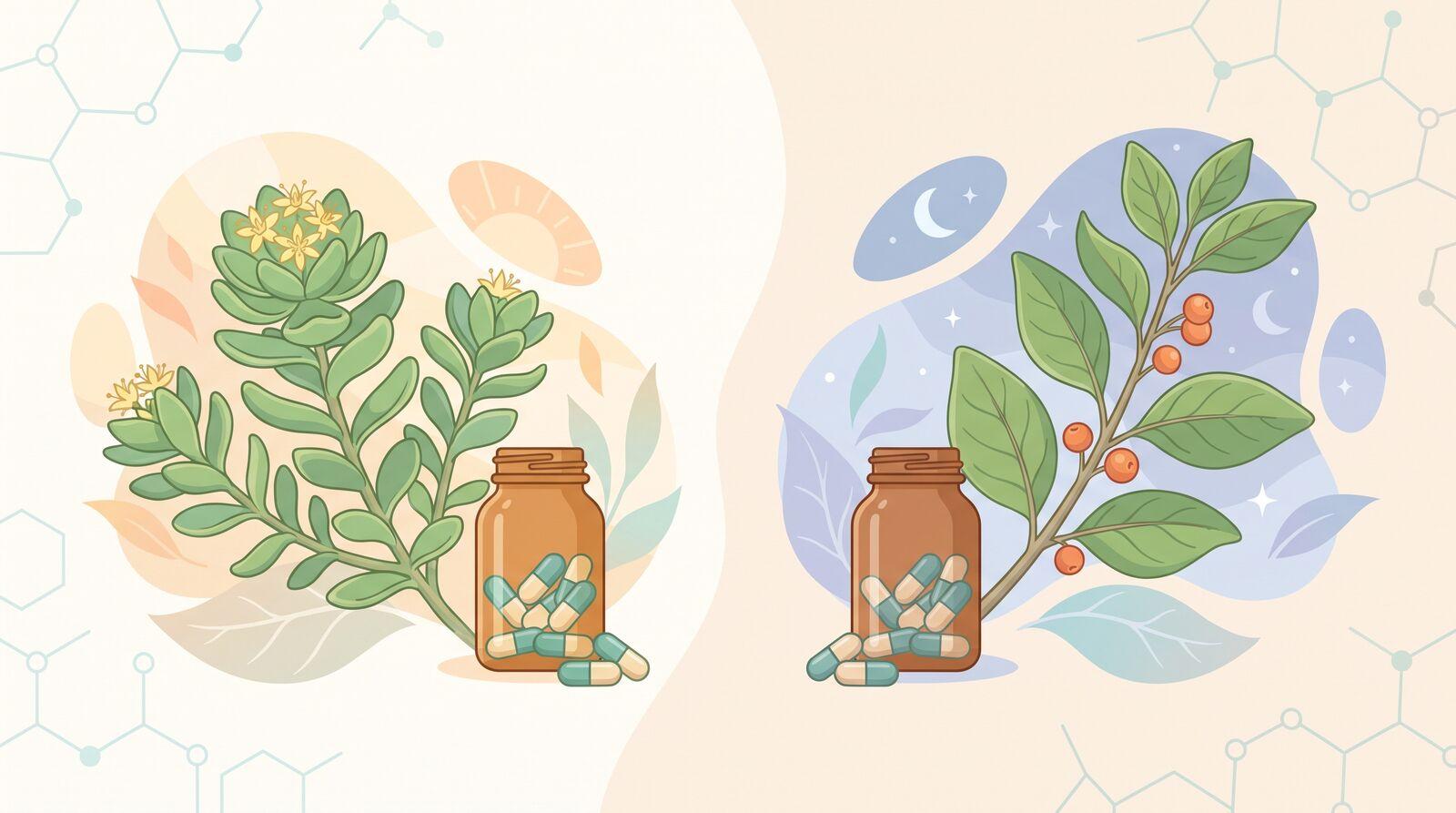
Rhodiola and ashwagandha are both adaptogens, but they pull in opposite directions. Rhodiola rosea is the energizing one: human trials support it for stress-related fatigue, burnout, and mental performance under pressure, with effects that can appear within days. It is taken in the morning, typically 200 to 600 mg of an extract standardized to 3% rosavins and 1% salidroside, and can feel mildly stimulating. Ashwagandha is the calming one: the strongest evidence is for lowering cortisol, easing anxiety, and improving sleep over 4 to 8 weeks, at 300 to 600 mg per day of a standardized root extract like KSM-66. Pick rhodiola if your main problem is exhaustion, brain fog, or fading focus under stress; pick ashwagandha if you feel wired, anxious, and sleep poorly. The two can be stacked, rhodiola in the morning and ashwagandha in the evening, since their mechanisms and timing do not conflict. Rhodiola is best avoided in bipolar disorder and by people sensitive to stimulants; ashwagandha is contraindicated in pregnancy and needs medical guidance with thyroid or autoimmune conditions. Quality matters unusually much for rhodiola because adulteration with cheaper Rhodiola species is common, so look for third-party tested products that state their rosavin and salidroside percentages.
Rhodiola and ashwagandha get lumped together constantly. Both are adaptogens, both show up in every "supplements for stress" listicle, and both promise to help your body cope with pressure. So people reasonably assume they're interchangeable, buy whichever is cheaper, and often end up with exactly the wrong one.
Here's the short version this whole article unpacks: rhodiola is the energizing adaptogen, ashwagandha is the calming one. One is for the person who is exhausted and foggy under stress. The other is for the person who is wired, anxious, and can't wind down. Confusing the two doesn't just waste money; it can make your actual problem feel worse.
Two Adaptogens, Opposite Personalities
The word "adaptogen" describes a compound that helps the body resist stress without acting as a straight stimulant or sedative. That definition is broad enough to hide huge practical differences.
Rhodiola rosea is a flowering plant that grows in cold, high-altitude regions of Europe and Asia. Traditional use in Scandinavia and Russia centered on stamina and endurance, and Soviet-era researchers studied it for exactly that: performance under physical and mental strain. Its active compounds are rosavins and salidroside, and quality extracts are standardized to roughly 3% rosavins and 1% salidroside, the ratio found in the wild plant.
Ashwagandha (Withania somnifera) comes from Ayurvedic medicine, where it has been used for millennia as a restorative tonic. Its actives are withanolides, and its best-studied effects run through the stress axis: lower cortisol, reduced anxiety, easier sleep. We've covered it in depth in our complete ashwagandha guide, so this article keeps the ashwagandha side brief.
In practice, the two sit at opposite ends of the adaptogen spectrum:
| Rhodiola | Ashwagandha | |
|---|---|---|
| Overall direction | Energizing, anti-fatigue | Calming, anti-anxiety |
| Best-supported uses | Stress-related fatigue, burnout, mental performance | Cortisol reduction, anxiety, sleep |
| Onset | Days (sometimes first dose) | 2 to 8 weeks |
| Typical timing | Morning, before food | Evening, or split with food |
| Feels like | Cleaner focus, more stamina | Lower baseline tension, easier sleep |
If you're still deciding which app to trust with your routine, our guide to the best supplement tracker apps compares the leading options honestly.
What the Evidence Says for Rhodiola
Rhodiola's research base is smaller than ashwagandha's, but it points consistently in one direction: fatigue and performance under stress.
- Stress-related fatigue and burnout. Several controlled trials in adults with fatigue syndrome or burnout symptoms found meaningful improvements in exhaustion scores, attention, and morning cortisol response. One frequently cited multicenter trial in people with burnout symptoms reported improvements in emotional exhaustion and fatigue over 12 weeks at 400 mg per day.
- Mental performance under pressure. Trials in physicians on night duty, students during exams, and military cadets found small but consistent improvements in cognitive tasks during periods of sleep deprivation and stress. These are exactly the conditions where most supplements show nothing.
- Physical endurance. Acute doses before exercise have shown modest reductions in perceived exertion. The effect is real but small; rhodiola is not a pre-workout replacement.
Two honest caveats. First, many rhodiola studies are older, small, or funded by extract manufacturers, and a widely discussed review flagged publication bias in the field. The signal for fatigue is consistent enough to take seriously, but this is not creatine-level evidence. Second, benefits show up at sensible doses quickly or not at all; megadosing does not rescue a non-response.
Where rhodiola clearly beats ashwagandha is speed. Ashwagandha builds over weeks. Rhodiola users often notice something within the first few days: a bit more stamina through the afternoon, less of the wrung-out feeling after a stressful day.
What the Evidence Says for Ashwagandha
The strongest ashwagandha data covers the calming cluster: cortisol reductions in the 14 to 28% range in chronically stressed adults, meaningful drops in anxiety scores, and modest improvements in sleep onset and quality. The effects build gradually and peak somewhere between weeks 4 and 8 of daily use.
What ashwagandha does not reliably do is fix exhaustion. If your core complaint is fatigue and brain fog, lowering cortisol may help indirectly over time, but trials suggest you're better served by rhodiola, or by checking the basics first: iron, B12, vitamin D, and sleep itself, which we cover in our guide to supplements for energy and fatigue.
Which One Fits Your Goal
The choice comes down to which side of the stress response is failing you.
Choose rhodiola if:
- Your main complaint is being tired, foggy, and depleted, especially in the afternoon
- You're in a demanding stretch (exams, deadline season, new baby, shift work) and need to keep performing
- You feel burned out rather than anxious: flat and empty rather than wired
- You want something you can evaluate within two weeks
Choose ashwagandha if:
- You feel wired, tense, or anxious more than tired
- Stress is wrecking your sleep, and poor sleep is causing the tiredness
- You want measurable cortisol and anxiety effects and can commit to 8 weeks
- Evenings are when you struggle most
Rough rule of thumb: if your problem peaks in the morning and afternoon (energy, focus, stamina), think rhodiola. If it peaks at night (racing mind, tension, poor sleep), think ashwagandha. If anxiety is your dominant symptom, ashwagandha has the stronger evidence, alongside the other options in our supplements for stress and anxiety guide.
Dosing and Timing
Rhodiola rosea:
- Dose: 200 to 600 mg per day of an extract standardized to 3% rosavins and 1% salidroside. Most people do well starting at 200 to 300 mg.
- Timing: Morning, ideally 30 minutes before breakfast. Rhodiola is mildly stimulating for many people; taken late in the day it can delay sleep.
- Cycling: Some clinicians suggest 6 to 12 weeks on followed by a break, since the traditional-use pattern was intermittent. Evidence either way is thin.
Ashwagandha:
- Dose: 300 to 600 mg per day of KSM-66, or 125 to 250 mg of Sensoril. Details and the extract comparison are in the full guide.
- Timing: Evening with food for sleep and anxiety goals; morning or split dosing works for general stress.
Can You Take Both Together?
Yes, and it's a sensible stack rather than a contradictory one. The combination follows the natural rhythm you're trying to restore: rhodiola in the morning to support energy and focus through the day, ashwagandha in the evening to lower arousal and support sleep. Their mechanisms don't compete, and no interaction between the two has been documented.
The practical mistake people make with this stack is starting both on the same day. If anything goes wrong (headache, jitteriness, unusual drowsiness), you won't know which herb caused it. Start one, give it a week, then add the other.
Who Should Be Careful
Rhodiola: avoid with bipolar disorder, since stimulating adaptogens have been associated with triggering mania in case reports. Be cautious if you're sensitive to caffeine or other stimulants, if you take antidepressants (theoretical serotonergic interaction, worth a pharmacist check), or if you have trouble sleeping even without stimulants. Pregnancy data is essentially nonexistent, so skip it.
Ashwagandha: contraindicated in pregnancy; requires medical guidance with thyroid conditions, autoimmune disease, or sedative medications; rare liver injury reports exist at high doses. The ashwagandha guide covers each of these in detail.
Quality note, especially for rhodiola: genuine Rhodiola rosea is expensive to source, and independent testing has repeatedly found products adulterated with cheaper Rhodiola species (usually Rhodiola crenulata, which lacks rosavins) or containing far less salidroside than labeled. Buy from brands that state the standardization percentages and carry third-party testing, using the same checklist as our guide to choosing a quality supplement.
Track the Difference, Don't Guess It
Adaptogens are where tracking earns its keep, because the outcomes are subjective and easy to misattribute. A stressful week ends, you feel better, and the bottle gets the credit. Or rhodiola is quietly working, but you never connected the afternoon energy to the morning capsule.
Pick two or three markers that match your goal: afternoon energy (1 to 10) and focus for rhodiola, evening tension and time to fall asleep for ashwagandha. Log them daily alongside your doses in a supplement tracker, then read the trend at week 2 for rhodiola and week 6 for ashwagandha. If the line hasn't moved, that's your answer.
One group for whom this comparison comes up often: people in early recovery from alcohol, where daytime exhaustion and nighttime anxiety tend to hit at the same time. The morning-rhodiola, evening-ashwagandha pattern maps well onto that window, and our sister app Sober Tracker is built for tracking mood, sleep, and milestones through exactly that phase.
Neither herb is magic. But matched to the right problem, dosed properly, and tracked honestly, rhodiola and ashwagandha are two of the few adaptogens with enough human evidence to deserve a spot in a routine. The trick is simply knowing which side of the stress curve you're standing on.
This article is for educational purposes and does not constitute medical advice. Talk to a qualified healthcare provider before starting any new supplement, especially if you are pregnant or breastfeeding, have a thyroid, autoimmune, or psychiatric condition, or take prescription medications.