Kosttillskott regleras väldigt annorlunda än läkemedel: ingen kontrollerar att en produkt faktiskt innehåller det etiketten påstår innan den säljs, och oberoende tester hittar regelbundet burkar som är underdoserade, överdoserade eller kontaminerade med tungmetaller och olistade ingredienser. Eftersom staten inte verifierar kvalitet i förväg är det mest användbara du kan göra att köpa produkter som har betalat för frivillig tredjepartstestning. Sigillen värda att känna till är NSF (och NSF Certified for Sport, den striktare versionen idrottare behöver), USP Verified, och oberoende program som ConsumerLab och Informed Sport. De bekräftar tre saker: att ingrediensen är det etiketten säger (identitet), att mängden matchar etiketten (styrka), och att produkten är fri från meningsfull kontaminering (renhet). De bevisar inte att tillskottet fungerar för dig: effekt är en separat fråga som sigillet aldrig rör. Bortom sigillet lever kvalitetssignaler på faktapanelen: namngivna former i stället för vaga 'proprietära blandningar', realistiska doser snarare än megadosknep, ett batch- eller lotnummer, och avsaknad av olagliga sjukdomspåståenden som 'botar' eller 'behandlar'. Kategorier där det mest lönar sig att betala för tredjepartstestning är de som är benägna till kontaminering eller fusk: fiskolja, proteinpulver, grönpulver, växtbaserade produkter, och allt du tar under graviditet eller som dopingtestad idrottare. Notera märke och lotnummer på det du tar så att du, om en batch återkallas eller en ny burk plötsligt känns annorlunda, kan spåra det i stället för att gissa.
Du står i tillskottsgången med två burkar av samma vitamin. Den ena kostar 9 dollar, den andra 29. Etiketterna ser nästan identiska ut: samma dos, samma portionsstorlek, samma självsäkra löften på framsidan. Så vad betalar du egentligen tre gånger så mycket för, och är den billiga faktiskt sämre, eller bara billigare förpackning?
Det är frågan nästan ingen kan svara på vid hyllan, och den spelar större roll än valet av vilket tillskott du tar. Ett perfekt valt näringsämne i en burk av låg kvalitet kan vara underdoserat, överdoserat eller tyst kontaminerat, och du skulle aldrig veta det från etiketten. Den goda nyheten är att det finns en handfull konkreta signaler som skiljer en pålitlig produkt från en hoppfull, och när du känner dem slutar gången att vara ett gissningsspel.
Kosttillskott regleras inte som läkemedel
Det första att förstå är det branschen helst inte vill att du gör: i de flesta länder, inklusive USA, regleras kosttillskott långt lösare än läkemedel. Under ramverket som styr dem behöver ett företag inte bevisa för någon myndighet att en produkt är effektiv, eller ens att den innehåller det etiketten säger, innan den hamnar på hyllan. Tillsynsmyndigheter kliver mest in i efterhand, när en produkt redan säljs och något går snett.
Det betyder att bördan för kvalitetskontroll till stor del faller på tillverkarens egen ärlighet och kompetens. De flesta ansedda företag tar det på allvar. Men oberoende tester har upprepade gånger hittat produkter på marknaden som innehåller långt mindre av den aktiva ingrediensen än påstått, långt mer, eller helt andra föreningar, tillsammans med föroreningar etiketten aldrig nämner. Etiketten är ett marknadsföringsdokument först och ett faktadokument sen.
Vad tredjepartstester faktiskt kontrollerar
Eftersom ingen verifierar kvaliteten åt dig i förväg är det mest kraftfulla du kan göra att gynna produkter som frivilligt har betalat ett oberoende labb för att testa dem. Det är vad "tredjepartstestad" betyder: en organisation utan intresse av att sälja produkten har verifierat den mot en standard.
En genuin certifiering bekräftar tre saker:
- Identitet: ingrediensen är faktiskt det etiketten säger att den är, inte en billigare kopia.
- Styrka: mängden i varje portion matchar mängden tryckt på etiketten, inom snäv tolerans.
- Renhet: produkten är fri från meningsfull kontaminering, särskilt tungmetaller som bly, arsenik, kadmium och kvicksilver, plus mikrober och, i sporttestade produkter, förbjudna substanser.
Vissa certifieringar bekräftar också att produkten tillverkades i en anläggning som följer Good Manufacturing Practices, vilket betyder att processen i sig är kontrollerad och spårbar.
Här är den avgörande gränsen, dock. Tredjepartstestning verifierar vad som finns i burken. Den verifierar inte att tillskottet fungerar, eller att du personligen behöver det. En kreatinburk kan vara felfritt certifierad och ändå meningslös för någon som aldrig tränar. Kvalitetscertifiering och effekt är två helt skilda frågor, och ett sigill svarar bara på den första.
Sigillen som är värda att känna till
Inte alla logotyper på en burk betyder något. Många är påhittade internt för att se officiella ut. Det här är de oberoende märkena som faktiskt bär tyngd:
- NSF Certified: en brett betrodd oberoende certifiering som testar etikettnoggrannhet och föroreningar.
- NSF Certified for Sport: den striktare versionen, som dessutom screenar mot över 270 substanser förbjudna i tävlingsidrott. Om du är en dopingtestad idrottare är det här i praktiken icke-förhandlingsbart, för ett "rent" tillskott kontaminerat med en förbjuden förening kan fortfarande avsluta en karriär.
- USP Verified: märket från U.S. Pharmacopeia, som verifierar identitet, styrka, renhet och tillverkningskvalitet. USP:s program för kosttillskott är frivilligt och relativt få produkter bär det, vilket gör det till en stark positiv signal när du ser det.
- Informed Sport / Informed Choice: program för batchnivå-testning populära i idrottsvärlden, där enskilda produktionslotter testas och publiceras.
- ConsumerLab: en oberoende prenumerationstjänst som köper produkter från hyllan och testar dem, och sedan publicerar vilka som klarade sig och vilka som föll. Deras "godkänd"-lista är en användbar genväg.
Att se ett av de här är en genuin anledning att lita mer på en produkt. Att inte se ett betyder inte automatiskt att en produkt är dålig, eftersom testning är dyr och vissa bra små märken hoppar över den, men bland två i övrigt lika alternativ vinner den certifierade.
Varningssignaler på etiketten
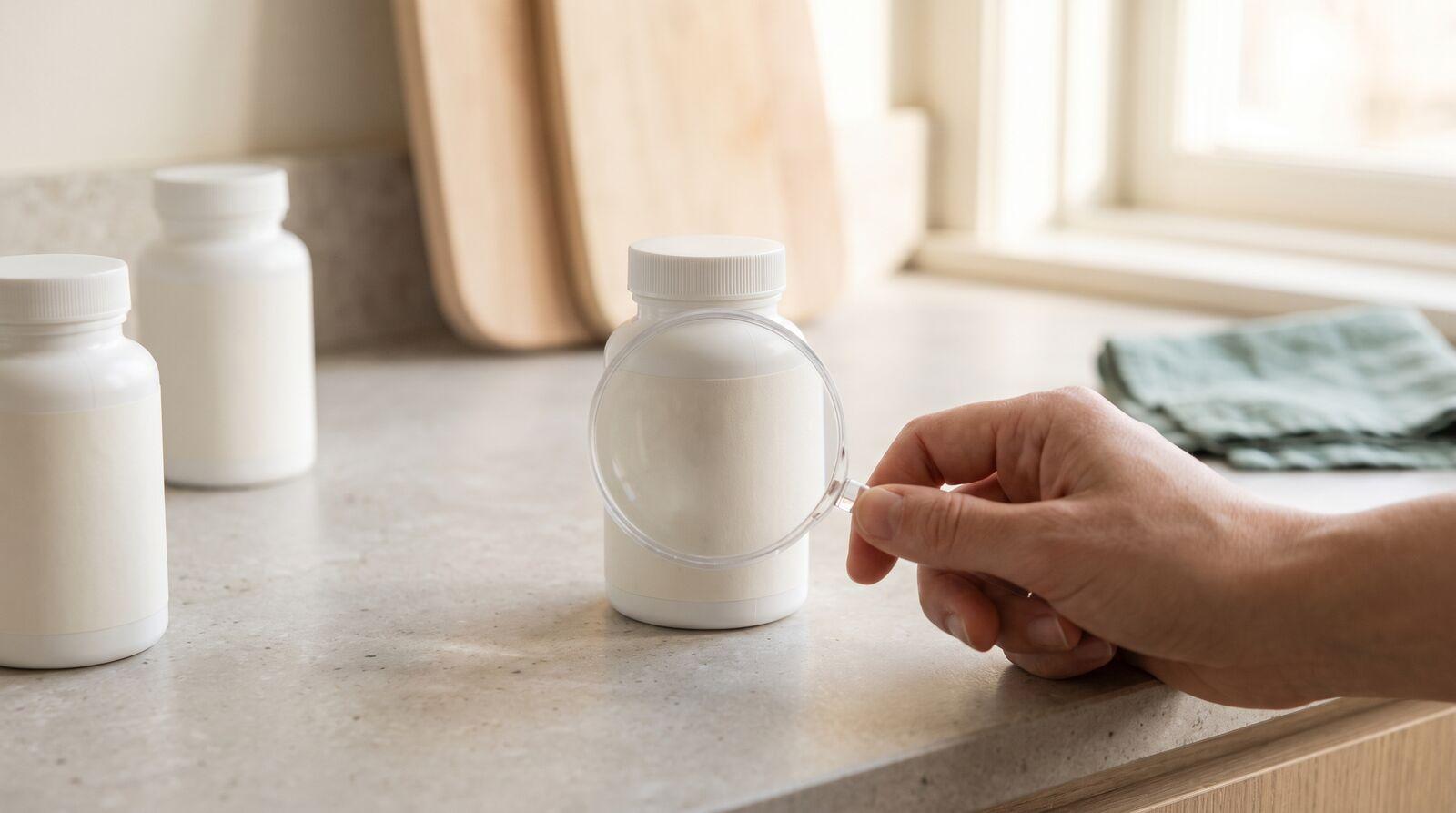
Även utan sigill säger faktapanelen för kosttillskott mycket när du vet vad du ska leta efter. Vår fulla genomgång av hur du läser en tillskottsetikett går djupare, men det här är varningarna som ska få dig att sätta tillbaka en burk:
- "Proprietär blandning." Det låter ett företag lista flera ingredienser under en totalvikt utan att tala om hur mycket du får av var och en. Det används ofta för att strö i ett spår av den dyra, rubrikvänliga ingrediensen och fylla resten med billigt fyllmedel. En kvalitetsprodukt namnger oftast varje ingrediens och dess dos.
- Sjukdomspåståenden. Fraser som "botar", "behandlar", "förebygger" eller "vänder" en namngiven sjukdom är inte tillåtna på ett legitimt kosttillskott och signalerar ett företag villigt att bryta reglerna.
- Megadoser ramade som bättre. Mer är inte automatiskt bättre, och doser många gånger över rekommenderat intag kan vara värdelösa eller aktivt riskfyllda. En genomtänkt dos är en kvalitetssignal i sig.
- Inget lot- eller batchnummer och inget utgångsdatum. Ansedda tillverkare spårar produktion i lotter så att en dålig batch kan återkallas. Deras frånvaro tyder på svag kvalitetskontroll.
- Mirakelspråk och hemlighetsmakeri. "Kliniskt bevisat" utan namngiven studie, "läkarens hemlighet", eller en formel som påstås göra allt på en gång är marknadsföring, inte medicin.
Där kvalitet spelar störst roll
Du behöver inte älta certifiering lika för varje produkt. Vissa kategorier är långt mer benägna till kontaminering eller fusk, och det är där det lönar sig att betala för tredjepartstestning:
- Fiskolja och omega-3, som kan härskna eller bära tungmetaller och PCB om de är dåligt källade.
- Protein- och grönpulver, som konsumeras i stora dagliga mängder och upprepade gånger har testat positivt för tungmetaller.
- Växtbaserade och botaniska produkter, där ingrediensbyte och förfalskning är vanligt eftersom råväxten är svår att verifiera.
- Allt som tas under graviditet, där kontaminering bär högre insatser och dosnoggrannhet spelar mer roll.
- Allt en testad idrottare tar, där en olistad förbjuden substans är en karriärrisk, inte bara en hälsorisk.
För vardagsvitaminer och mineraler från ett stort, etablerat märke är risken lägre, även om en certifiering fortfarande är en trevlig försäkran.
Pris, varumärke och det vettiga mitten
Pris är en svag signal i sig. Dyrt garanterar inte kvalitet, och några av de billigaste produkterna kommer från stora tillverkare med utmärkt processkontroll. Det du egentligen betalar för med en premiumprodukt är ibland testningen och källorna, och ibland bara varumärket och en snyggare burk.
Det vettiga mitten är det här: köp från etablerade märken som antingen bär ett riktigt tredjepartssigill eller publicerar testning och källor öppet, undvik produkterna som viftar med varningssignalerna ovan, och anta inte att det dyraste alternativet automatiskt är det säkraste. En certifierad mellanprisprodukt slår en ocertifierad premium.
Spåra det du faktiskt tar
Kvalitet är inte ett engångsbeslut vid kassan. Samma produkt kan ändras mellan batcher, ett märke kan omformuleras, och återkallelser händer. Det är här det lönar sig att hålla journal. När du loggar inte bara tillskottet utan märket och, helst, lotnumret, bygger du ett pappersspår: om en batch återkallas kan du kolla om din är berörd, och om en ny burk plötsligt retar magen eller slutar kännas som den fungerar kan du se om märket eller formulan tyst ändrades.
Att notera vad du tar i Supplement Tracker löser också det tystare problemet bakom allt det här. Poängen med att köpa en kvalitetsprodukt är att faktiskt få nyttan, och nyttan kommer bara av att ta den konsekvent och märka vad som förändras. En burk som sitter glömd i ett skåp är det lägsta-kvalitets-tillskottet av alla, oavsett hur många sigill som sitter på den. Om du redan är noggrann nog att jämföra certifieringar är det värt att vara lika noggrann med om saken faktiskt hamnar i dig.
Kortversionen
Du kan inte lita på tillsynsmyndigheter att garantera att ett kosttillskott innehåller det det påstår, så du måste läsa signalerna själv. Gynna produkter som bär ett riktigt oberoende sigill som NSF, NSF Certified for Sport eller USP Verified. Behandla proprietära blandningar, sjukdomspåståenden, megadosknep och saknade lotnummer som skäl att gå vidare. Lägg kvalitetsbudgeten där den spelar mest roll, på fiskolja, pulver, örtprodukter och allt för graviditet eller dopingtestad idrott. Och kom ihåg att ett sigill bevisar vad som finns i burken, aldrig att du behöver det. Välj noggrant, spåra sedan ärligt, och du får långt mer ut av kosttillskotten än personen som bara jämförde priserna på framsidan.
Den här artikeln är avsedd som information och utgör inte medicinsk rådgivning. Prata med en behörig vårdgivare innan du börjar med ett nytt kosttillskott, särskilt om du är gravid eller ammar, har en medicinsk åkomma eller tar receptbelagda läkemedel.