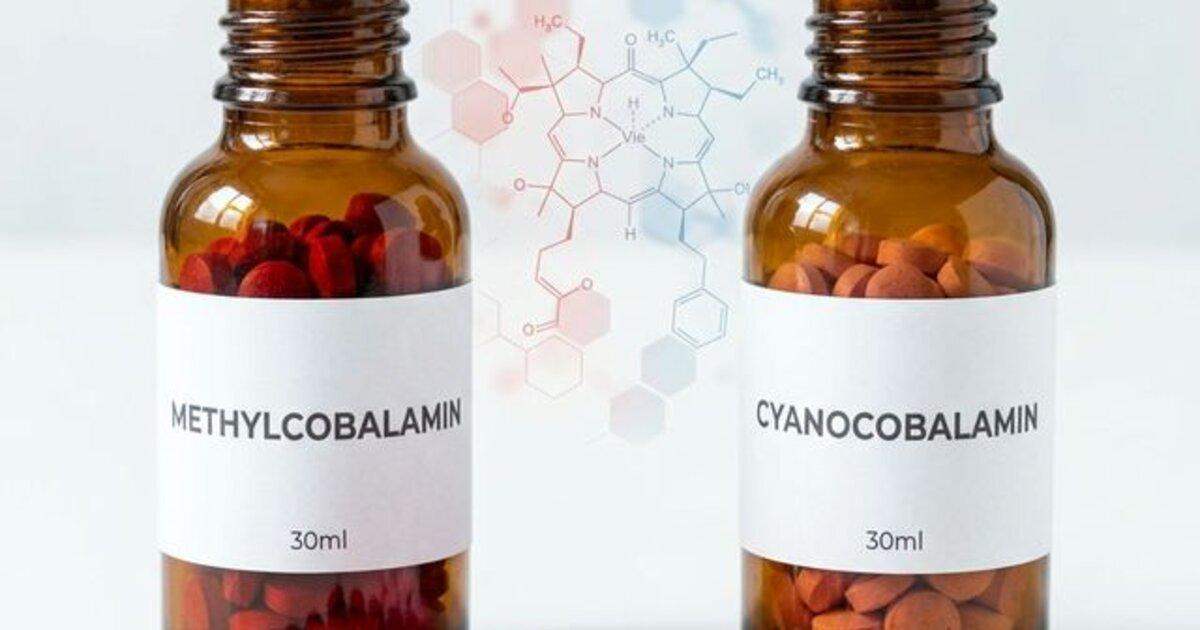
Methylcobalamin is the bioactive B12 form: choose it if you have MTHFR variants, neurological symptoms, or want to skip metabolic conversion. Cyanocobalamin is cheaper and the most-studied form: it releases trace cyanide during conversion, but the amount is toxicologically insignificant (less than one almond). Both prevent and correct deficiency effectively. For most healthy people supplementing preventively (vegans, vegetarians, over 50), cyanocobalamin is fine; for conversion concerns or neurological symptoms, methylcobalamin is the safer default.
This content is for informational purposes only and is not a substitute for professional medical advice, diagnosis, or treatment. Always consult your physician or qualified healthcare provider before starting any supplement regimen.
Vitamin B12 is critical for nerve function, red blood cell formation, and DNA synthesis. Deficiency can cause fatigue, cognitive decline, and irreversible neurological damage if left untreated. When you go to supplement, you will encounter two primary forms: methylcobalamin (the natural, active form) and cyanocobalamin (the synthetic, shelf-stable form). The debate between them generates strong opinions, but the evidence tells a nuanced story.
Here is what you actually need to know.
Methylcobalamin: Overview
Methylcobalamin is one of the two bioactive coenzyme forms of B12 (the other is adenosylcobalamin). It is the form that directly participates in methylation reactions throughout the body — converting homocysteine to methionine and supporting myelin synthesis for healthy nerves.
Key Benefits
- Bioactive — No Conversion Needed: Your cells can use methylcobalamin immediately without metabolic conversion, which may be advantageous for people with genetic variants (like MTHFR mutations) that impair methylation.
- Neurological Support: Some clinical evidence suggests methylcobalamin is superior for nerve repair and neuropathy treatment, though results are mixed.
- Retained in Tissue Longer: Studies show methylcobalamin is retained in liver tissue more effectively than cyanocobalamin.
Typical Dosage
1,000–5,000 mcg per day (sublingual or oral). Higher doses are used because absorption of oral B12 is limited to approximately 1.5 mcg per dose via intrinsic factor, with additional passive diffusion at about 1% of the total dose.
Cyanocobalamin: Overview
Cyanocobalamin is a synthetic form of B12 not found in nature. It is created in laboratories because it is extremely stable and inexpensive to produce. Once ingested, the body cleaves the cyanide group (in trace, harmless amounts) and converts it to methylcobalamin or adenosylcobalamin.
Key Benefits
- Most-Studied Form: The vast majority of B12 research — including studies on deficiency correction, cognitive function, and energy — used cyanocobalamin.
- Superior Stability: It is highly resistant to heat, light, and oxidation, meaning the dose on the label remains accurate over the product's entire shelf life.
- Lowest Cost: Cyanocobalamin is significantly cheaper to produce and purchase.
Typical Dosage
500–2,500 mcg per day (oral or sublingual), or 1,000 mcg via monthly intramuscular injection for deficiency treatment.
Head-to-Head Comparison
| Factor | Methylcobalamin | Cyanocobalamin |
|---|---|---|
| Form | Bioactive coenzyme | Synthetic pro-drug |
| Conversion required | None | Must be converted to active forms |
| Shelf stability | Less stable (light-sensitive) | Very stable |
| Tissue retention | Higher in some studies | Lower — more excreted in urine |
| Clinical evidence base | Growing but smaller | Extensive — most B12 research uses this form |
| MTHFR / methylation issues | Potentially advantageous | May be less efficient for some individuals |
| Cyanide content | None | Trace (toxicologically insignificant) |
| Cost (30-day supply) | $8–$20 | $4–$10 |
| Best For | People with methylation concerns, neurological symptoms | General deficiency prevention, budget-conscious supplementation |
The Verdict
Choose Methylcobalamin if you have known MTHFR polymorphisms, are dealing with neurological symptoms like neuropathy or cognitive decline, or simply prefer a form that does not require metabolic conversion. The higher cost and lower shelf stability are reasonable trade-offs for those who may not convert cyanocobalamin efficiently.
Choose Cyanocobalamin if you are a healthy individual looking to prevent deficiency (especially vegans and vegetarians), want the most clinically validated form, and prefer the lowest cost option. The trace cyanide released during conversion is toxicologically insignificant — you get more cyanide from a single almond.
For most people, both forms are effective at preventing and correcting deficiency. The practical differences matter most for individuals with specific genetic variants or neurological conditions. If in doubt, methylcobalamin is the safer default, but cyanocobalamin is not a bad choice.
Track Your Choice
B12 deficiency develops slowly and can take months to correct. Use Supplement Tracker to log your daily B12 intake, record periodic blood tests (serum B12, methylmalonic acid), and track energy levels over time to see how your chosen form is working.