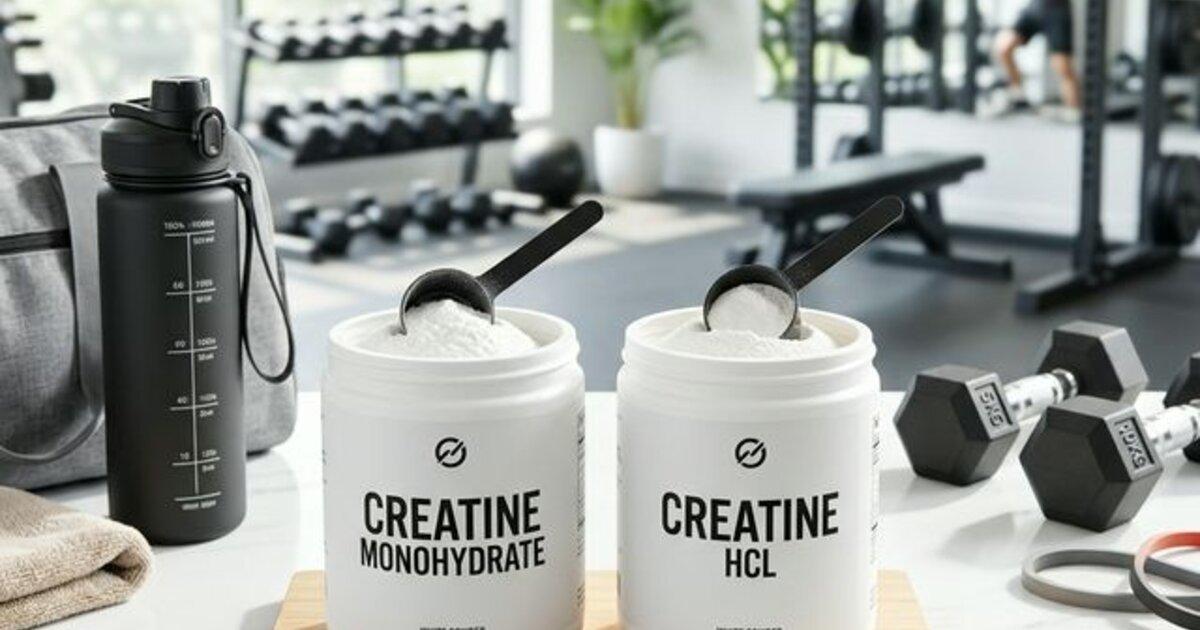
Creatine monohydrate is the default choice for nearly everyone: decades of evidence, proven 20-40% increase in muscle phosphocreatine stores, dirt cheap. The mild water-retention bloat that some users experience usually fades within 1-2 weeks and is actually a sign it is working. Creatine HCL is only worth the 5-10x price premium if monohydrate consistently causes GI issues you cannot resolve by taking with food or splitting the dose. HCL has a tiny fraction of the research.
This content is for informational purposes only and is not a substitute for professional medical advice, diagnosis, or treatment. Always consult your physician or qualified healthcare provider before starting any supplement regimen.
Creatine is arguably the most researched and effective performance supplement in existence, with over 500 peer-reviewed studies confirming its benefits for strength, power, and lean mass. While creatine monohydrate dominates the market, creatine HCL (hydrochloride) has gained popularity with claims of better absorption and less bloating.
But does the science back those claims? Here is the evidence-based comparison.
Creatine Monohydrate: Overview
Creatine monohydrate is the original and most-studied form of creatine. It is simply creatine bound to a water molecule, resulting in a powder that is roughly 88% pure creatine by weight.
Key Benefits
- Gold Standard of Evidence: Virtually all major creatine studies — including those demonstrating a 5–10% increase in strength and a 1–2 kg increase in lean mass over 4–12 weeks — used monohydrate.
- Highly Effective: It saturates muscle creatine stores reliably and predictably.
- Incredibly Affordable: Creatine monohydrate costs as little as $0.03 per serving, making it one of the cheapest supplements per unit of benefit.
Typical Dosage
3–5 g per day, every day (including rest days). A loading phase of 20 g/day for 5–7 days is optional — it saturates stores faster but is not required.
Creatine HCL (Hydrochloride): Overview
Creatine HCL is creatine bonded to a hydrochloride molecule. This changes the chemical properties, increasing water solubility by approximately 38 times compared to monohydrate.
Key Benefits
- Superior Solubility: HCL dissolves easily in water with no gritty residue, making it more pleasant to drink.
- Smaller Doses Claimed: Manufacturers suggest 1–2 g per day is sufficient due to better absorption, though this claim lacks rigorous clinical validation.
- Less GI Distress (Anecdotal): Some users report less bloating and stomach discomfort compared to monohydrate, likely due to the smaller dose and better solubility.
Typical Dosage
1–2 g per day as recommended by most HCL products, though some researchers argue 3–5 g may still be necessary.
Head-to-Head Comparison
| Factor | Creatine Monohydrate | Creatine HCL |
|---|---|---|
| Peer-reviewed studies | 500+ | Fewer than 10 |
| Water solubility | Low (gritty) | ~38x higher |
| Recommended dose | 3–5 g/day | 1–2 g/day (manufacturer claim) |
| Proven muscle benefits | Extensively proven | Limited direct evidence |
| Bloating / water retention | Some users report it | Less reported |
| GI side effects | Mild in some people | Rare |
| Cost per 30 days | $2–$5 | $15–$30 |
| Purity | 88% creatine by weight | ~78% creatine by weight |
| Best For | Maximum proven results at minimum cost | Those who experience GI issues with monohydrate |
The Verdict
Choose Creatine Monohydrate for the vast majority of situations. It is the most researched, most proven, and most cost-effective form of creatine available. The bloating some users experience is typically water retention in muscle tissue (which is actually a sign it is working) and tends to diminish after the first 1–2 weeks.
Choose Creatine HCL only if monohydrate consistently causes stomach discomfort or GI issues that you cannot resolve by taking it with food or splitting the dose. Be aware that HCL costs 5–10 times more and has a fraction of the research supporting it.
The bottom line: monohydrate's decades of evidence, proven efficacy, and rock-bottom pricing make it the default choice. Creatine HCL is a reasonable alternative for the small percentage of people who genuinely cannot tolerate monohydrate, but it is not an upgrade.
Track Your Choice
Creatine works through saturation — consistency matters more than timing. Use Supplement Tracker to make sure you take your daily dose without missing days. Log your training performance alongside supplementation to see strength gains build over 4–8 weeks.