Vitamin C dramatically boosts non-heme iron absorption by reducing ferric iron to the more absorbable ferrous form: 200 mg of vitamin C can increase iron absorption up to 6-fold. Critical for vegetarians and vegans relying on plant-based iron, and for anyone correcting iron-deficiency anemia. Practical: take iron with 200 mg vitamin C on an empty stomach in the morning, far from calcium, coffee, and tea (which inhibit absorption). Orange juice with iron is a classic effective pairing.
This content is for informational purposes only and is not a substitute for professional medical advice, diagnosis, or treatment. Always consult your physician or qualified healthcare provider before starting any supplement regimen.
Iron deficiency is the most common nutritional deficiency in the world, affecting roughly 25 percent of the global population. If you are among the millions taking an iron supplement, there is one simple step that can dramatically improve how much of that iron actually gets into your bloodstream: take it with vitamin C.
This is arguably the most well-established synergistic interaction in nutrition science, and yet many people miss it entirely. Pairing iron with vitamin C is easy, inexpensive, and can make the difference between a supplement that works and one that barely moves the needle.
How the Interaction Works
Iron exists in two forms in food and supplements: heme iron (from animal sources) and non-heme iron (from plant sources and most supplements). Non-heme iron is notoriously difficult for the body to absorb because it tends to form insoluble compounds in the alkaline environment of the small intestine.
Vitamin C (ascorbic acid) enhances non-heme iron absorption through two mechanisms. First, it acts as a reducing agent, converting ferric iron (Fe3+) into ferrous iron (Fe2+), which is the form your intestinal cells can actually transport. Second, vitamin C chelates iron in the stomach and upper intestine, forming a soluble iron-ascorbate complex that remains available for absorption even as pH rises in the lower digestive tract.
The result is a dramatic improvement in iron uptake. Taking vitamin C alongside non-heme iron can increase absorption by two to six times, depending on the dose of vitamin C and the amount of iron consumed.
What the Research Says
Decades of research support this interaction. A classic study published in the American Journal of Clinical Nutrition showed that just 100 mg of vitamin C (the amount in one medium orange) increased non-heme iron absorption by 4.1 times when consumed at the same meal.
More recent research has confirmed these findings and extended them to supplemental iron. A 2020 systematic review found that concurrent vitamin C supplementation significantly improved hemoglobin levels and iron status markers in individuals with iron deficiency, compared to iron supplementation alone.
This interaction is particularly important for vegetarians and vegans, who rely entirely on non-heme iron. Studies show that the iron status of plant-based eaters improves significantly when they consistently pair iron-rich foods or supplements with vitamin C sources.
It is worth noting that vitamin C does not meaningfully enhance heme iron absorption, since heme iron already has its own efficient absorption pathway. But since most iron supplements contain non-heme iron (ferrous sulfate, ferrous gluconate, ferrous bisglycinate), the vitamin C benefit applies to the vast majority of people supplementing with iron.
Practical Recommendations
Making this combination work is straightforward:
- Take iron and vitamin C at the same time — this is a synergistic pair, so simultaneous intake is ideal
- Aim for 100 to 200 mg of vitamin C per iron dose — this is enough to significantly boost absorption without causing digestive issues
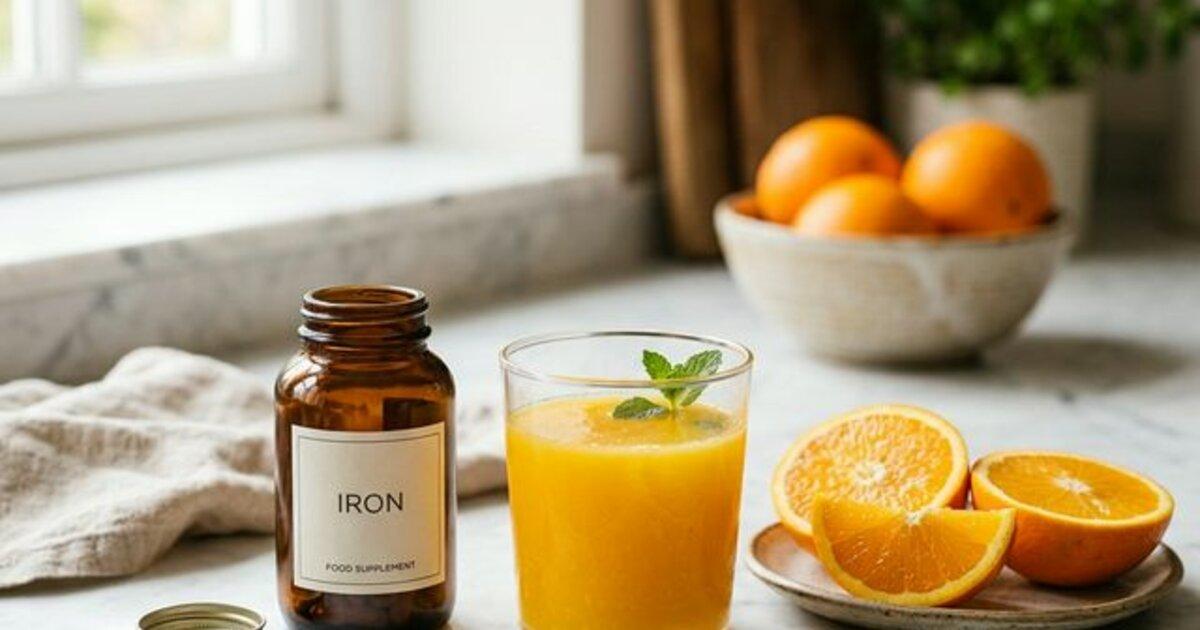
- A glass of orange juice works — if you prefer food over pills, drinking a small glass of orange juice (about 100 mg vitamin C) with your iron supplement is effective
- Take iron on an empty stomach if tolerated — iron absorbs best between meals. If this causes nausea, take it with a small vitamin C-rich snack (strawberries, bell peppers, kiwi)
- Avoid taking iron with coffee, tea, dairy, or calcium supplements — these all inhibit iron absorption and can undo the benefit of vitamin C
- Take iron at a different time from your calcium or zinc — separate by at least 2 hours
Dosage Considerations
The dose of vitamin C needed to boost iron absorption is quite modest:
- 25 to 50 mg vitamin C: Provides a mild improvement in iron absorption. This is roughly the amount in a few strawberries.
- 100 mg vitamin C: Provides a strong absorption boost (approximately 4x increase). This is the sweet spot for most people.
- 200 mg vitamin C: Near-maximum benefit. Going beyond this adds little extra iron absorption.
- 500 mg or more vitamin C: No additional benefit for iron absorption, though the extra vitamin C is not harmful for most people.
For iron dosage, most supplements range from 18 to 65 mg of elemental iron. Higher doses do not necessarily mean more absorption — your body has a ceiling for how much iron it can uptake at once, and higher doses often increase side effects like constipation and nausea. Taking a moderate dose (25 to 45 mg) with vitamin C often outperforms a high dose taken alone.
Key Takeaway
Taking 100 mg of vitamin C alongside your iron supplement is one of the simplest and most effective ways to improve iron absorption. It costs almost nothing, has no downside, and can multiply the amount of iron your body actually uses by several times.
Track Your Timing
Supplement Tracker lets you pair iron and vitamin C as a single reminder so you always take them together. Log your doses, track how you feel over time, and see the impact of consistent, well-timed iron supplementation on your energy and well-being.