Your body makes CoQ10 on its own, and a healthy adult eating normally rarely runs short. The groups with a real case for supplementing are narrow: people on statins with muscle aches, those with diagnosed heart failure (where it has the strongest trial support), people taking it for migraine prevention, and adults over 60 whose natural production has declined. For everyone else, the 'energy boost' marketing is not backed by evidence in people who are not deficient. Ubiquinol absorbs somewhat better than ubiquinone but both work; the bigger absorption lever is taking it with a fatty meal. Typical dose is 100-200 mg/day. It is very safe, the main catch is that it can blunt warfarin and is mostly wasted money if you do not fit one of the real-use groups.
CoQ10 occupies a strange middle ground in the supplement world. It is not a fad ingredient that appeared last year, and it is not a basic vitamin everyone has heard of since childhood. It sits in between: marketed heavily for "cellular energy" and "heart health," recommended by some cardiologists for specific conditions, and bought by millions of people who are not entirely sure why they are taking it. The truth, as usual, is more specific than the marketing. CoQ10 has a small number of genuinely good use cases backed by real trials, and a much larger marketing story that does not hold up in healthy people.
This guide separates the two. Here is what coenzyme Q10 actually does, who has a real reason to take it, who is wasting money, and how to take it so the dose is not flushed straight through you.
What CoQ10 Actually Is
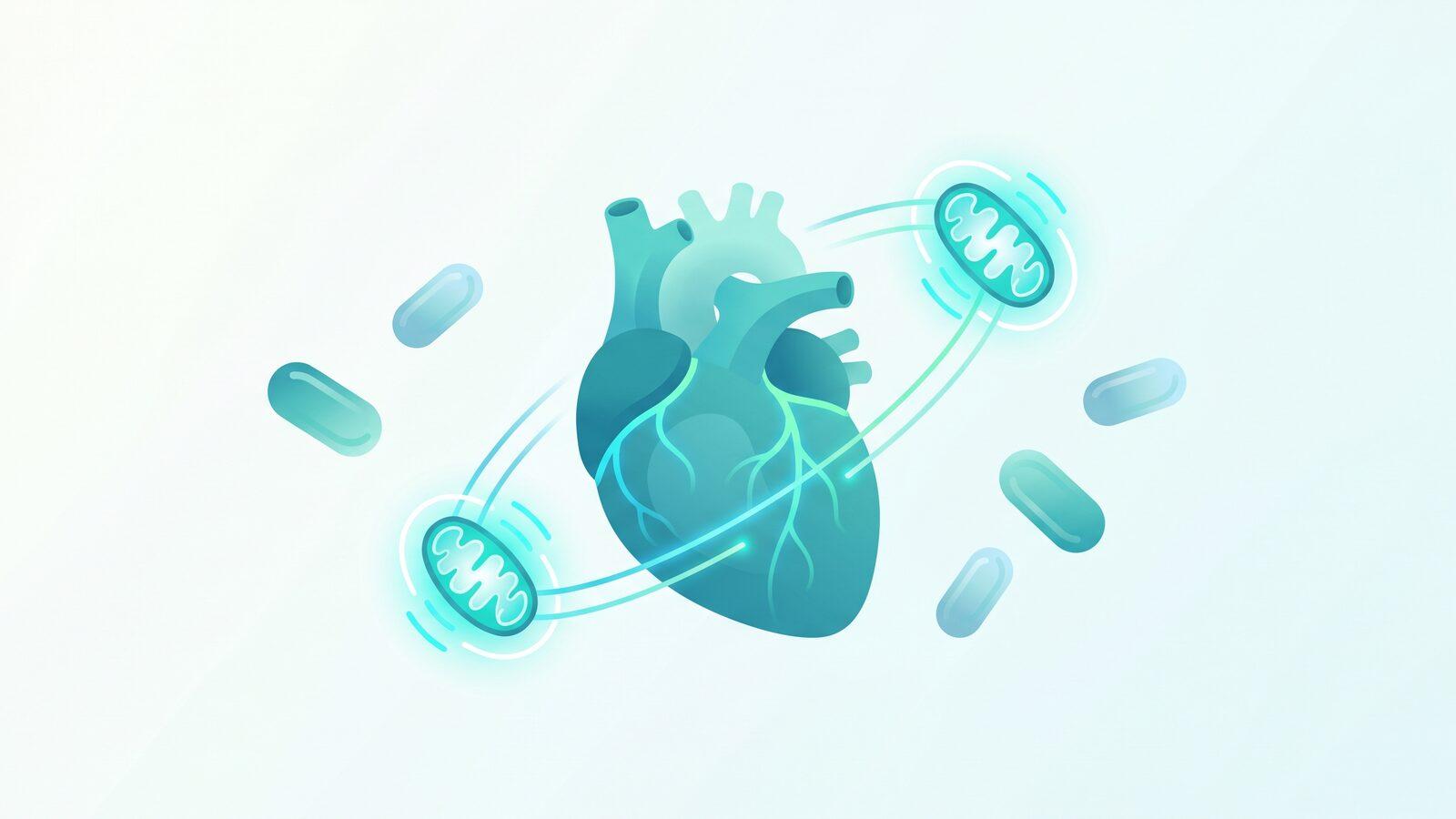
Coenzyme Q10, also called ubiquinone, is a fat-soluble compound your body produces on its own. It lives in the mitochondria, the part of your cells that generates energy, where it shuttles electrons along the chain that ultimately produces ATP, the body's energy currency. It also acts as an antioxidant, protecting cell membranes from oxidative damage.
Because it is involved in energy production in every cell, the highest concentrations are found in the tissues that work hardest: the heart, kidneys, liver, and muscles. That biological fact is the seed of the entire "CoQ10 gives you energy" pitch. The leap the marketing makes is assuming that because CoQ10 is involved in energy production, swallowing more of it produces more energy. In a person who already makes enough, it does not work that way, the same logic trap that drives most supplement over-selling.
Your body's CoQ10 production peaks in your twenties and declines slowly with age. You also get small amounts from food, mainly organ meats, fatty fish like sardines and mackerel, and to a lesser extent nuts and some vegetables. Dietary intake is modest, on the order of a few milligrams a day, far below the 100 to 200 mg in a typical supplement.
Before you commit to one app, it's worth reading our honest comparison of supplement tracker apps.
Two Forms: Ubiquinone vs Ubiquinol
The shelf has two versions and the price difference is real, so it is worth understanding.
- Ubiquinone is the oxidized form. It is cheaper, more stable, and what most older research studied. Your body converts it to the active form after absorption.
- Ubiquinol is the reduced, "active" form. It is marketed as superior and does appear to raise blood levels somewhat more efficiently, particularly in older adults whose conversion may be less efficient.
The honest summary: ubiquinol has a modest absorption edge, but ubiquinone still works and your body converts it fine in most people. The difference between the two forms is much smaller than the difference between taking either one with a fatty meal versus on an empty stomach. If ubiquinol fits your budget, it is a reasonable choice for adults over 60. If it does not, ubiquinone is not a wasted purchase. Do not let the price premium convince you the cheaper form does nothing.
Who Actually Has a Real Reason to Take It
This is the part that matters. CoQ10 is not a "everyone should take this" supplement. The groups with genuine, evidence-supported reasons are specific.
People on statins with muscle symptoms. Statins lower cholesterol partly by blocking the same pathway your body uses to make CoQ10, so they measurably reduce circulating CoQ10 levels. The theory that this contributes to statin-associated muscle pain is plausible and widely discussed. The trial evidence is genuinely mixed: some studies show CoQ10 reduces statin muscle aches, others show no difference from placebo. Despite the mixed data, CoQ10 is cheap, very safe, and the downside of a trial is small. Many clinicians consider it a reasonable thing to try for a few weeks if statin muscle aches are the problem, while being clear it is not guaranteed to work. Never stop a statin on your own to chase muscle symptoms; talk to the prescriber first.
People with diagnosed heart failure. This is where CoQ10 has its strongest evidence. In heart failure, supplemental CoQ10 has been studied as an add-on to standard therapy, and the largest trial suggested benefits on symptoms and outcomes. It is an adjunct, not a replacement for prescribed heart failure medication, and it should be used under a cardiologist's guidance, but this is the use case with the most credible data behind it.
People using it for migraine prevention. CoQ10 has modest evidence for reducing migraine frequency and is included in some neurology guidelines as a preventive option, usually at higher doses around 300 mg/day. It is not a fast fix; like most preventives it needs months, not days, which is true of most supplements that actually work.
Adults over 60. Natural production declines with age, and this is the group where supplementing is most defensible as general support, particularly the ubiquinol form. The evidence here is softer than for heart failure, but the rationale is real.
Who Is Probably Wasting Money
If you are a healthy adult under 50, not on a statin, with no heart condition or migraines, the "energy and vitality" pitch is the main reason you would buy CoQ10, and that is exactly the claim with the weakest support. In people who are not deficient, CoQ10 has not been shown to boost energy, athletic performance, or general wellbeing in any reliable way. The studies that show benefit are almost always in people with an underlying condition or a measurable deficiency, not in healthy people looking for a lift.
This is the same pattern that shows up across the supplement aisle: correcting a deficiency or supporting a diagnosed condition produces real results, and those results get repackaged as a universal benefit for everyone. CoQ10 is a textbook example. It is not useless, it is just useful for specific people, and "tired and busy" is not one of the validated categories.
How to Take It So It Actually Absorbs
CoQ10 is fat-soluble, which makes timing and food the single biggest lever on whether your dose does anything.
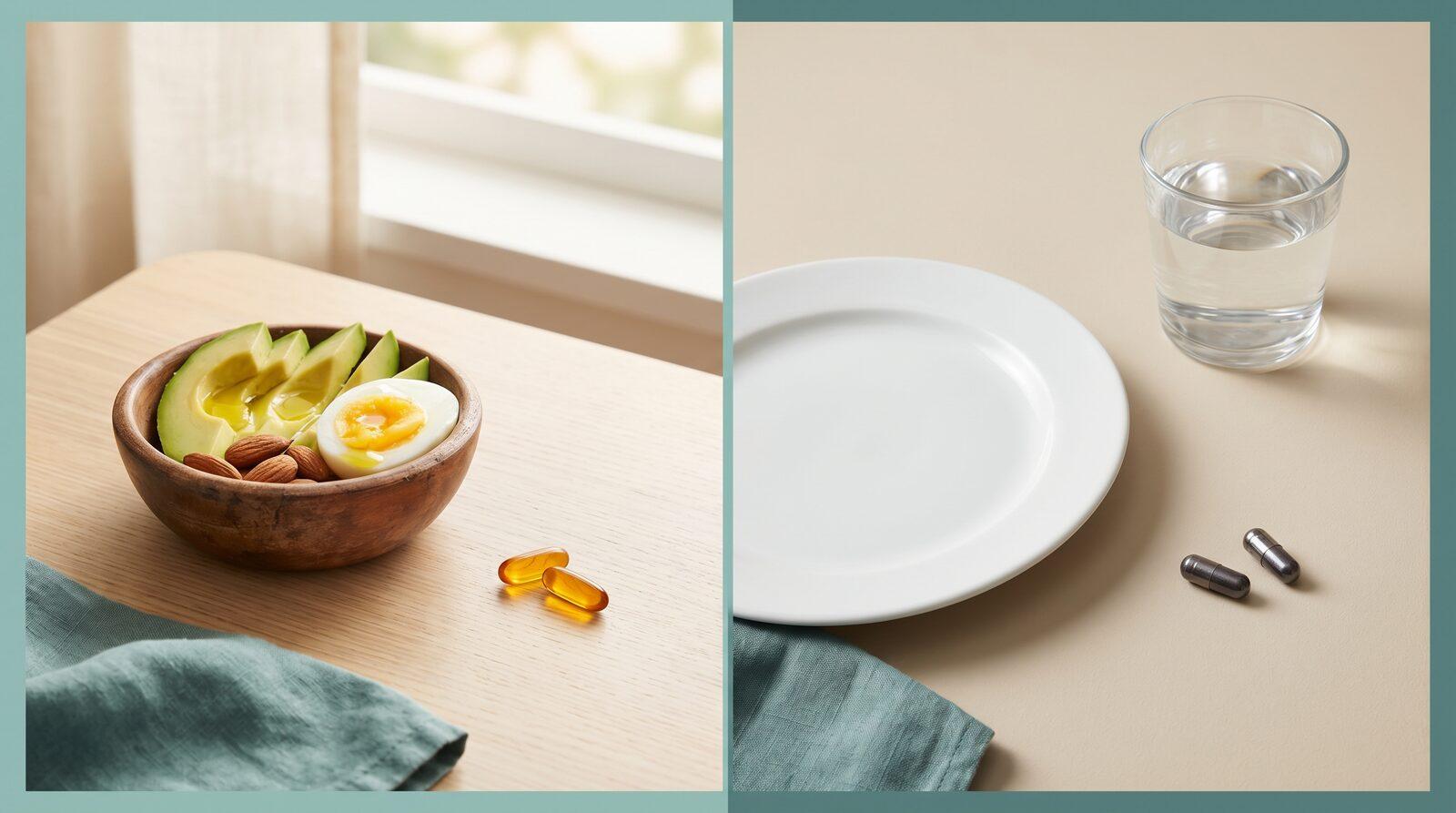
- Always take it with a meal containing fat. Absorption can be several times higher with food than on an empty stomach. This matters more than which form you buy. The general principle is covered in our guide to taking supplements with food versus an empty stomach, and CoQ10 is one of the clearest cases.
- Typical dose is 100 to 200 mg per day for general use and statin support. Migraine prevention protocols often go to 300 mg/day. Heart failure dosing is set by a cardiologist.
- Split larger doses. Above roughly 200 mg, splitting into two doses with two meals improves absorption versus one large dose.
- Be patient. Blood levels rise over a couple of weeks, but any clinical benefit (muscle comfort, migraine frequency) is judged over 4 to 12 weeks, not days.
Safety and Interactions
CoQ10 is one of the better-tolerated supplements. Side effects are uncommon and mild when they occur: occasional stomach upset, nausea, or headache, often improved by splitting the dose or taking it earlier in the day.
The interaction worth knowing:
- Warfarin (a blood thinner). CoQ10 is structurally similar to vitamin K and can reduce warfarin's effect, making the blood thinner less effective. If you take warfarin, do not start CoQ10 without telling your prescriber, who can monitor your INR.
- Blood pressure medication. CoQ10 may modestly lower blood pressure, so people on antihypertensives should be aware of additive effects.
- Pregnancy and breastfeeding. Data are limited, so it is generally avoided unless specifically recommended by a doctor.
There is no established toxic dose; intakes well above the typical range have been used in trials without serious harm. The main risk with CoQ10 is not danger, it is paying for something you do not need.
The Bottom Line
CoQ10 is a real compound with real, narrow uses. If you are on a statin with muscle aches, have diagnosed heart failure, are using it for migraine prevention, or are over 60, there is a defensible case, strongest of all for heart failure under medical care. If you are a healthy younger adult buying it for "energy," the evidence does not support the promise, and your money is better spent elsewhere, perhaps on the heart-health basics like omega-3s at an adequate dose that have far more consistent data behind them.
Whatever you decide, take it with a fatty meal, give it weeks rather than days, and check it against warfarin if that applies to you.
Track Whether It Is Actually Working
CoQ10 is a good candidate for honest tracking precisely because its real benefits are slow and easy to imagine. If you are trying it for statin muscle aches or migraine prevention, the only way to know whether it helps is to log it consistently and watch the right outcome over weeks: how many muscle-ache days, how many migraine days, how you feel on a fixed scale. Note everything else that changed at the same time (a new dose, a different meal timing, more sleep) so you do not credit CoQ10 for something else. A supplement tracker turns a vague "I think it is helping" into a 6 to 12 week record you can actually read, and makes it easy to decide whether the bottle is worth refilling.
This article is for educational purposes and does not constitute medical advice. CoQ10 can interact with warfarin and blood pressure medication, and statin and heart conditions require medical oversight. Talk to a qualified healthcare provider before starting, stopping, or changing supplements, and never stop a prescribed statin on your own.