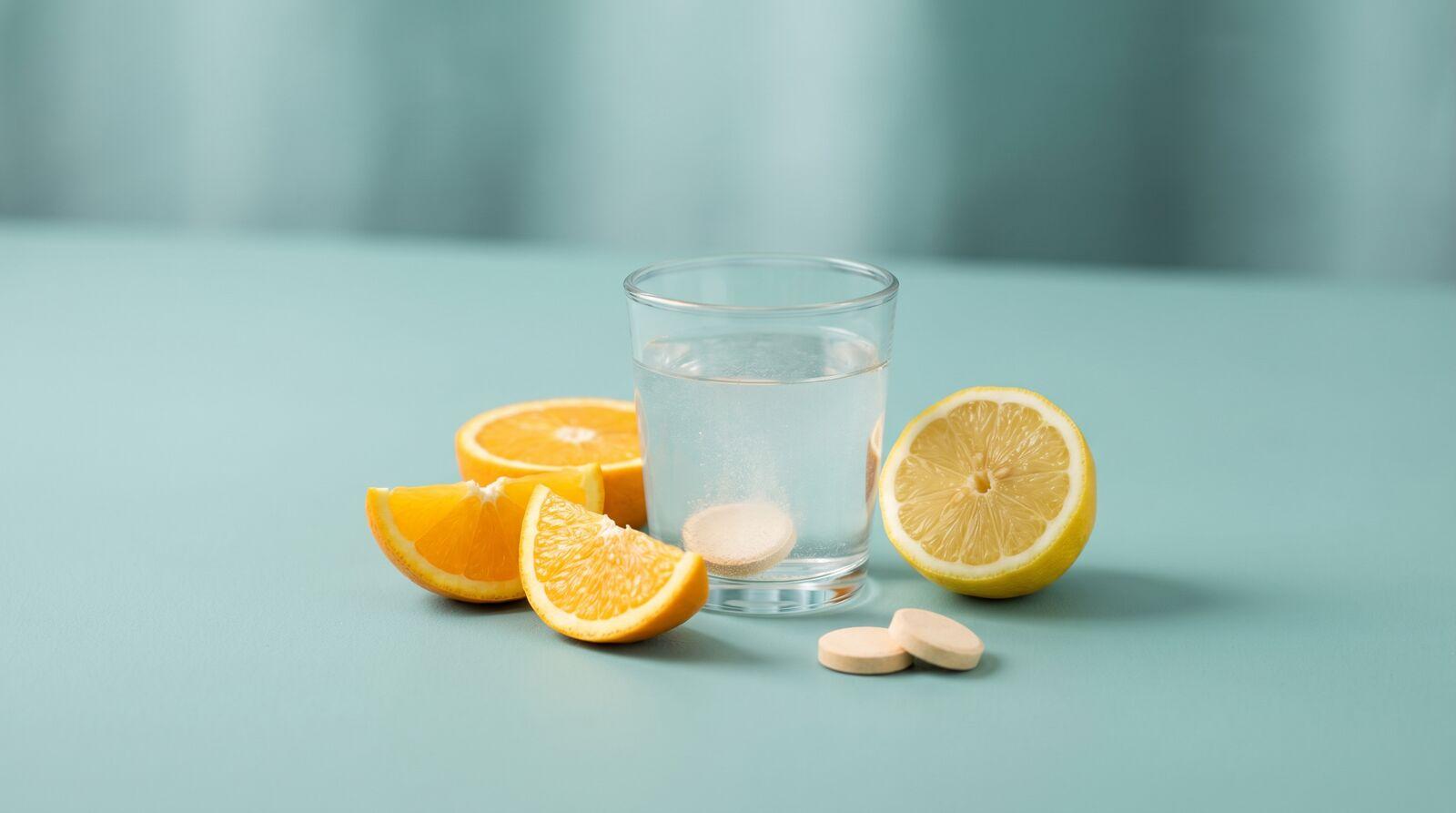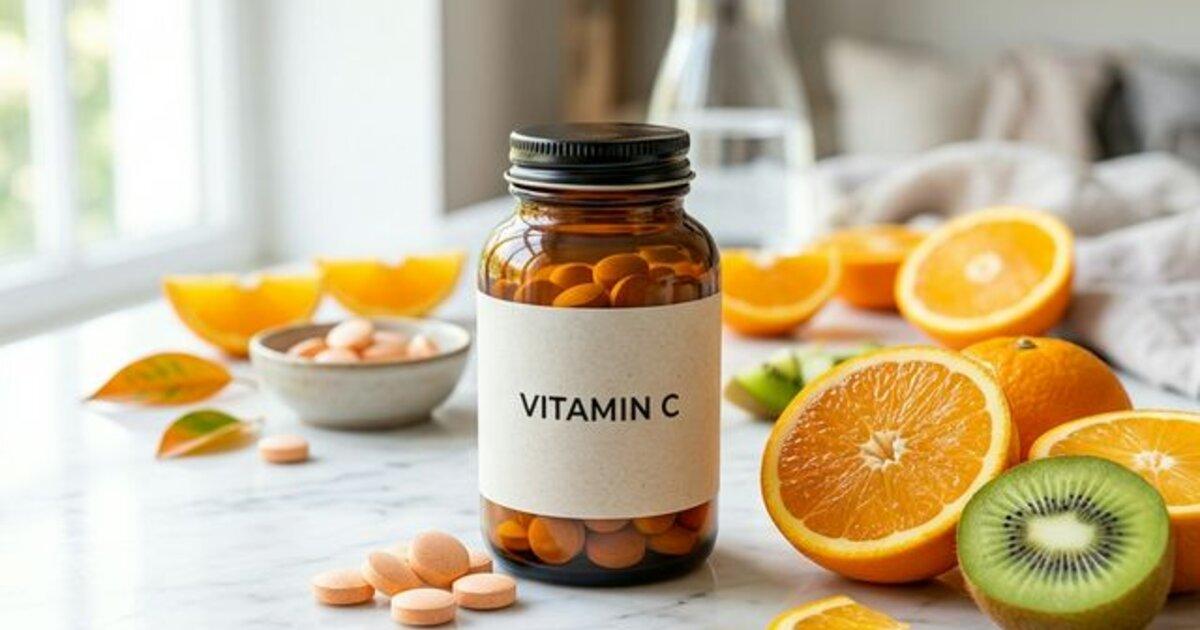
Vitamin C at 500–1,000 mg per day supports immune function, collagen synthesis, antioxidant defense, and iron absorption (up to 67% boost when paired with non-heme iron). Absorption drops sharply above 200 mg per dose, so split larger amounts. Megadosing (5,000+ mg) lacks strong evidence and can cause GI upset, kidney stones in susceptible men, and iron overload in hemochromatosis. Plain ascorbic acid works fine; buffered forms (sodium or calcium ascorbate) are gentler on the stomach. Liposomal forms help if you're targeting higher doses.
This content is for informational purposes only and is not a substitute for professional medical advice, diagnosis, or treatment. Always consult your physician or qualified healthcare provider before starting any supplement regimen.
Quick Reference
- Typical Dosage
- 500–1,000 mg daily
- Best Time to Take
- Morning, with or without food
- Available Forms
- Capsules, Tablets, Powder, Chewables, Liposomal, Gummies
- Also Known As
- Ascorbic Acid, L-Ascorbic Acid, Sodium Ascorbate
Vitamin C is perhaps the most widely recognized supplement in the world. It has been a household name since Linus Pauling championed megadose vitamin C in the 1970s, and it remains one of the most commonly taken supplements today. But beyond the popular notion that "vitamin C prevents colds," this essential nutrient plays a far broader role in human health.
As a water-soluble vitamin, your body cannot store vitamin C in significant amounts, and humans — unlike most animals — cannot synthesize it internally. This means you need a consistent daily intake from food or supplementation. Citrus fruits, bell peppers, strawberries, broccoli, and kiwi are all excellent food sources, but supplementation ensures you meet your needs even on days when your fruit and vegetable intake falls short.
Here is what you should know about vitamin C supplementation — what it can do, what it cannot, and how to take it effectively.
What are the key benefits?
-
Immune function. Vitamin C supports both the innate and adaptive immune systems. It stimulates the production and function of white blood cells, enhances the skin barrier, and acts as a powerful antioxidant. Research shows that regular vitamin C supplementation can reduce the duration and severity of common colds, though it does not prevent them in most populations (athletes and people under physical stress are an exception).
-
Powerful antioxidant. Vitamin C is one of the body's primary water-soluble antioxidants. It neutralizes free radicals, protects cells from oxidative damage, and regenerates other antioxidants like vitamin E. This makes it valuable for long-term health and aging.
-
Collagen synthesis. Vitamin C is an essential cofactor for the enzymes that produce Collagen — the structural protein in skin, joints, tendons, and blood vessels. Without adequate vitamin C, collagen production falters, leading to weakened connective tissue, slow wound healing, and in extreme cases, scurvy.
-
Iron absorption. Vitamin C dramatically enhances the absorption of non-heme iron (the type found in plant foods and supplements). Taking just 200 mg of vitamin C with an Iron supplement can increase absorption by up to 67%. This makes it an essential pairing for anyone dealing with iron deficiency.
-
Skin health. Through its role in collagen production and antioxidant defense, vitamin C supports skin elasticity, reduces UV damage, and may help with hyperpigmentation. Oral supplementation complements topical vitamin C serums.
What is the recommended dose?
- RDA: 90 mg/day for men, 75 mg/day for women
- Smokers: Add 35 mg/day to the RDA (smoking depletes vitamin C)
- Optimal supplemental range: 500–1,000 mg/day for most adults
The RDA is the minimum to prevent deficiency, but many researchers argue that higher intakes provide additional antioxidant and immune benefits. That said, absorption decreases as dose increases — at 200 mg, absorption is nearly 100%, while at 1,000 mg, it drops to roughly 50%. Above 1,000 mg/day, the excess is rapidly excreted in urine.
For most people, 500 mg taken once or twice daily provides a good balance of benefit and absorption efficiency. If you want to take 1,000 mg+, consider splitting it into two doses for better utilization, or choose a liposomal form for enhanced absorption.
Megadosing (5,000–10,000+ mg/day) has vocal proponents but limited high-quality evidence for additional benefits in healthy people. Very high doses increase the risk of side effects.
When is the best time to take it?
Vitamin C can be taken at any time of day, with or without food. Since it is water-soluble, it does not require dietary fat for absorption.
Many people prefer morning dosing because it pairs well with breakfast, and the mild energizing effect of vitamin C (through its role in iron metabolism and neurotransmitter production) is best utilized during waking hours.
If you also take an Iron supplement, taking vitamin C at the same time significantly boosts iron absorption — making this one of the most beneficial supplement pairings you can make.
Tip: If you have a sensitive stomach, consider taking vitamin C with food or choosing a buffered form (sodium ascorbate or calcium ascorbate) to reduce acidity.
What forms are available?
- Ascorbic acid — The most common and well-studied form. Affordable and effective, but can be acidic and irritating to sensitive stomachs.
- Sodium ascorbate / Calcium ascorbate — Buffered (less acidic) forms that are easier on the stomach. Calcium ascorbate also provides a small amount of calcium.
- Liposomal vitamin C — Encapsulated in lipid spheres (liposomes) for enhanced absorption, especially at higher doses. More expensive but may be worth it for people taking 1,000 mg+ daily.
- Ester-C (calcium ascorbate with metabolites) — A patented form that claims better retention. The evidence for superiority over regular ascorbic acid is modest.
- Powder — Pure ascorbic acid powder that can be mixed into water or smoothies. Economical and allows flexible dosing.
- Chewables and gummies — Palatable, especially for children. Check for added sugar content and actual vitamin C dosage.
For everyday supplementation, plain ascorbic acid capsules or buffered ascorbate are cost-effective and perfectly adequate for most people.
What are the side effects and precautions?
Vitamin C is one of the safest supplements, but high doses can cause issues:
- GI symptoms — Doses above 1,000 mg can cause nausea, abdominal cramps, and diarrhea. This is the most common side effect and is the basis for the "tolerable upper intake level" of 2,000 mg/day.
- Kidney stones — High-dose vitamin C supplementation (over 1,000 mg/day) may increase the risk of oxalate kidney stones in susceptible individuals, particularly men. If you have a history of kidney stones, keep doses moderate and stay well hydrated.
- Iron overload risk — Because vitamin C enhances iron absorption, people with hemochromatosis or iron overload should be cautious about high-dose supplementation.
Drug interactions:
- Vitamin C may reduce the effectiveness of certain chemotherapy drugs — consult your oncologist if relevant.
- May affect the accuracy of some blood glucose and urine tests.
- Can interact with blood thinners (warfarin) at very high doses, although this is uncommon at typical supplemental levels.
The Bottom Line
Vitamin C is a safe, affordable, and versatile supplement that supports immune function, collagen production, antioxidant defense, and iron absorption. For most people, 500–1,000 mg per day provides meaningful benefits without the diminishing returns and side effects of megadosing.
Its synergy with Iron and Collagen makes it a valuable team player in a well-rounded supplement routine. Supplement Tracker can help you log your vitamin C alongside these partners, build consistent daily habits, and see how your immunity and energy respond over time. Simple, effective, and worth making a habit.