Liver detox and cleanse supplements are built on a premise that does not survive contact with physiology: the liver is not a filter that clogs and needs periodic flushing, it is a chemical processing plant that works continuously and does not accumulate the toxins it handles. Nothing in a capsule switches that process on or speeds it up. Milk thistle, the category's flagship, is also its most studied ingredient, and the results are underwhelming: a Cochrane review of 18 randomized trials in over a thousand patients with alcoholic and viral liver disease found no convincing effect on mortality once the low-quality trials were excluded, and in hepatitis C its effect on liver enzymes was no different from placebo. It is reliably safe and reliably unremarkable. The rest of the shelf is thinner still. NAC has genuine, FDA-approved value in acetaminophen overdose, but that evidence used intravenous dosing in a hospital, and oral capsules absorb at roughly 6 to 10 percent. TUDCA descends from a real cholestatic-disease drug but has almost no evidence in people with healthy livers. Dandelion rests on three small studies. The sharpest irony is what the data show about supplements themselves: the share of drug-induced liver injury cases attributed to herbal and dietary supplements tripled from 7 percent to 20 percent in a decade, and the six botanicals most often implicated are turmeric, green tea extract, ashwagandha, Garcinia cambogia, red yeast rice, and black cohosh. A 2024 JAMA Network Open analysis estimated 15.6 million US adults had taken at least one of them in the previous month, comparable to the number on prescription NSAIDs. Serious injury remains rare in absolute terms, but it is not zero, and it is more plausible than any benefit a cleanse product offers. The interventions that actually protect a liver are unglamorous: less alcohol, a healthier body weight, and caution with what you swallow.
Searches for liver health have risen roughly sevenfold this year, and the shelf has arrived to meet them. Bottles labeled Liver Cleanse, Liver Detox, and Liver Support promise to flush out the accumulated residue of modern life: alcohol, processed food, pollution, medication, the vague toxic burden that wellness marketing never quite defines. The imagery is consistent and effective, usually a glowing amber organ surrounded by botanicals, and the implied mechanism is plumbing. Something has built up. This will wash it away.
The premise is wrong in an interesting way, and understanding why explains almost everything about the category. This guide covers what the liver actually does, what the evidence says about milk thistle and the other ingredients on those labels, and the finding that ought to reframe the whole aisle: that supplements are themselves a rising cause of serious liver injury, and that several of the botanicals implicated are among the most popular products in the store.
The Word "Detox" Is Doing a Lot of Work
In medicine, detoxification means something specific: the supervised management of acute poisoning or withdrawal, usually in a hospital. In supplement marketing, it means whatever the buyer wants it to mean, because the word has no regulatory definition and no measurable endpoint.
That vagueness is the product's central feature, not a flaw in the copywriting. A cleanse never specifies which toxin it removes, how much of it was present, or how you would confirm it is gone. There is no before reading and no after reading, which means the product cannot fail. You take it, you feel virtuous, and nothing about the experience can contradict the claim.
Ask the question the label avoids, which toxin, in what quantity, cleared by what mechanism, and the category tends to go quiet. That is the first signal worth noticing.
Staying consistent with a daily supplement routine is much easier with a dedicated app, and we have compared the leading supplement tracker apps to help you pick the right one.
Your Liver Is Not a Filter
The plumbing metaphor is the root error. A filter traps particles and clogs, so it needs cleaning or replacing. The liver does not work this way at all.
It is closer to a chemical processing plant. Compounds arrive through the portal vein, enzymes chemically transform them in two broad phases, and the products leave through bile or urine. The liver does not store the things it processes, which means there is no sludge to flush and no backlog to clear. It handles alcohol, medications, and metabolic byproducts continuously, every hour, without prompting, and it does not need a supplement to be told to start.
This has a practical consequence. If your liver is healthy, it is already performing at capacity and nothing in a capsule raises that ceiling. If your liver is genuinely damaged, by heavy alcohol use, viral hepatitis, or metabolic disease, that is a medical condition requiring diagnosis and treatment, and a cleanse product is both inadequate and a dangerous way to delay real care. There is no third category of person, quietly toxic but otherwise fine, that the detox market is actually serving.
Milk Thistle: The Most Studied, and the Most Underwhelming
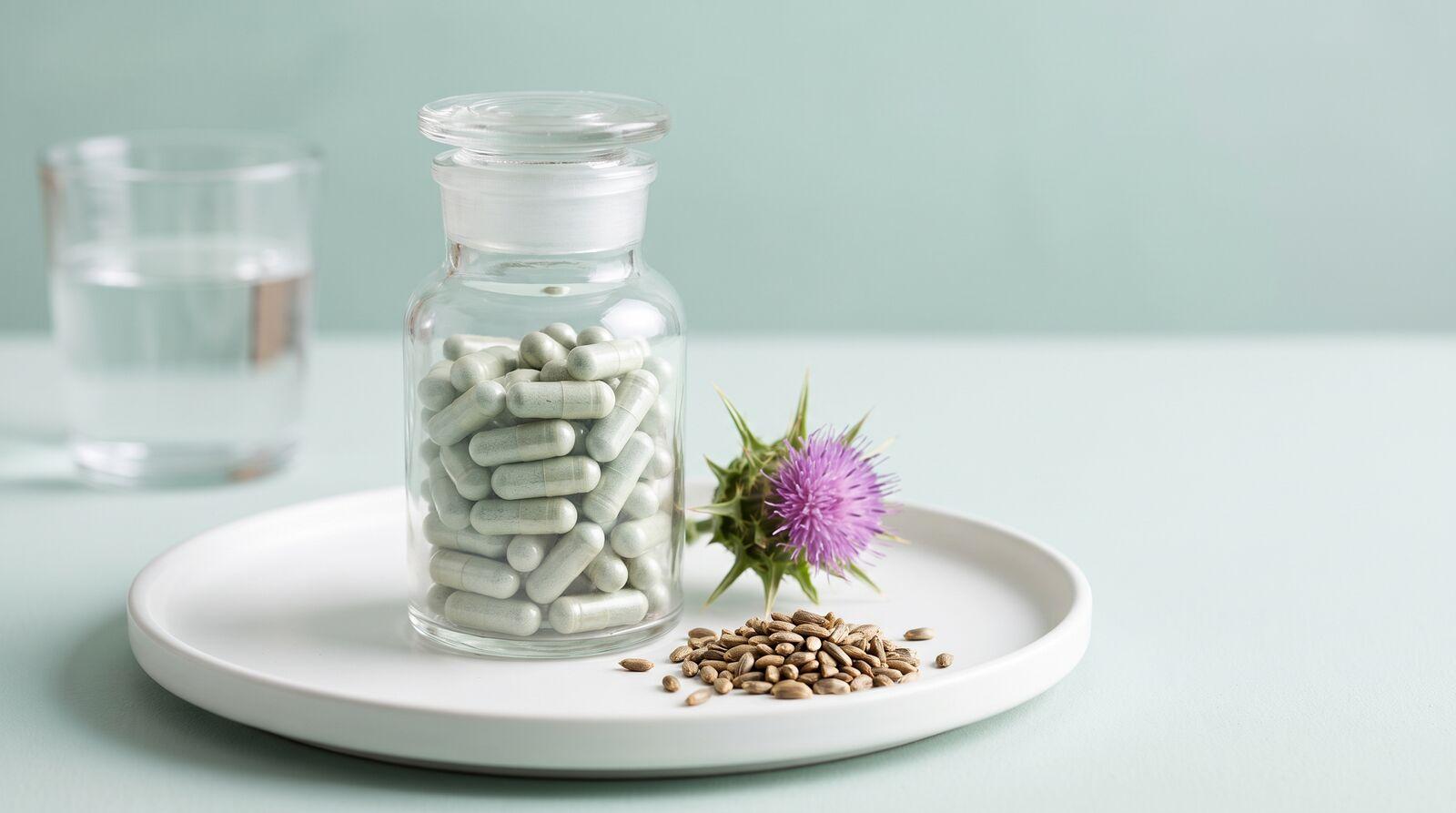
Milk thistle, standardized to its active fraction silymarin, is the flagship ingredient and by far the best researched. It is also the clearest illustration of how a supplement can be genuinely popular, genuinely safe, and genuinely unimpressive at the same time.
A Cochrane systematic review pooled 18 randomized trials covering more than a thousand patients with alcoholic and viral liver disease. The conclusion was that the evidence neither supports nor refutes a benefit, and that once the analysis was restricted to the minority of trials with high methodological quality, roughly a quarter of them, the apparent effect on mortality was no longer significant. That pattern, where a benefit shrinks as study quality improves, is the classic signature of an effect that was never really there.
In chronic hepatitis C specifically, silymarin's effect on ALT, a standard marker of liver stress, was not different from placebo. There is one narrow context with a more encouraging signal: a meta-analysis found silymarin reduced the incidence of liver injury in patients starting tuberculosis medications, which are notably hard on the liver. That is a specific clinical scenario under medical supervision, not a case for daily use by a healthy person.
The fair summary is that milk thistle is well tolerated, has been studied more than almost any other botanical, and has not demonstrated a meaningful benefit for the people most likely to buy it. It is not a scam. It is simply not doing much.
NAC, TUDCA, and Dandelion
The rest of a typical liver formula ranges from real-but-misapplied to essentially unstudied.
- NAC (N-acetylcysteine) has the strongest pharmacological credentials on the list. It replenishes glutathione and is an FDA-approved treatment for acetaminophen overdose, which is a genuine, life-saving use. The catch matters: that evidence comes from intravenous administration in an emergency department, and oral NAC has a bioavailability of roughly 6 to 10 percent because of extensive first-pass metabolism. A capsule is not a small version of the hospital protocol, and there is no good evidence it helps a healthy liver.
- TUDCA is the taurine conjugate of ursodeoxycholic acid, a legitimate prescription drug for cholestatic liver diseases. It is well tolerated and has real data in specific chronically ill populations, including primary biliary cholangitis and transplant patients. What it does not have is meaningful evidence in people with normal liver function, which is who buys the supplement version.
- Dandelion root is a fixture of cleanse formulas and rests on about three small human studies. It is largely a traditional-use ingredient carried into a modern product, and the honest position is that we do not know.
The pattern across all three is familiar from other corners of the supplement aisle: a real mechanism or a real drug sits somewhere upstream, and the retail product borrows its credibility while changing the dose, the route, or the population enough that the original evidence no longer applies. Our guide to choosing a quality supplement covers how to spot that substitution in general.
The Part Nobody Advertises: Supplements Damage Livers
Here is the finding that reframes the entire category. While cleanse products promise to protect your liver, supplements as a class have become a growing cause of serious liver injury.
In the US Drug-Induced Liver Injury Network, the share of cases attributed to herbal and dietary supplements rose from about 7 percent in 2004 to 2005 to roughly 20 percent in 2013 to 2014, close to a tripling in a decade. The six botanicals most frequently implicated are worth naming, because several are enormously popular and none of them are marketed as risky:
- Turmeric and curcumin, now the most commonly reported, with a documented case series in the injury network. We cover the wider picture in our turmeric guide.
- Green tea extract, where the concentrated EGCG in capsules behaves very differently from tea as a drink. Risk rises with prolonged use, taking it fasted, and doses above roughly 800 mg.
- Ashwagandha, generally well tolerated but with a documented set of injury case reports, one of which ended in transplant. Worth reading alongside our full ashwagandha guide.
- Garcinia cambogia, red yeast rice, and black cohosh round out the list.
A 2024 analysis in JAMA Network Open estimated that around 4.7 percent of US adults, about 15.6 million people, had taken at least one of these six in the previous 30 days. For scale, the authors noted that is comparable to the number taking prescription NSAIDs or simvastatin.
Two pieces of honesty are required here. First, exposure is not injury: 15.6 million people taking these products does not mean 15.6 million damaged livers, and industry groups pushed back on that paper for exactly this reason. Serious herbal liver injury remains rare in absolute terms, and most people take turmeric or green tea extract uneventfully. Second, rare is not zero, and susceptibility appears partly genetic, with the HLA-B*35:01 allele showing up in the large majority of green tea extract injury cases. You cannot know in advance whether you carry it.
There is a compounding problem: chemical analyses of supplements linked to confirmed liver toxicity repeatedly find mismatches between what the label lists and what the bottle contains. So the realistic risk is not only the named ingredient at the stated dose, but whatever else made it into a product nobody independently checked. Taking more products multiplies that exposure, which is one more argument for keeping a routine short and deliberate.
What Actually Protects Your Liver
The interventions with real evidence are unglamorous, unpatentable, and considerably more effective than anything in a cleanse bottle.
Alcohol is the dominant modifiable factor. Nothing else on the list comes close for the people most worried about their livers, and no supplement meaningfully offsets heavy drinking. Milk thistle in particular is often bought as a hangover-adjacent insurance policy, which is precisely the use the trial evidence fails to support. If drinking is the actual reason you are researching liver supplements, the honest intervention is the drinking itself, and that is worth being direct about rather than routing around with a capsule. Our sister app Sober Tracker is built for taking that kind of clear-eyed look at alcohol, whether the goal is quitting or simply seeing the real pattern.
Body weight and metabolic health come second. Metabolic dysfunction-associated steatotic liver disease, formerly called fatty liver disease, is now the most common liver condition in the world, and the intervention with the best evidence is losing roughly 7 to 10 percent of body weight. Diet and activity do what no liver supplement has been shown to do.
Be careful what you swallow. Stay within dosing limits on acetaminophen, be cautious combining it with alcohol, and treat concentrated botanical extracts as pharmacologically active rather than automatically safe because they are natural. Third-party testing, from USP, NSF, or Informed Choice, at least tells you the contents match the label.
Get tested if you are actually worried. A liver panel is a cheap, routine blood test. It gives you a real number instead of a vague sense of toxicity, and it distinguishes the person who needs a doctor from the person who needs nothing at all.
If You Take One Anyway, Watch the Right Numbers
Milk thistle is safe enough that taking it is a reasonable personal choice, even knowing the evidence is weak. The problem is that liver supplements are almost uniquely resistant to self-assessment: you cannot feel your liver working, so the only feedback available is a vague sense of wellbeing that expectation alone reliably produces.
If you are going to run the experiment, run it properly. The meaningful evidence is a liver panel before you start and another after 3 to 6 months, not how you feel. Log what you take, the dose, and the brand, and note anything that could plausibly matter alongside it, including alcohol intake and any new supplement or medication. That record is genuinely useful in the situation where it counts: if enzymes ever come back elevated, the first question a doctor asks is what you have been taking, and a precise list beats trying to reconstruct six months from memory. Given that supplements themselves are a leading cause of unexplained liver injury, knowing exactly what went in is the most valuable thing tracking gives you here.
The Bottom Line
Liver detox supplements sell a mechanism that does not exist. The liver is a continuous processing organ, not a filter that clogs, and there is no accumulated residue for a cleanse to remove. Milk thistle, the category's best-studied ingredient, is safe and has not shown a convincing benefit in high-quality trials. NAC and TUDCA borrow credibility from real clinical uses that do not transfer to capsules taken by healthy people. Dandelion is barely studied at all.
The sharper point is the inversion. The most defensible liver-related advice about supplements is not which one to take, but to be careful with the ones you already take, since turmeric, green tea extract, and ashwagandha appear more often in liver injury records than any cleanse product appears in evidence of benefit. Drink less, maintain a healthy weight, respect dosing limits, and get a liver panel if you are concerned. That is the whole protocol, and it costs less than a month of any bottle promising to detoxify you.
This article is for educational purposes and does not constitute medical advice. Liver disease can progress with few symptoms and requires proper diagnosis. If you have known liver disease, hepatitis, or persistently elevated liver enzymes, or you take prescription medication, speak with a qualified healthcare provider before starting or stopping any supplement, including milk thistle, NAC, and TUDCA.