NAD+ is a coenzyme every cell needs for energy production and DNA repair, and its levels do fall with age, which is the entire basis of the NAD+ supplement industry. The precursors sold to raise it, mainly nicotinamide mononucleotide (NMN) and nicotinamide riboside (NR), genuinely work at the first step: controlled trials show both roughly double circulating NAD+ within about two weeks, and plain nicotinamide does not. The problem is everything after that step. A 2025 meta-analysis of ten randomized trials found no benefit for muscle mass, strength, or physical function in older adults, and the broader human literature shows scattered, small hints on things like insulin sensitivity and blood pressure that have not been replicated convincingly. So the accurate summary is that these supplements reliably move a biomarker and have not yet been shown to change how anyone ages or feels. Safety looks reasonable in short trials, with occasional nausea, headache, flushing, or fatigue, but long-term data in healthy people is thin, and anyone with cancer or on medication should get medical advice first because NAD+ metabolism is closely tied to cell growth. On legality, the FDA excluded NMN from the supplement category in 2022 and then reversed that position in a September 2025 letter, so NMN is lawfully sold again in the United States. Given prices that commonly run 50 to 100 dollars a month, NAD+ boosters are best understood as an expensive, plausible, unproven bet: reasonable if you have money to spend on speculative longevity, and a poor first purchase if the basics of your routine are not covered.
Few supplement categories have arrived with as much scientific glamour as NAD+ boosters. The pitch comes wrapped in Harvard labs, mouse studies with dramatic results, and podcast interviews where researchers discuss reversing cellular aging. The bottles cost 50 to 100 dollars a month and the language on them is careful but suggestive: cellular energy, healthy aging, mitochondrial support.
Underneath the marketing there is real science, which is exactly what makes this category hard to evaluate. NAD+ is not invented, the age-related decline is not invented, and the supplements do measurably do something. The question is whether the thing they do is the thing you are buying them for. This guide walks through what NAD+ actually is, what the human trials have and have not shown, where the legal confusion around NMN came from, and how to think about the price tag.
What NAD+ Actually Is and Why It Declines
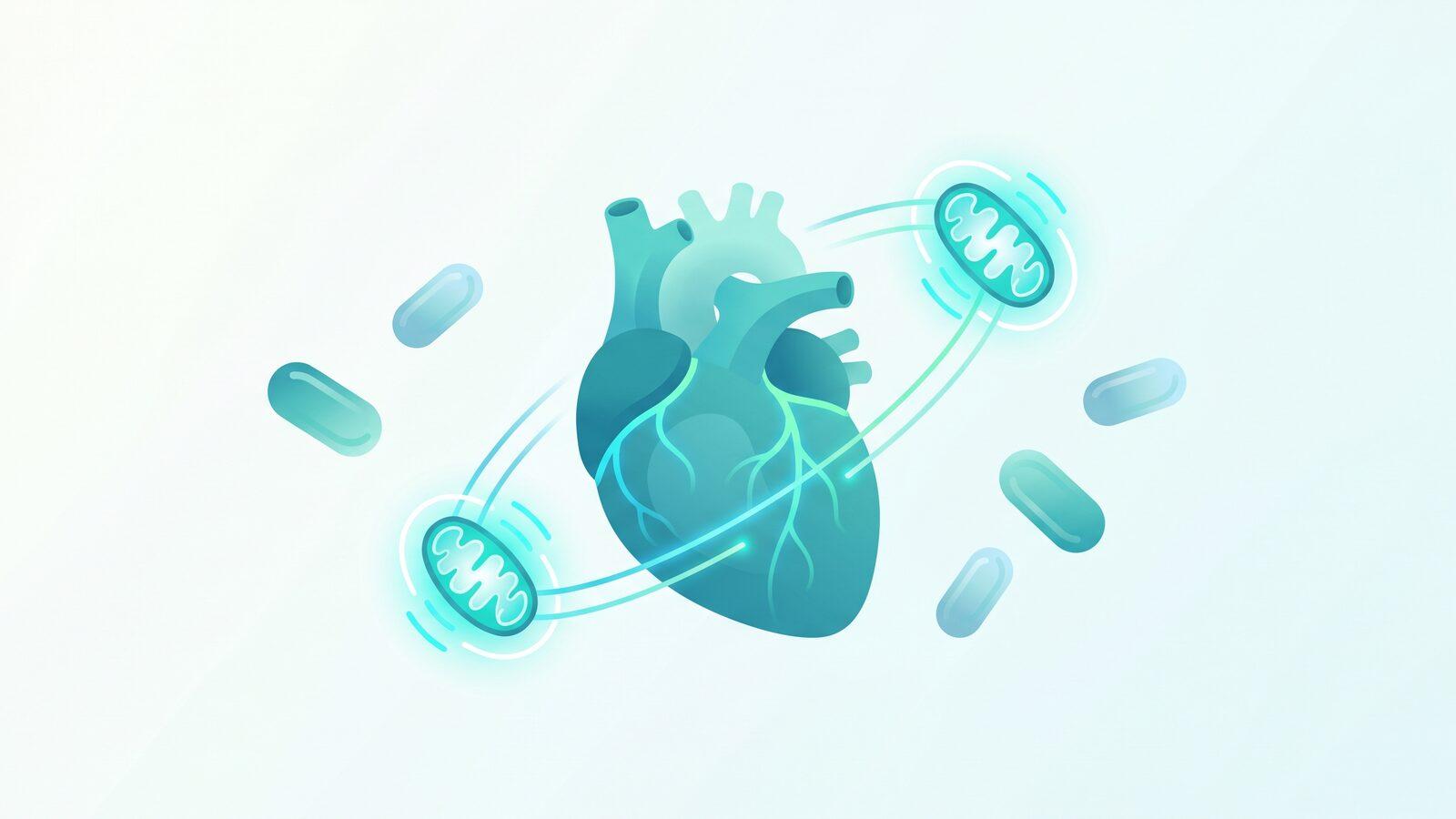
Nicotinamide adenine dinucleotide, NAD+, is a coenzyme present in every cell you have. It is not optional or exotic: it is a workhorse molecule that shuttles electrons during energy metabolism, making it essential for turning food into usable ATP. It is also the required fuel for two families of repair and regulation enzymes, the sirtuins and the PARPs, which are involved in DNA repair and in switching various stress-response genes on and off.
Levels of NAD+ in human tissue decline with age. That observation is reasonably well established and is the seed of the entire industry. The logic runs: NAD+ falls with age, NAD+ is needed for repair and energy, therefore restoring NAD+ should restore some of what age took away.
That is a coherent hypothesis. It is not a demonstrated fact in humans, and the distance between those two things is where most of your money goes. It is the same reasoning pattern that drives the "cellular energy" pitch for CoQ10: a molecule genuinely involved in energy production gets marketed as though swallowing more of it produces more energy in someone who is not deficient.
Your body does not absorb NAD+ well when you swallow it directly, so supplements sell precursors instead: smaller molecules your cells convert into NAD+ internally.
If you're still deciding which app to trust with your routine, our guide to the best supplement tracker apps compares the leading options honestly.
The Main Precursors, Briefly
- Nicotinamide mononucleotide (NMN) is the most hyped, largely because of high-profile mouse research and the researchers associated with it. It sits one step from NAD+ in the salvage pathway.
- Nicotinamide riboside (NR) is the more commercially established precursor, sold under branded ingredient names, and has been through more registered human trials than NMN.
- Niacin (nicotinic acid) is the cheap, decades-old option. It raises NAD+ effectively but causes the well-known flushing reaction at higher doses.
- Nicotinamide (Nam) is a form of vitamin B3 found in many multivitamins and is notably weak at raising circulating NAD+ compared with NMN and NR.
The NMN versus NR debate absorbs a lot of forum energy. Head-to-head human comparison suggests both roughly double circulating NAD+ over about two weeks, with no clear winner. If you are choosing between them, the differences that matter in practice are price, third-party testing, and legal availability where you live, not a decisive advantage in the biochemistry.
What Human Trials Actually Found
Here is where the story splits into two very different halves.
The biomarker half works. Randomized trials consistently show that oral NMN and NR raise NAD+ levels in blood. Roughly doubling circulating NAD+ within two weeks is a real, repeatable result. If someone tells you NAD+ supplements "do nothing," that claim is too strong: they clearly move the number they are supposed to move.
The outcomes half does not, at least not yet. A 2025 meta-analysis pooling ten randomized controlled trials found no benefit for muscle mass, muscle strength, or physical function in older adults, which is precisely the population and precisely the outcomes the marketing points at. Elsewhere in the literature there are scattered signals: small effects on insulin sensitivity in some groups, modest blood pressure changes in others, subjective improvements in fatigue or walking distance in individual small trials. None of these have accumulated into a replicated, convincing benefit, and many of the most enthusiastic studies are small, short, or funded by the companies selling the product.
The blunt summary that fits the current evidence: NAD+ precursors reliably raise a biomarker, and have not been shown to reliably change how humans age, perform, or feel. That is not proof they are useless. Trials so far have mostly been short, in small groups, and testing outcomes that may take years to move. It is proof that anyone promising rejuvenation is running ahead of the data.
Two further gaps deserve mention. Raising NAD+ in blood is not the same as raising it inside the specific tissues you care about, such as brain or muscle, and measuring tissue NAD+ in living people is difficult. And a longevity supplement is, by definition, making a claim about a timescale no completed trial has covered.
The NMN Legal Mess, Explained
If you have seen conflicting headlines about NMN being banned, both were true at different times.
In 2022 the FDA took the position that NMN could not be sold as a dietary supplement, on the grounds that it had been authorized for investigation as a drug before being marketed as a supplement, which triggers a preclusion rule. Products were pulled from some major retailers, while others continued selling, and the category spent three years in limbo.
In a letter dated September 29, 2025, the FDA reconsidered its interpretation and confirmed that NMN is not excluded from the dietary supplement definition. NMN is lawfully sold in the United States again.
The useful takeaway is not the legal detail but what the episode revealed about the market: for three years, an ingredient of contested legal status kept selling in large volumes, from suppliers of wildly varying quality. Independent testing during that period repeatedly found products whose actual NMN content did not match the label. That is an argument for buying only third-party tested products, which is worth doing anyway; our guide to choosing a quality supplement covers what the NSF and USP marks actually verify.
Safety and Side Effects
Short-term safety looks reasonable. Across the published trials, NMN and NR are generally well tolerated at common doses, with side effects that are mild and uncommon: nausea, headache, flushing, fatigue, or digestive upset. Niacin is the exception, where flushing is expected rather than rare.
The honest caveats:
- Long-term data in healthy people is thin. Most trials run weeks to a few months. A supplement taken daily for decades in pursuit of longevity has not been studied on anything close to that timescale.
- Cancer is the theoretical concern worth respecting. NAD+ supports cell growth and DNA repair, which is beneficial in healthy cells and potentially unhelpful in malignant ones. This has not been demonstrated as a human harm, but anyone with a current or past cancer diagnosis should raise it with their oncologist rather than self-prescribing.
- Medication and pregnancy. Data are limited, so anyone pregnant, breastfeeding, or on prescription medication should check first.
Typical doses in trials sit around 250 to 500 mg per day for NMN and 250 to 300 mg per day for NR, taken in the morning. Doses far above the trial range are common in the enthusiast community and are not better supported by evidence, just more expensive.
Is It Worth the Money?
At 50 to 100 dollars a month, NAD+ boosters are among the most expensive things in the supplement aisle, and the cost is what turns an interesting scientific question into a practical decision.
A reasonable way to frame it: this is a speculative bet on a plausible mechanism, not a purchase of a known benefit. If you have disposable income earmarked for longevity experiments, understand that the outcome data is currently absent, and are not skipping better-supported basics to afford it, taking NMN or NR is a defensible choice. If the same 80 dollars a month would otherwise buy protein, creatine, omega-3s, and vitamin D, all of which have far more consistent human evidence, the basics win on expected value every time. Our roundup of cheap supplements that actually work is a useful reality check on how much proven benefit that budget buys elsewhere.
Be especially skeptical of NAD+ IV drips and injections sold at wellness clinics at several hundred dollars per session. They raise the same unanswered outcome question as the capsules, at many times the price.
The Bottom Line
NAD+ decline with age is real. NMN and NR do raise NAD+ levels in humans, and that part of the story holds up. What has not been shown is that raising that number changes anything you would actually notice or that a doctor could measure in your health. A 2025 meta-analysis of the most relevant outcomes in older adults found nothing.
That makes NAD+ supplements a legitimate area of research and a premature product. They may turn out to matter; longer and larger trials are running. Until those report, treat these as an optional experiment for people whose fundamentals are already covered, buy only third-party tested products given the category's quality history, and discount any marketing that talks about reversing aging as if it were settled.
Track It Honestly If You Try It
NAD+ boosters are unusually vulnerable to wishful thinking, because what they promise is diffuse: more energy, better recovery, a vaguer sense of vitality. Those are exactly the things expectation alone can manufacture for a few weeks, especially at this price point, where nobody wants to conclude they wasted the money.
If you decide to run the experiment, run it properly. Pick two or three concrete measures before you start, such as afternoon energy on a fixed 1 to 10 scale, training performance on a specific lift, or sleep quality, and log them daily. Change nothing else at the same time. Give it 8 to 12 weeks, then look at the record rather than your memory. A supplement tracker makes that comparison possible instead of impressionistic, and with a category this expensive, being able to see clearly whether anything changed is worth more than another month of hoping it did.
This article is for educational purposes and does not constitute medical advice. NAD+ precursors have limited long-term human data, and anyone with a current or past cancer diagnosis, taking prescription medication, or who is pregnant or breastfeeding should consult a qualified healthcare provider before starting them.