Turmeric's active compound, curcumin, has genuine anti-inflammatory effects, with the strongest human evidence for osteoarthritis knee pain, where good-quality trials put it in the same range as common anti-inflammatory drugs. The catch is absorption: plain turmeric powder and cheap curcumin capsules are poorly absorbed and mostly pass through you. Formulations that fix this (curcumin with piperine from black pepper, or phytosome/nanoparticle versions) are what the positive trials actually used. Claims about cancer, depression, and general 'detox' are far weaker or unproven. Turmeric is generally safe, but it can interfere with blood thinners, drop blood sugar, and rare liver injury has been reported with high-dose extracts. Cooking spice doses are negligible as medicine; a real dose is a standardized extract.
Turmeric has gone from spice rack to medicine cabinet in about a decade. It is now one of the top-selling herbal supplements in the world, sold as capsules, golden-milk lattes, "anti-inflammatory" gummies, and shots promising everything from glowing skin to a calmer gut to protection against serious disease. The marketing has run far ahead of the science in some places, and lagged behind it in others.
The interesting thing about turmeric is that it is neither the miracle the wellness industry sells nor the placebo the skeptics assume. There is real evidence here, concentrated in a few specific uses, built almost entirely on one compound and one stubborn problem: your body barely absorbs it. Understanding both is the difference between spending money on bright yellow capsules that do nothing and actually getting the effect the good trials found.
This is the honest guide to what turmeric and curcumin do, where the evidence is genuinely solid, where it falls apart, and how to take it so it has a chance of working.
Turmeric Is Not Curcumin
The first thing to get straight is that "turmeric" and "curcumin" are not the same word for the same thing, and the confusion is built into how products are sold.
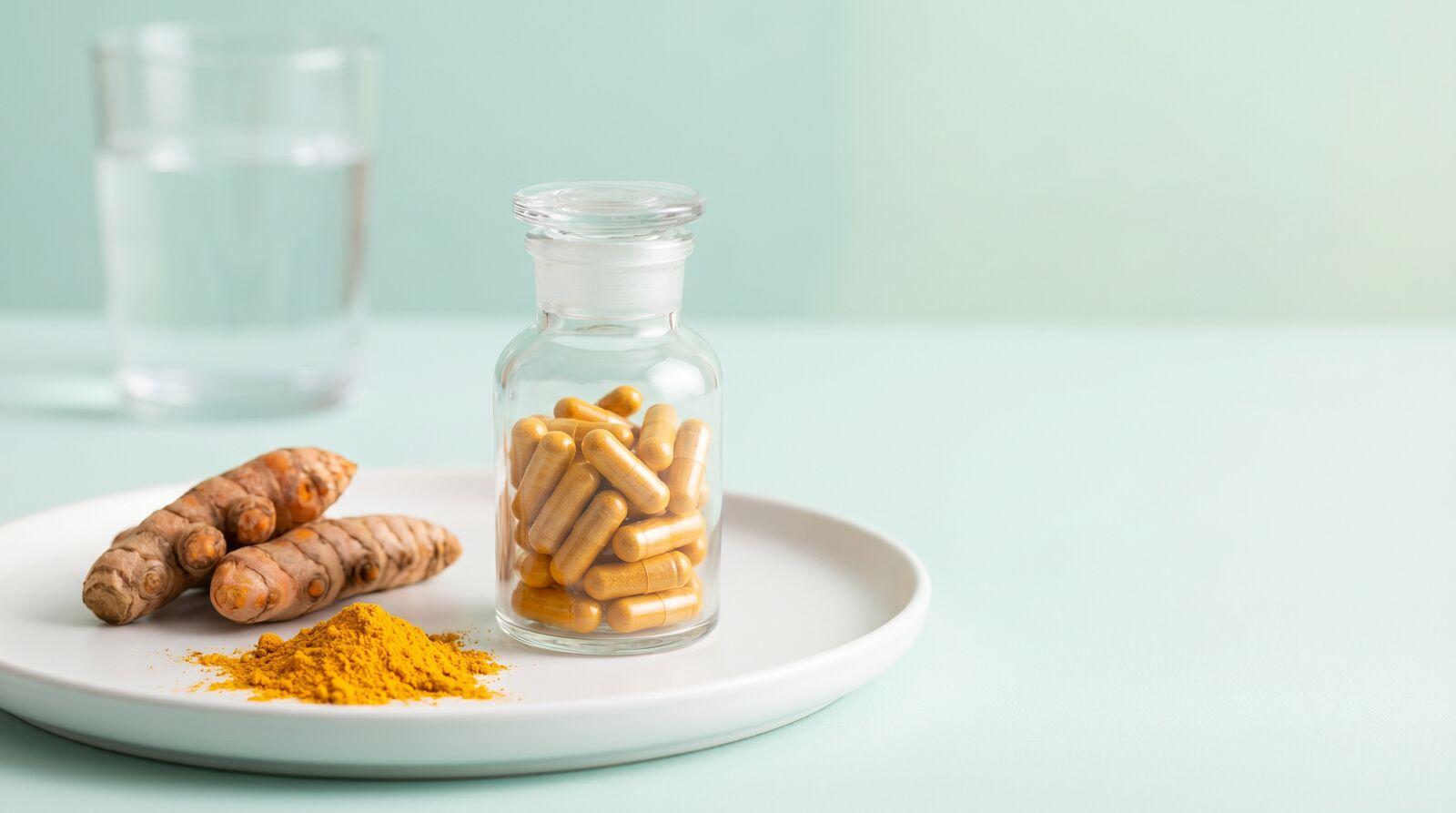
Turmeric is the whole root, the spice you cook with. By weight it is only about 2 to 5 percent curcuminoids, the family of yellow compounds that includes curcumin, the most studied one. The rest is fiber, starch, oils, and other plant matter. When you stir turmeric into a curry or a latte, you are getting a small dose of curcuminoids diluted in a lot of root.
Curcumin is the isolated active compound. Nearly every positive clinical trial you have heard about used a standardized curcumin extract, often concentrated to 95 percent curcuminoids, at doses of hundreds of milligrams to a gram or more per day. To get that much curcumin from culinary turmeric you would need to eat spoonfuls of the spice daily, which nobody does.
So when a study says "turmeric reduced knee pain," it almost always means a concentrated, standardized curcumin extract, not the jar in your pantry. This single distinction quietly invalidates a large share of casual turmeric use. Golden milk is a pleasant drink. It is not the intervention the trials studied.
Staying consistent with a daily supplement routine is much easier with a dedicated app, and we have compared the leading supplement tracker apps to help you pick the right one.
The Absorption Problem
Here is the issue that sits underneath every conversation about turmeric: curcumin is poorly absorbed. Swallowed on its own, most of it is poorly soluble, rapidly metabolized by the liver and gut wall, and quickly excreted. Blood levels after a plain curcumin dose are often barely detectable. A bottle of cheap curcumin capsules with no absorption enhancer is, for many people, an expensive way to make yellow urine.
The supplement industry knows this, and the good products are built specifically to solve it. The main approaches:
- Piperine (black pepper extract). Adding piperine, the active compound in black pepper, can increase curcumin absorption dramatically, with the most-cited study reporting a roughly 2,000 percent increase. This is why so many turmeric supplements list "BioPerine" or black pepper extract, and why traditional recipes pair turmeric with pepper. It is a real, cheap, effective fix.
- Phospholipid (phytosome) formulations, where curcumin is bound to a fat-soluble carrier to improve uptake.
- Nanoparticle and micellar formulations, engineered to keep curcumin soluble and absorbable.
- Taking it with a fatty meal, since curcumin is fat-soluble and absorbs better alongside dietary fat. This is the same logic that applies to other fat-soluble nutrients, and the broader principle is covered in our guide to taking supplements with food versus on an empty stomach.
The practical takeaway is blunt: a curcumin supplement without an absorption strategy is probably not delivering enough to your bloodstream to match the trials. If the label does not mention piperine, a phytosome or micellar formulation, or a comparable enhancer, you are likely buying the wrong version. Knowing how to find that detail is a question of reading the supplement label rather than the marketing on the front.
Where the Evidence Is Genuinely Strong
Curcumin's reputation as an anti-inflammatory is not made up. It does modulate several inflammatory pathways in the body, and that biology shows up most convincingly in one area.
Osteoarthritis, especially knee pain. This is the strongest human evidence curcumin has. Multiple randomized trials and meta-analyses have found that standardized curcumin extracts meaningfully reduce pain and improve function in knee osteoarthritis, with several head-to-head trials putting it in a similar range to common non-steroidal anti-inflammatory drugs like ibuprofen, often with fewer digestive side effects. The trials are not perfect, many are short and some are industry-funded, but the consistency and the plausible mechanism make this the use most worth taking seriously. For joint comfort specifically, curcumin sits alongside the small set of supplements with credible data, a category we also touch on in the collagen supplement guide.
General markers of inflammation. Across various conditions, curcumin supplementation tends to lower circulating inflammatory markers such as CRP. Whether that translates into how you feel or any long-term outcome is less certain, but the biological signal is consistent.
These are the claims you can lean on. Notice how narrow they are compared to the marketing.
Where the Evidence Is Weak or Overstated
Most of what turmeric is sold for falls into this bucket: plausible, sometimes promising in early or lab studies, but not established in humans.
- Cancer prevention or treatment. Curcumin does interesting things to cancer cells in a dish, which is where most of the dramatic claims come from. In actual humans, it is not an established treatment or preventive, and the poor absorption makes reaching meaningful tissue levels difficult. Treat any "turmeric fights cancer" headline as a lab finding, not medical reality.
- Depression and mood. A handful of small trials are suggestive, but the evidence is thin and the studies are mixed. It is not a substitute for actual treatment.
- Heart disease, diabetes, Alzheimer's. Early signals exist, large outcome trials do not. Interesting research direction, not a reason to buy.
- "Detox" and immune-boosting. These are marketing language, not measurable effects. The body does not need turmeric to detoxify, and "boosting immunity" is not a thing a single spice extract reliably does.
- Skin glow and general wellness. Mostly placebo and good lighting.
None of this means curcumin is useless. It means the honest case for it is narrow: a reasonable, generally well-tolerated option for joint pain and inflammation, not a cure-all.
Safety and Interactions
Turmeric as food is extremely safe, eaten by hundreds of millions of people daily. Concentrated curcumin extracts are also well tolerated by most people, but "natural" does not mean "no interactions," and a few are worth knowing:
- Blood thinners. Curcumin can have a mild blood-thinning effect and may add to medications like warfarin or antiplatelet drugs. If you take a blood thinner, talk to your doctor before adding a curcumin extract, and mention it before any surgery.
- Blood sugar. Curcumin can lower blood sugar, which is usually mild but can matter if you take diabetes medication.
- Liver injury. This is the one that has grown in importance. There have been documented cases of liver injury linked to high-dose turmeric or curcumin supplements, some involving highly absorbable formulations or products contaminated with other substances. It is rare relative to how many people use turmeric, but it is real, and it is more associated with the high-potency extracts than with culinary use.
- Iron absorption. Curcumin can bind iron and may reduce absorption, which is worth noting if you already manage low iron.
- Gallbladder and kidney stones. Turmeric is high in oxalates and can stimulate the gallbladder, so people with a history of kidney stones or active gallbladder disease should be cautious.
The general rule: spice doses in food are essentially risk-free, but a real medicinal dose is a drug-like intervention and deserves the same "tell your doctor" treatment as any other supplement with pharmacological effects.
How to Take It If You Want to Try
If your goal is joint pain or general anti-inflammatory support and you want to give curcumin a fair test, do it the way the successful trials did:
- Use a standardized extract, not the spice. Look for a curcumin or curcuminoid extract, typically standardized to around 95 percent curcuminoids.
- Insist on an absorption strategy. Either added piperine (black pepper extract / BioPerine) or a phytosome, micellar, or nanoparticle formulation. Without one, you are likely under-dosing your bloodstream no matter what the capsule says.
- Typical trial doses run from roughly 500 mg to 1,000 mg of curcumin per day, often split into two doses, taken with a meal that contains some fat.
- Give it weeks, not days. Anti-inflammatory benefits in the trials build over several weeks. Judging it after three days tells you nothing, a theme we return to in our guide on how long supplements take to work.
- Skip it, or check first, if you take blood thinners or diabetes medication, are pregnant, have gallstones or a history of liver problems. These are the situations where a quick conversation with a clinician is genuinely worth it.
For overall inflammation, it is also worth remembering that curcumin is one tool among several with real evidence. Adequate omega-3 intake, sleep, and movement do more for systemic inflammation than any single capsule, and curcumin works best as an addition to those basics rather than a replacement for them.
Track Whether It Actually Helps You
Turmeric is a perfect example of why honest tracking beats vibes. The benefit, when it exists, is gradual and easy to confuse with a good week, the weather, or simply wanting the expensive capsules to be working. Pain and stiffness fluctuate naturally, so a few good days after starting a supplement feel like proof when they may be coincidence.
The way to actually know is to log it: record the dose and formulation you are taking, rate your joint pain or whatever symptom you are targeting on a simple scale at the same time each day, and note the other things that move the needle, your activity, sleep, and stress. Run it as a real trial of six to eight weeks, then look at the trend rather than your memory of it. If the line genuinely improved and held, keep going. If it did not budge over two months on a properly absorbed dose, the honest conclusion is that it is not your supplement, and the money is better spent elsewhere. That disciplined approach, picking one variable and giving it enough time, is the whole philosophy behind tracking supplements consistently.
Turmeric earns a modest, real place in the supplement world: a reasonably evidenced option for joint pain and inflammation, badly undermined by absorption problems and wildly oversold for everything else. Buy the version that actually absorbs, use a real dose, respect the handful of genuine interactions, and let a few weeks of honest tracking tell you whether the bright yellow capsule deserves a permanent spot in your routine.
This article is for educational purposes and does not constitute medical advice. Turmeric and curcumin extracts can interact with blood thinners, diabetes medication, and other drugs, and high-dose extracts have rarely been linked to liver injury. Talk to a qualified healthcare provider before starting, stopping, or changing supplements, especially if you take medication, are pregnant, or have a medical condition.