Vitamin C does NOT prevent colds in the general population. It reduces cold duration by about 8% (less than 1 day on average) in healthy adults when taken daily; the cold-prevention effect only appears in athletes and people under physical stress. Mega-dosing (5,000+ mg) at the first sniffle is useless and can cause GI distress. The honest dose: 500-1,000 mg daily for general antioxidant and collagen support, split into two doses (absorption drops sharply above 200 mg per dose).
The moment your throat starts to feel scratchy, someone in your life will tell you to load up on vitamin C. It is the most reflexive piece of health advice in the world, repeated so often that almost nobody stops to ask whether it is true. We dissolve fizzy tablets, we drink the orange-flavored sachets, we double the dose at the first sniffle, and we feel like we are doing something.
Here is the uncomfortable part. The single most common reason people take vitamin C, stopping a cold, is the thing it does worst. The evidence on this has been remarkably stable for decades, and it does not say what the marketing says. Vitamin C is a genuinely important nutrient with a few real uses. Preventing the average person's cold is not one of them.
This is the honest guide to what vitamin C actually does, how much you really need, why megadosing is mostly expensive urine, and the narrow situations where it earns its place.
Where the Cold Myth Came From
The vitamin C and cold story is not folk wisdom that grew organically. It has a single famous origin: Linus Pauling, a two-time Nobel laureate, who in the 1970s published a popular book arguing that gram-level doses of vitamin C could prevent and treat the common cold. His scientific reputation gave the claim enormous weight, and the supplement industry never looked back.
The problem is that Pauling's enthusiasm ran far ahead of the data, and the decades of controlled trials that followed did not vindicate the strong version of his claim. What they produced instead is one of the better-studied questions in all of supplement science, which means we are not guessing here. We have the answer, and it is nuanced rather than flattering.
Before you commit to one app, it's worth reading our honest comparison of supplement tracker apps.
What the Evidence Actually Shows
The body of research on vitamin C and colds is large and consistent enough to draw firm conclusions. It splits cleanly into three separate questions that get sloppily merged in everyday advice.
Does taking vitamin C every day prevent you from catching colds? For the general population, no. Regular daily supplementation does not meaningfully reduce how often the average healthy person gets sick. This is the headline finding, and it is the exact opposite of what most people believe they are buying.
Does taking vitamin C every day make colds shorter or milder if you do catch one? Modestly, yes. Consistent daily supplementation taken before you get sick shortens cold duration by roughly 8 percent in adults and around 14 percent in children. On a week-long cold that is a fraction of a day. It is real, it is measurable, and it is far too small to feel.
Does starting vitamin C after symptoms appear help? Essentially no. Beginning a megadose once the scratchy throat has already arrived has not shown a reliable benefit in trials. This is the single most common way people actually use vitamin C, and it is the one with the weakest support.
There is one striking exception. In people under extreme, sustained physical stress, marathon runners, soldiers training in subarctic conditions, skiers, regular vitamin C roughly halved the incidence of colds. That is a large effect, but it applies to a very specific population pushing their bodies to an extreme, not to someone with a desk job and a sore throat.
| Scenario | Does vitamin C help? | Practical meaning |
|---|---|---|
| Daily use, general population, preventing colds | No | The most popular use is unsupported |
| Daily use, shortening a cold you still catch | Slightly (about 8% shorter in adults) | Too small to notice |
| Starting it after symptoms begin | No reliable effect | The way most people use it |
| Daily use under extreme physical stress | Yes, roughly halves incidence | Marathoners, soldiers, not desk workers |
The summary that survives all of this: vitamin C is not a cold cure, it is at best a very mild duration-shortener for people who were already taking it consistently, and the reactive "megadose at the first sign" ritual is the least effective approach of all.
How Much You Actually Need
Step away from colds and the picture gets clearer, because vitamin C is genuinely essential. Without it you develop scurvy, and the dose required to prevent that is tiny: well under 100 mg a day.
The official requirements are modest:
- Adult women: about 75 mg per day
- Adult men: about 90 mg per day
- Smokers: add roughly 35 mg, because smoking measurably depletes vitamin C
- The amount to prevent deficiency outright is only around 10 mg
For perspective, a single medium orange delivers roughly 70 mg, and a cup of raw red bell pepper or broccoli can exceed your entire daily requirement on its own. Strawberries, kiwi, citrus, peppers, and most leafy greens are dense sources. This is the quiet reason the supplement underperforms for so many people: a reasonably varied diet already covers the requirement, so an extra 1,000 mg tablet is added on top of sufficiency, not filling a gap.
True deficiency is real but concentrated in specific situations: very limited or restrictive diets, heavy smoking, alcohol use disorder, certain malabsorption conditions, and severe food insecurity. If you eat produce most days, you are very unlikely to be deficient.
Why Megadosing Is Mostly Expensive Urine
The 1,000 mg and higher products invite an obvious question: if a little is good, is a lot better? The body's handling of vitamin C answers this clearly, and the answer is no.
Vitamin C absorption is tightly regulated. At intakes around 100 to 200 mg per day, plasma levels approach saturation and the body absorbs the vast majority of what you take. As the dose climbs, the fraction you actually absorb falls, and the excess is excreted by the kidneys. Past roughly 1 gram, a large share of a megadose simply leaves in urine within hours. You are paying for a brief, expensive spike, not a meaningful reserve, because this is a water-soluble vitamin the body does not stockpile.
High chronic doses are not just wasteful, they carry minor downsides:
- Digestive upset. Doses above 1 to 2 grams commonly cause bloating, cramps, and diarrhea. This "bowel tolerance" ceiling is the body telling you the dose is too high.
- Kidney stones. Vitamin C is metabolized partly to oxalate. Chronic high-dose supplementation has been associated with an increased risk of calcium oxalate kidney stones, particularly in men with a history of stones.
- Lab interference. Very high intake can skew certain blood and urine test results, including some glucose readings.
None of this makes vitamin C dangerous at sane doses. It makes the megadose strategy pointless: more does not mean more benefit, it means more cost and, eventually, more time in the bathroom.
Does the Form Matter? Liposomal, Buffered, Ester-C
Supplement marketing has moved on from "more" to "better absorbed," and the shelves now carry liposomal vitamin C, Ester-C, buffered ascorbates, and food-derived versions, usually at a steep premium over plain ascorbic acid.
For the overwhelming majority of people, plain ascorbic acid at a modest dose is already absorbed efficiently, so the premium forms are solving a problem most users do not have. Liposomal formulations can raise plasma levels somewhat compared with equivalent plain doses, but whether that translates into any health outcome the average person would notice is unproven. Buffered or "gentle" forms (calcium or sodium ascorbate, Ester-C) are mainly about reducing stomach irritation for people sensitive to the acidity, which is a comfort feature, not a potency upgrade. The same skepticism that applies to reading any supplement label applies here: a more elaborate delivery system on the front of the bottle is a marketing decision before it is a clinical one. If plain ascorbic acid upsets your stomach, a buffered form is a reasonable fix. Otherwise the cheapest version does the job.
The Uses That Actually Hold Up
Dismissing the cold myth is not the same as dismissing vitamin C. It does several things that are well supported, just not the thing it is famous for.
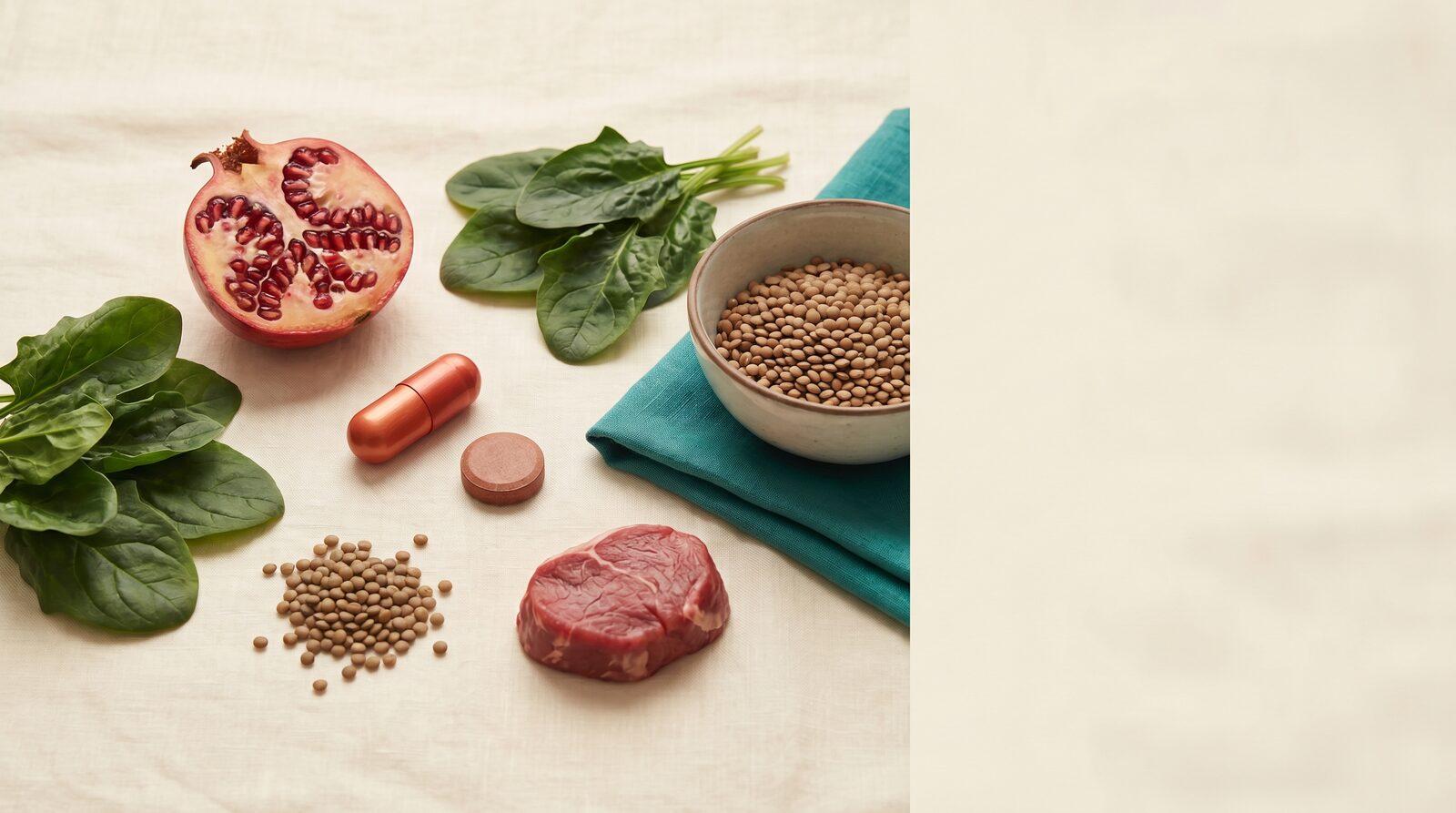
It is required for collagen synthesis, which is why scurvy presents with bleeding gums and poor wound healing. It functions as an antioxidant. And it has one genuinely useful, practical supplement application: it substantially increases the absorption of non-heme (plant and supplement) iron. Taking vitamin C alongside an iron supplement or an iron-rich plant meal measurably improves uptake, which is why it comes up directly in the guide to iron supplements and who actually needs them. If you take iron, pairing it with a vitamin C source is one of the few "take these together" moves with solid evidence behind it.
For immune support specifically, the more interesting supplement conversation is usually about zinc, where the evidence for shortening colds, while still modest and form-dependent, is somewhat stronger than for vitamin C. That trade-off is worth understanding before you reach for the orange tablets by reflex, and it is covered in zinc for immunity: cold defense or marketing hype.
The Sensible Protocol
Putting the evidence together, a rational approach to vitamin C looks nothing like the cultural ritual:
- Prioritize food. If you eat fruit and vegetables most days, you are very likely already meeting your requirement and a supplement adds little.
- If you supplement, keep it modest. Something in the 100 to 250 mg range covers the requirement comfortably with full absorption. There is no benefit to routinely exceeding 1 gram.
- Do not split your day around it. Take it with a meal if higher doses bother your stomach. Splitting a large dose only matters because the body cannot absorb a large bolus, which is itself an argument for not taking a large bolus.
- Pair it with iron, not with a cold. Its strongest practical use is improving iron absorption, not chasing away a virus that already arrived.
- Skip the panic megadose. Starting grams of vitamin C at the first scratchy throat is the single least supported way to use it.
- Consider it seriously only if you are in a deficiency-risk group or under sustained extreme physical exertion, where regular use genuinely lowers cold incidence.
Why Tracking Beats Believing
The reason the vitamin C myth has survived sixty years of unflattering evidence is that nobody tests it on themselves properly. People take a megadose reactively when they already feel a cold coming, the cold runs its normal week-long course, and the supplement gets credit for the recovery that was always going to happen. The ritual feels effective precisely because it is never observed honestly.
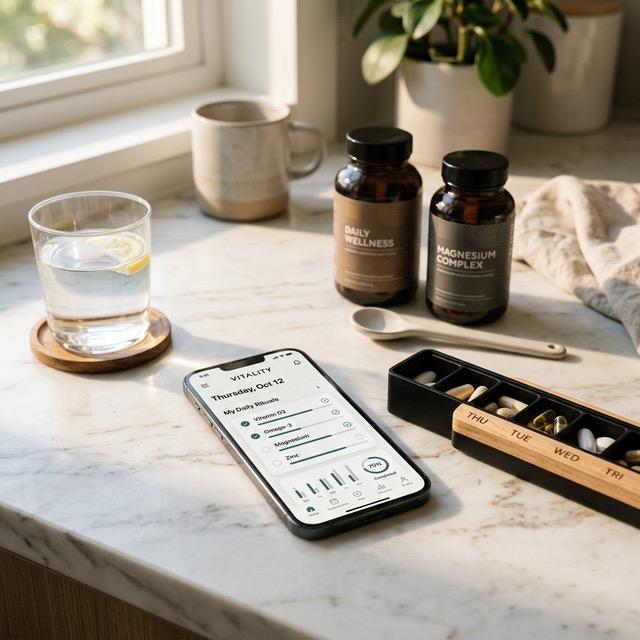
This is where a tracking habit changes the conversation. If you actually log what you take and when, alongside how you feel, you stop relying on the story your memory tells and start seeing the pattern: the colds that came anyway, the megadoses that changed nothing, the months the daily tablet did exactly what the trials predicted, which is to say very little. Tracking supplements consistently is what turns a belief into a result you can check, and vitamin C is the textbook case of a supplement that survives only because it is rarely checked.
Vitamin C deserves a small, sane place in most routines and a much larger one in specific risk groups. What it does not deserve is the reputation it has. It will not stop your colds. It will, taken modestly and paired with iron, do a couple of useful things well. Knowing the difference is worth more than another bottle of 1,000 mg tablets.
This article is for educational purposes and does not constitute medical advice. If you have a history of kidney stones, a malabsorption condition, or take medication that interacts with high-dose vitamin C, talk to a qualified healthcare provider before supplementing above the recommended intake.