Most people can take selenium and zinc together, even at the same time with a meal. We found no documented absorption conflict between them; the pairs ODS flags, such as high-dose zinc with copper and iron with zinc, do not involve selenium. The caution is total dose. Both minerals can turn up in a multivitamin, a thyroid or immune blend and a single-mineral bottle, and the adult upper limits are 400 mcg of selenium and 40 mg of zinc a day. Zinc at 50 mg or more for weeks can inhibit copper absorption and reduce immune function. Selenium plays a role in thyroid hormone metabolism, but supplement trials in autoimmune thyroiditis are mixed, and the American Thyroid Association recommends against selenium supplements for pregnant women with thyroid autoimmunity. On thyroid medication, ask your doctor before adding selenium.
This content is for informational purposes only and is not a substitute for professional medical advice, diagnosis, or treatment. Always consult your physician or qualified healthcare provider before starting any supplement regimen.
Check your whole list, not just one pair
Supplement Tracker reminds you of each dose, and its interaction check looks at every supplement you take, with sources from the NIH.
Your morning handful has grown to three bottles: a multivitamin, a "thyroid support" blend, and the zinc you started during a winter of colds. Turn them around and selenium appears on two labels, zinc on all three. So can you take selenium and zinc together, or is one of them undoing the other?
Most people can take them together, even in the same handful. We found no documented absorption conflict between the two minerals, so there is no known reason to space them apart. The catch is arithmetic. The adult upper limits are 400 mcg of selenium and 40 mg of zinc a day, and a routine like this one can exceed them without any single label looking large.
Do Selenium and Zinc Interfere?
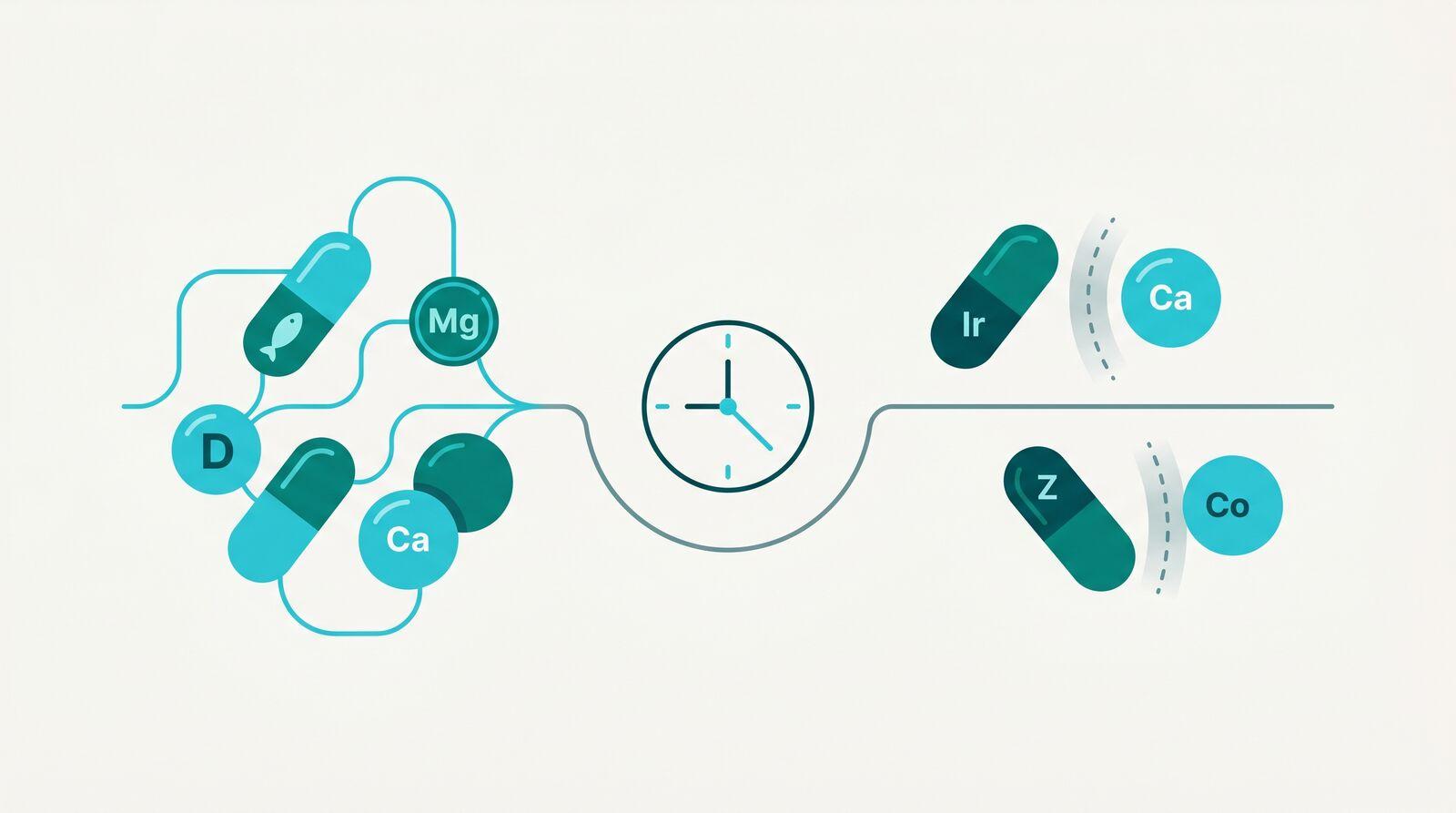
Not that we could find. The mineral conflicts that the NIH Office of Dietary Supplements (ODS) describes involve other pairs. The zinc fact sheet warns that high doses of zinc taken for weeks can inhibit copper absorption. The iron fact sheet describes iron and zinc competing for absorption, and says experts recommend taking calcium and iron supplements at different times. Selenium is in none of these pairs.
We found no study showing that selenium lowers zinc absorption, or that zinc lowers selenium absorption. That is an absence of evidence, not proof that no effect exists. In practice, spacing these two apart solves no known problem, while adding up your totals solves a real one. For the pairs that do need a gap, see our list of supplements you should not take together.
Why People Pair Them
Selenium's reputation is tied to the thyroid, and that part has a basis. The ODS selenium fact sheet says selenium "plays important roles in the synthesis and metabolism of thyroid hormones." Selenoproteins, the selenium-containing proteins the body makes, also have critical roles in DNA synthesis, reproduction, and protection from oxidative damage and infection.
Whether extra selenium helps a thyroid is a separate question. In chronic autoimmune thyroiditis (Hashimoto's), some trials found that selenium can lower certain thyroid antibodies, "but other trials have reported no effect on thyroid function or the quality of life," as the ODS sheet puts it. Mixed is the fair summary. ODS also notes that the American Thyroid Association recommends against selenium supplementation in pregnant women who have thyroid autoimmunity. If a thyroid blend pairs selenium with zinc, note that the thyroid evidence above is about selenium alone.
The zinc in this stack has a different job: colds. ODS reports that zinc lozenges taken early in a cold can reduce how long symptoms last. That finding concerns lozenges during a cold, not a daily capsule taken all year; our look at zinc for immunity sorts out what the evidence does and does not cover.
Practical Recommendations
These are our suggestions, not a tested protocol.
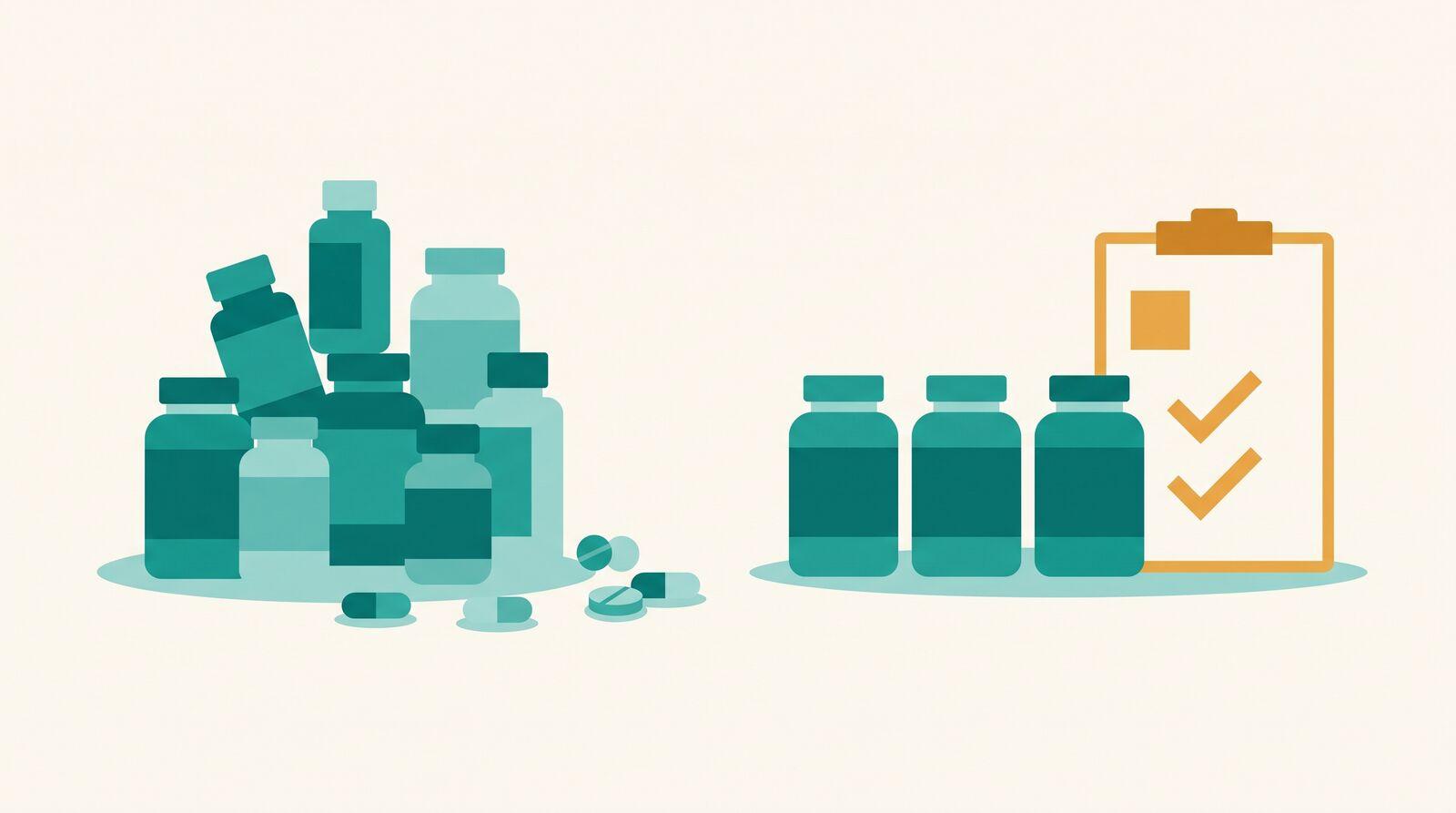
- Add up every label. Selenium and zinc can appear in a multivitamin, a "thyroid" or "immune" blend and a single-mineral bottle at once. Write down how much of each mineral every product gives you, total them, and redo the sum whenever a new bottle joins. Our guide to auditing a crowded stack walks through the same exercise for a whole routine.
- Take zinc and selenium together if it suits you. One slot, with a meal, is fine for this pair; our zinc guide suggests taking zinc with food.
- Give iron its own slot. Iron competes with zinc for absorption, and experts recommend taking calcium and iron at different times, so a time of day for iron alone takes care of both. If you take calcium too, our calcium and zinc page covers that pair.
- Keep high-dose zinc short. If your daily zinc total stays at 50 mg or more for weeks, copper absorption can suffer. Our zinc and copper page explains the balance, and it is worth raising with your doctor.
Dosage Considerations
Upper limits: the Tolerable Upper Intake Level (UL) for adults, as listed by ODS, is 400 mcg of selenium and 40 mg of zinc a day. Check the unit on every label: selenium is measured in micrograms (mcg), zinc in milligrams (mg), and a microgram is a thousandth of a milligram.
How totals creep: say the multivitamin in that morning handful lists 55 mcg of selenium and 11 mg of zinc, the thyroid blend 200 mcg and 15 mg, and the zinc capsule 15 mg. That is 41 mg of zinc, just over the adult limit. Add a 200 mcg selenium capsule and selenium reaches 455 mcg, over its limit too. None of those labels would make you look twice on its own.
Zinc at 50 mg and above: according to ODS, doses of 50 mg of zinc or more over a period of weeks can inhibit copper absorption, reduce immune function, and lower high-density lipoprotein (HDL) cholesterol levels. If zinc is in your routine for immunity, note the middle item: kept that high for weeks, zinc can work against the reason you bought it.
Who should check first: pregnant women with thyroid autoimmunity, since the American Thyroid Association recommends against selenium supplementation for them; anyone with thyroid disease who takes medication for it, who should ask their doctor before adding selenium, given its role in thyroid hormone metabolism and the mixed trial record; and parents, because the limits above are adult figures, so doses for children are a question for a pediatrician.
Key Takeaway
Most people can take selenium and zinc together, and we found no documented conflict between them. The caution is total dose: count every product, multivitamin and blends included, against 400 mcg of selenium and 40 mg of zinc a day, and give iron its own slot. If you are pregnant and have thyroid autoimmunity, the American Thyroid Association advises against selenium supplements; if you take thyroid medication, ask your doctor first.
Track Your Timing
Supplement Tracker lets you log each product you take, multivitamin and blends included, and see your whole day in one list. With everything in one place, adding up your selenium and zinc is quick, and the list is ready when your doctor asks what you take.