Protein powder is food in convenient form, not a supplement with special powers: it works only by helping you hit a daily protein target you were not reaching from meals. That target is higher than the old minimum recommendations: roughly 1.2 to 2.2 grams per kilogram of body weight per day for people who train, are dieting, or are over 60, spread across three or four meals of 25 to 40 grams each. If your meals already get you there, a powder adds nothing but cost. The groups who genuinely benefit are lifters and athletes with high targets, older adults fighting age-related muscle loss, people on GLP-1 medications eating far less food, vegans with limited high-protein options, and anyone whose schedule makes real meals unreliable. Whey is the best-studied and most efficient option; a pea and rice blend gets plant-based users essentially the same result at a slightly higher dose. The anabolic window is mostly a myth: daily total and per-meal distribution matter far more than shake timing. Because powders are consumed in large daily amounts, they are one of the categories where third-party testing (NSF, Informed Sport) matters most, both for heavy metals and for 'protein spiking' tricks. For healthy kidneys, higher protein intakes are safe; the kidney-damage fear comes from studies of people with pre-existing disease.
Protein is having a moment. There is protein cereal, protein water, protein ice cream, and an entire aisle of tubs promising more muscle, faster recovery, and easier fat loss. Somewhere between the influencer blending three scoops into everything and the skeptic insisting it is all expensive milk dust, there is a boring, useful truth.
Here it is up front: protein powder is not really a supplement in the way vitamin D or magnesium is. It is food, dried and sifted into a scoop. It has no special muscle-building properties beyond the protein it contains, and it does exactly one job: helping you reach a daily protein target you were not reaching with meals. Whether you need it depends entirely on how big that gap is. So the honest question is not "is protein powder good," but "am I short, and by how much?"
How Much Protein Do You Actually Need?
The official minimum, the RDA, is 0.8 grams of protein per kilogram of body weight per day. That number is worth understanding, because it is the source of most of the confusion. The RDA is the amount that prevents deficiency in a sedentary person, not the amount that optimizes muscle, recovery, appetite, or healthy aging. It is a floor, not a target.
For almost everyone with a goal beyond "not being deficient," research points considerably higher:
- Recreationally active people: around 1.2 to 1.6 g/kg per day.
- People lifting weights to build muscle: roughly 1.6 to 2.2 g/kg per day. More than this shows no additional benefit in most studies.
- People dieting to lose fat: the higher end, 1.6 to 2.4 g/kg, because protein protects muscle when calories are cut and it is the most filling macronutrient.
- Adults over 60: at least 1.2 g/kg. Aging muscle responds more weakly to protein, a phenomenon called anabolic resistance, so older adults need more per meal to trigger the same muscle-building response as a 25-year-old.
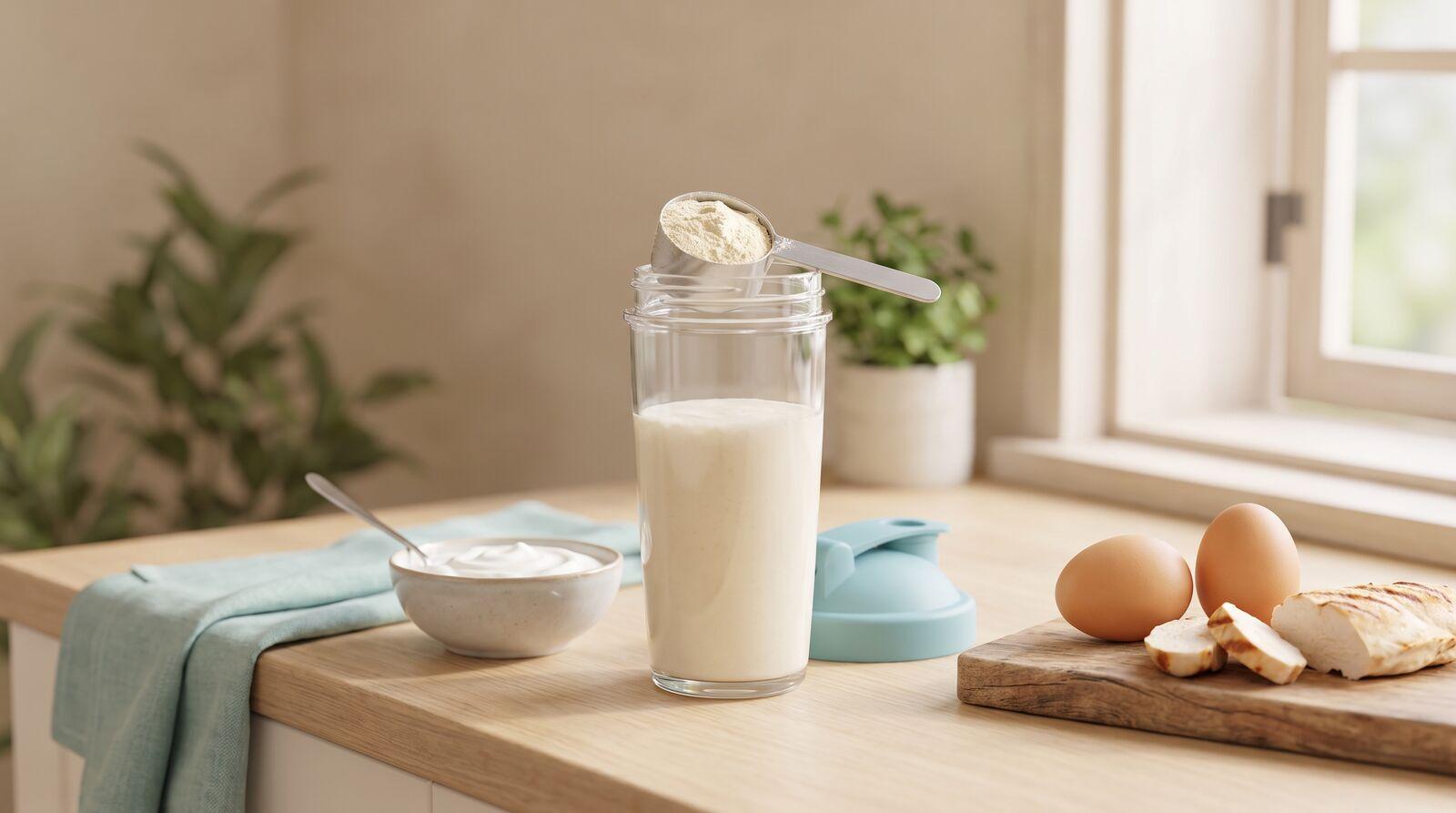
For a 70 kg (154 lb) person who trains, that means 110 to 150 grams of protein a day. A chicken breast has about 35 grams, an egg about 6, a cup of Greek yogurt about 20. Run that math against what you actually ate yesterday and you have your answer about whether a powder makes sense. Many people who assume they eat plenty of protein land at 60 to 80 grams a day; many people convinced they need a powder are already at 140 from food.
Food First, Powder for the Gap
If your meals already hit your target, a protein shake adds nothing except cost and calories. Whole food sources bring things a scoop does not: iron and B12 in meat, calcium in dairy, fiber in legumes, plus more chewing and more fullness per gram. No study has found whey to build more muscle than the same grams of protein from milk, eggs, or meat.
What a powder wins on is logistics. It requires no cooking, no refrigeration, and no appetite for a full meal. It costs less per 25 grams of protein than most meat. It travels. When the honest reason you are short on protein is that breakfast is coffee and lunch is whatever is nearby, a shake is often the difference between hitting 130 grams and hitting 80, not because it is superior food but because it is food that actually happens.
That is the entire case for protein powder: it is the most convenient patch for a real gap. If there is no gap, there is nothing to patch.
Whey, Casein, or Plant?
Whey is the default for a reason. It is rich in leucine, the amino acid that acts as the main trigger for muscle protein synthesis, it digests quickly, and it is the most studied protein supplement in existence. Whey concentrate is cheaper and fine for most people; whey isolate has more protein per scoop and far less lactose, which matters if regular whey upsets your stomach.
Casein digests slowly, which made it popular as a "before bed" protein. The practical difference from whey over a whole day is small. If you like a thicker, pudding-like shake in the evening, it is pleasant; it is not required.
Plant proteins used to be a clear step down, but modern blends have mostly closed the gap. Pea protein alone is decent; a pea and rice blend has an amino acid profile close to whey. The honest caveats are that plant proteins are slightly lower in leucine, so studies suggest aiming a bit higher per serving, around 30 to 40 grams where 25 of whey would do, and that texture varies more between brands. For vegans, or anyone whose digestion dislikes dairy in all forms, a good blend gets essentially the same result.
Collagen deserves a special mention because it sits in the same aisle and confuses people: it is a poor muscle-building protein, missing the amino acid profile that drives muscle protein synthesis. It has its own separate use cases, but it is not a substitute for whey or a plant blend.
Who Genuinely Benefits
A few groups reliably come out ahead with a powder in the cupboard:
- People who lift. High targets, big appetites for convenience. This is the classic case, and pairing adequate protein with creatine covers the two supplements with the strongest muscle evidence there is.
- Adults over 60. Anabolic resistance means older adults need around 30 to 40 grams of protein per meal to properly stimulate muscle maintenance, and appetite often declines exactly when needs rise. Sarcopenia, the slow loss of muscle with age, is one of the strongest predictors of losing independence later, and protein plus resistance training is the best-supported defense.
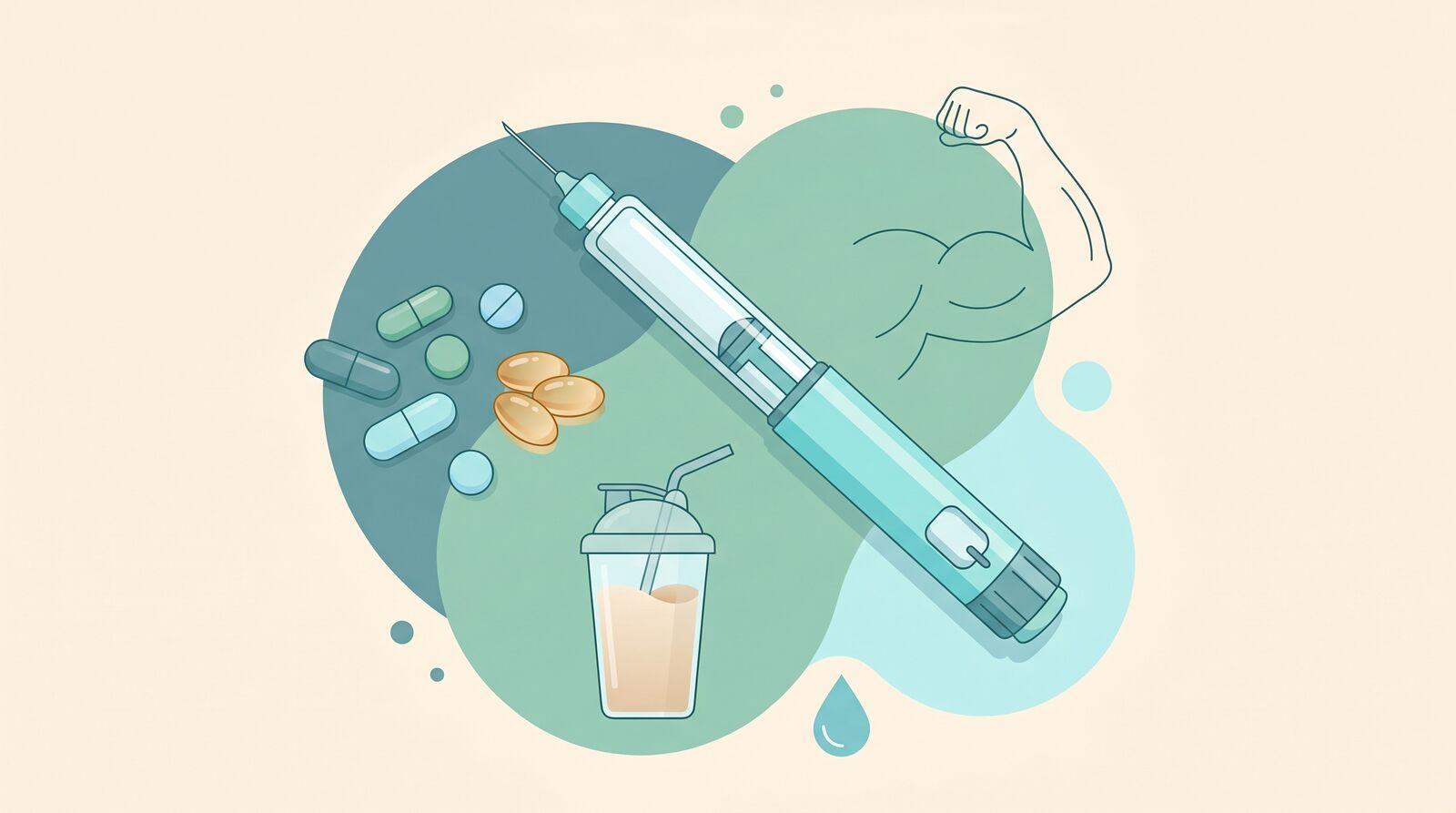
- People on GLP-1 medications. Ozempic, Wegovy, and their relatives suppress appetite so effectively that protein intake often collapses, and a meaningful share of the weight lost can be muscle. A shake is one of the easiest ways to protect muscle when you can only manage small meals; we cover the full picture in our guide for GLP-1 users.
- Vegans and vegetarians. Hitting 1.6 g/kg from legumes and grains alone takes real planning and a lot of volume. A plant protein blend makes the math dramatically easier.
- Anyone in a cutting phase. Higher protein preserves muscle and blunts hunger while dieting, and a low-calorie shake is an efficient way to get there.
One quieter factor worth naming for anyone chasing recovery and muscle: alcohol. Drinking after training measurably blunts muscle protein synthesis, the exact process you are eating all that protein to support, and regular evenings of a few drinks quietly undo gym work. If you are experimenting with cutting back, our sister app Sober Tracker is built for tracking exactly what changes when you do.
Timing Myths and Real Side Effects
The famous "anabolic window," the idea that you must drink a shake within 30 minutes of training or the workout is wasted, has not survived the research. Total daily protein matters most, and distribution comes second: spreading intake across three or four meals of roughly 25 to 40 grams each beats cramming most of it into dinner. If a post-workout shake is convenient, it is a perfectly good slot. It is not a deadline.
On safety, the persistent fear is kidneys. In people with healthy kidneys, intakes well above 2 g/kg have repeatedly failed to show harm; the concern originates from patients with pre-existing kidney disease, for whom protein restriction is a genuine medical tool. If you have kidney disease or are at risk for it, protein targets are a conversation with your doctor, not a blog decision. The mundane real side effects are digestive: bloating and gas from lactose in cheap concentrates, or from sugar alcohols and gums in heavily flavored products. Switching to an isolate or an unflavored powder solves most of it.
The one issue worth genuine caution is quality. Protein powders are consumed in large daily amounts, and independent testing has repeatedly found detectable heavy metals in popular products, along with "protein spiking," where cheap amino acids are added to inflate the tested protein number. This is exactly the category where a third-party seal like NSF or Informed Sport earns its price premium; our guide to choosing a quality supplement covers what those seals actually verify.
Make the Gap Visible
The entire protein powder question comes down to a number you probably do not know: how many grams you actually ate today. Almost everyone who guesses gets it wrong in one direction or the other. Before buying a tub, it is worth spending three or four ordinary days adding it up honestly, because the answer decides everything: a 20-gram gap is a dietary tweak, a 60-gram gap is a real case for a daily shake.
And if you do add a powder, treat it like any other supplement: it only works on the days it happens. Logging your shake alongside your vitamin D and creatine in Supplement Tracker turns "I usually have a shake" into an actual record, and a scoop that reliably happens five days a week will do more for you than a premium tub that gets forgotten by Thursday.
The Short Version
Protein powder is convenient food, nothing more and nothing less. Work out your real daily target, 1.2 to 2.2 g/kg depending on your training, age, and goals, then count what your meals already deliver. If there is a meaningful gap, a shake is the cheapest, easiest patch: whey if dairy agrees with you, a pea and rice blend if it does not, 25 to 40 grams per serving, timed wherever it fits your day. Buy a third-party tested product, skip the ones promising magic, and remember the powder only counts on the days you actually take it.
This article is for educational purposes and does not constitute medical advice. Talk to a qualified healthcare provider before starting any new supplement, especially if you are pregnant or breastfeeding, have a medical condition, or take prescription medications.