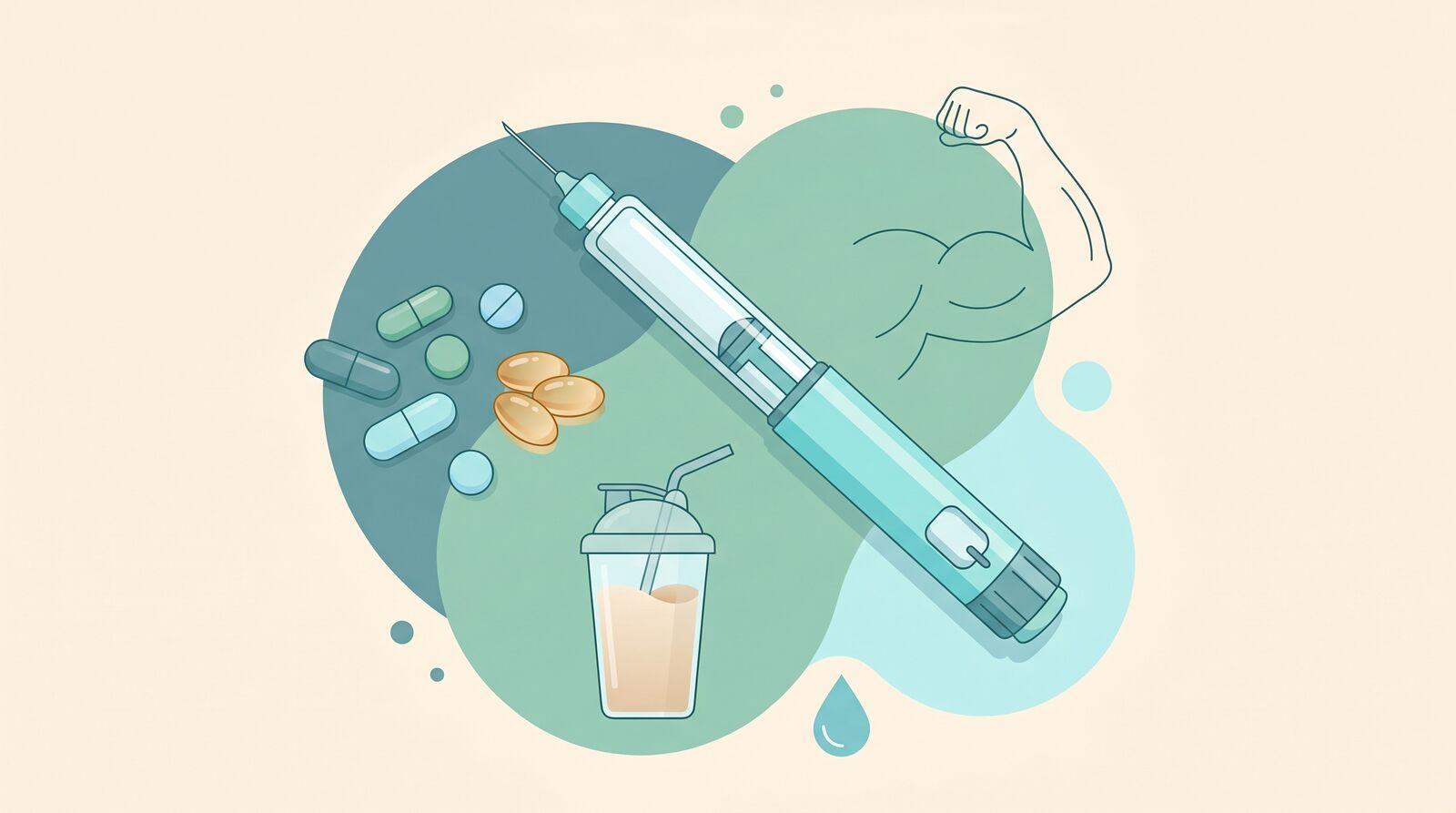
GLP-1 medications like Ozempic, Wegovy, and Zepbound work by making you eat dramatically less, and that success creates real nutritional side effects: studies show more than 20% of users develop a diagnosed nutrient deficiency within a year, vitamin D being the most common, and a meaningful share of the weight lost can be muscle rather than fat. The supplements that actually matter are unglamorous. Protein (food first, powder when appetite will not cooperate) plus resistance training protects muscle, and creatine is the best-evidenced capsule to support that. A basic multivitamin earns its place here more than for almost anyone else, with vitamin D, B12, and iron worth specific attention. For day-to-day comfort, fiber, magnesium, and electrolytes handle the constipation, sluggish digestion, and dehydration that GLP-1s commonly cause. Skip the 'natural GLP-1 booster' stacks, fat burners, and berberine layered on top of the real drug. Your needs change at every dose escalation, so track what you take and how you feel rather than buying the whole companion-supplement aisle.
GLP-1 medications have changed weight loss in a way no supplement ever has. Semaglutide (Ozempic, Wegovy) and tirzepatide (Mounjaro, Zepbound) reliably produce the kind of results that diets and "fat burner" pills spent decades promising and not delivering. Tens of millions of people are now taking them, and the supplement industry has noticed: store shelves are filling up with "GLP-1 companion" gummies, "muscle protection" blends, and entire product lines aimed at people on these drugs.
Some of that is opportunism. But underneath the marketing sits a genuine issue: GLP-1 medications work by making you eat much, much less, and eating much less has predictable nutritional consequences. When your daily intake drops by 500 to 1,000 calories, every nutrient that used to ride along with those calories drops too.
This guide covers what actually changes in your body on a GLP-1, which supplements have a real case, which ones are wasted money, and how to manage a routine that will keep shifting as your dose and appetite change.
Why GLP-1 Medications Create Real Nutrient Gaps
GLP-1 drugs do not block nutrient absorption the way some medications do. The problem is simpler and harder to avoid: they suppress appetite so effectively that many people eat half of what they used to, and they slow stomach emptying, which changes what you can comfortably eat at all.
Three effects stack up:
- You eat far less of everything. Vitamins and minerals come bundled with calories. Cut the calories steeply and the micronutrients fall with them, unless you deliberately steer what is left toward dense, high-quality food.
- Food aversions shift your diet. Many users develop aversions, and meat is one of the most commonly reported. That quietly cuts protein, iron, B12, and zinc at exactly the moment you need them most.
- Side effects reduce intake further. Nausea, early fullness, and constipation make people eat and drink less, including fluids, which is why dehydration is a recurring theme on these medications.
This is not theoretical. Research on GLP-1 users has found that more than 20% develop a diagnosed nutritional deficiency within a year of starting, with vitamin D the most frequently flagged, followed by other fat-soluble vitamins and B12. None of that means the drugs are bad. It means the eating pattern they create needs deliberate support, the same way bariatric surgery patients have always needed it.
Staying consistent with a daily supplement routine is much easier with a dedicated app, and we have compared the leading supplement tracker apps to help you pick the right one.
Protein Comes Before Any Capsule
The single biggest nutritional risk on a GLP-1 is not a vitamin. It is muscle loss. In studies of rapid weight loss, including GLP-1 trials, somewhere between a quarter and 40% of the total weight lost can be lean mass rather than fat if nothing is done to prevent it. Losing 20 kg sounds great until you realize several of those kilograms were muscle you will badly want back later, especially as you age.
Two things protect muscle during rapid weight loss, and neither is exotic:
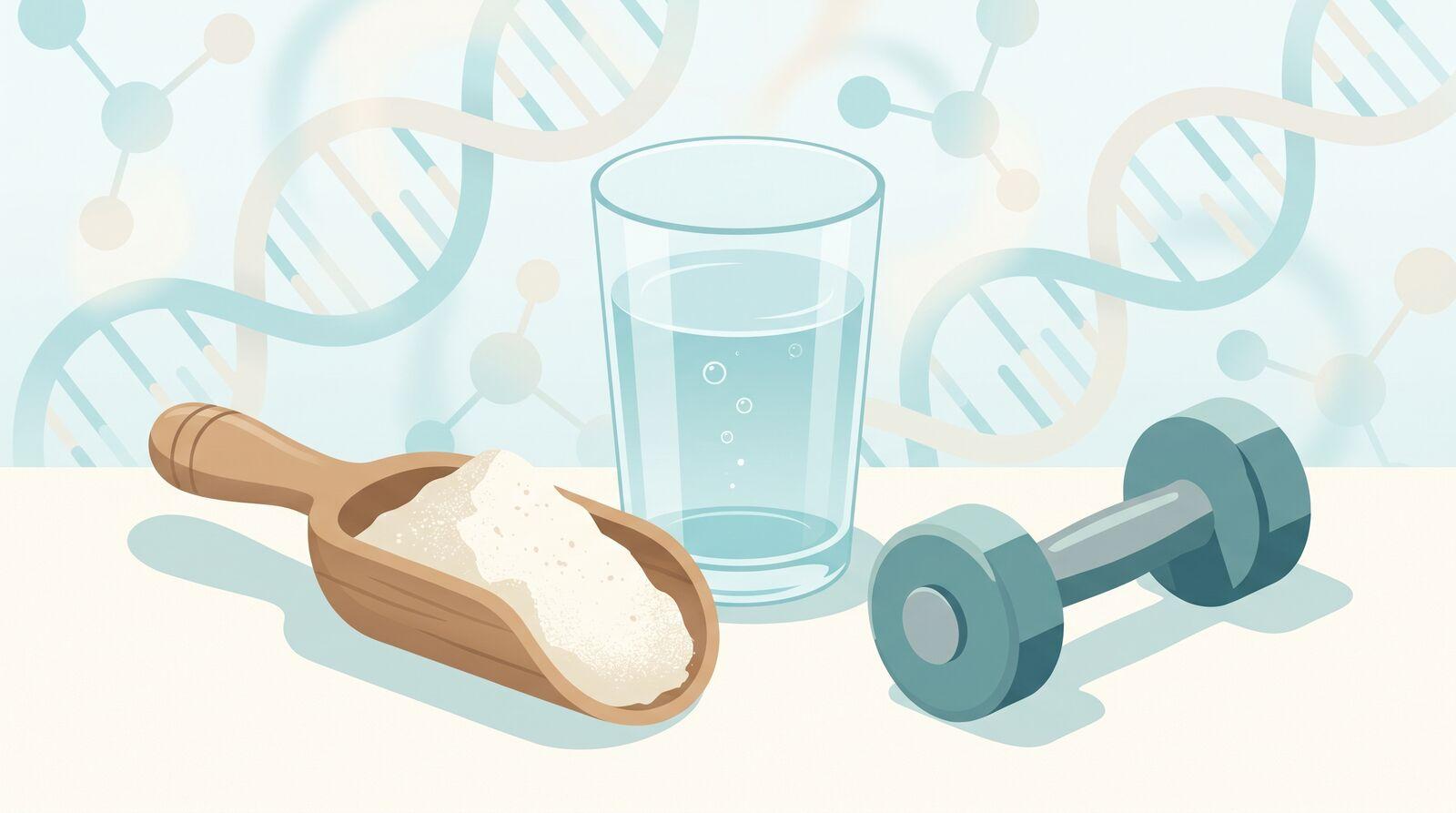
- Enough protein. A reasonable target on a GLP-1 is roughly 1.2 to 1.6 grams per kilogram of body weight per day (about 0.6 to 0.7 grams per pound of goal weight). On a suppressed appetite, that is genuinely hard to hit with food alone, which is the one honest reason protein powder deserves a place here. A shake is not magic; it is simply 25 to 30 grams of protein that fits into a stomach that no longer wants a chicken breast.
- Resistance training. Two to three sessions a week of lifting, bands, or bodyweight work signals your body to keep the muscle. No supplement substitutes for this. Protein plus training preserves lean mass; protein alone merely slows the loss.
Practical tip: eat or drink the protein first in any meal. On a GLP-1, fullness arrives fast, and whatever you start with is often most of what you finish.
Creatine: The Best-Evidenced Capsule for the Muscle Problem
If you add one true supplement for muscle preservation, the boring, decades-studied answer is creatine monohydrate. It is one of the most researched supplements in existence, it measurably supports strength and lean mass when combined with resistance training, and it costs very little. The standard 3 to 5 grams daily, taken whenever is convenient, applies on a GLP-1 exactly as it does off one; no loading phase needed. We cover the dosing, the water-weight myth, and who should be cautious in the complete creatine guide.
Two GLP-1-specific notes: creatine pulls water into muscle, and GLP-1 users already tend to under-drink, so be deliberate about fluids. And creatine supports the muscle you train; it does not preserve muscle by itself while you lose weight on the couch.
You may also see HMB marketed for this purpose. The evidence is far weaker than creatine's, and it is usually sold at a much higher price. Creatine first.
The Deficiency Watch List
This is one of the rare situations where a basic daily multivitamin genuinely earns its place. Our general position is that most well-fed adults do not need a multivitamin, but "well-fed" is doing the heavy lifting in that sentence. Someone eating 1,200 calories with food aversions is exactly the person the multivitamin was invented for. A standard one-a-day covering around 100% of daily values is enough; skip the mega-dose formulas.
Beyond the multi, four nutrients deserve specific attention:
- Vitamin D. The most commonly documented deficiency in GLP-1 users. It is fat-soluble, so lower food (and fat) intake reduces both intake and absorption. A typical maintenance dose is 1,000 to 2,000 IU with a meal that contains some fat; testing beats guessing, as we explain in how much vitamin D you actually need.
- Vitamin B12. Doubly relevant: meat aversion cuts intake, and many people on GLP-1s for diabetes also take metformin, which depletes B12 over time. Deficiency creeps in slowly and shows up as fatigue and brain fog that is easy to blame on the diet itself. Who actually needs it and in what form is covered in our B12 guide.
- Iron. Menstruating women eating less red meat are the high-risk group. But iron is the one item on this list you should not supplement blind: too much is genuinely harmful, so get a ferritin test first, as we lay out in who actually needs iron supplements.
- Omega-3s. Eating less fish while eating less of everything makes a standard fish oil dose a reasonable, if not urgent, addition. Dosing is in the omega-3 guide.
Digestive Support: Where the Day-to-Day Value Is
Ask actual GLP-1 users what bothers them and they rarely say "micronutrients." They say constipation, nausea, and feeling like a raisin. This is where supplements deliver the most noticeable benefit:
- Fiber. Slower digestion plus much less food volume is a recipe for constipation, one of the most common GLP-1 complaints. A soluble fiber like psyllium husk, started low (around 5 grams) and taken with plenty of water, is the standard fix. Go slowly; adding a lot of fiber to a slowed stomach all at once can backfire into bloating.
- Magnesium. Useful twice over: it is a common shortfall when food intake drops, and magnesium citrate's gentle laxative effect, normally listed as a drawback, becomes a feature for GLP-1 constipation. The form comparison is in magnesium glycinate vs citrate.
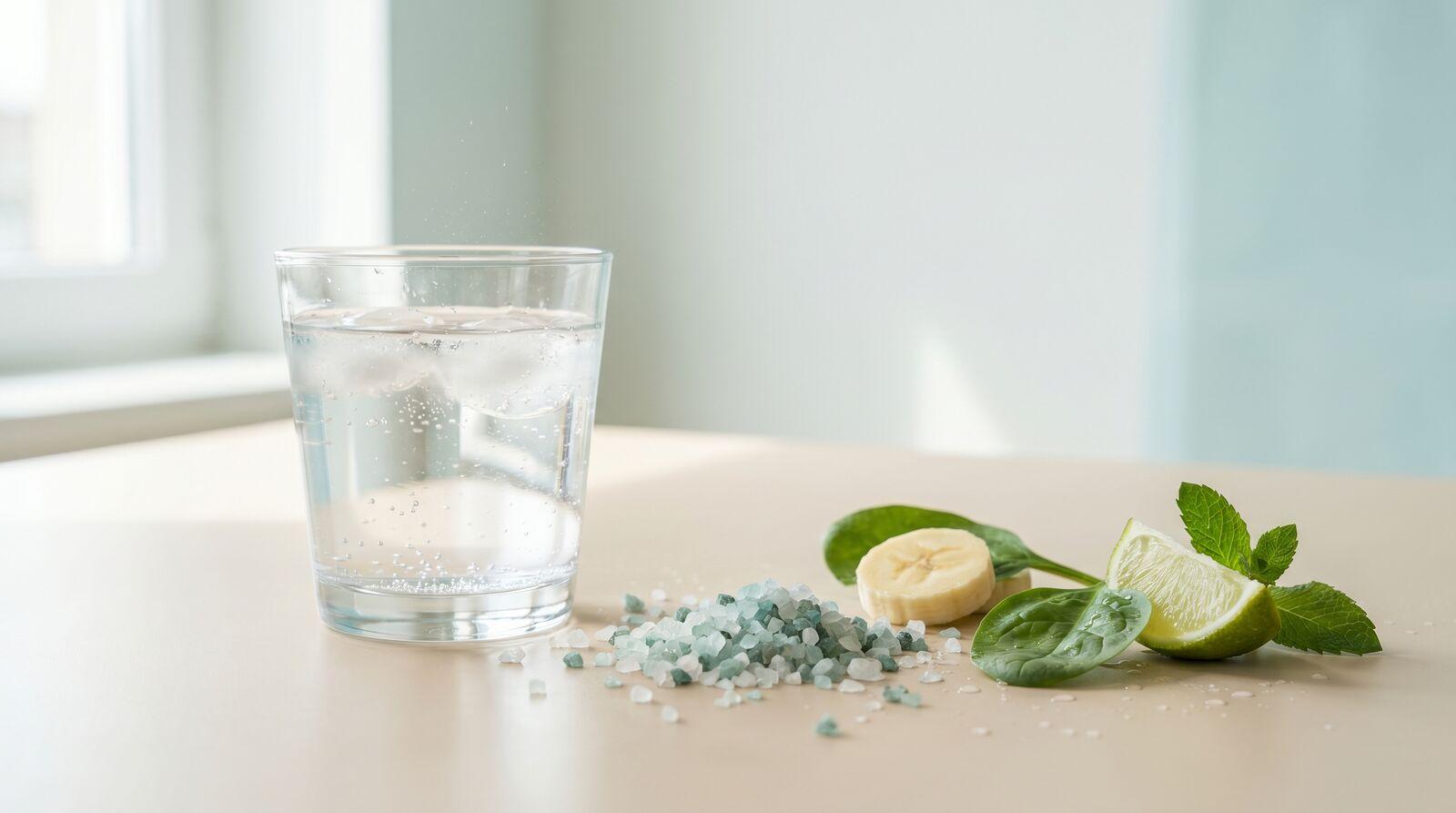
- Electrolytes and fluids. Reduced thirst, smaller meals (food carries a surprising amount of water and sodium), and occasional vomiting add up to chronic mild dehydration, which worsens the fatigue and headaches many users report. You do not need fancy powders every day, but on rough days an electrolyte mix earns its keep; the honest breakdown is in do you need electrolyte supplements.
- Probiotics. The weakest entry here. Evidence for general digestive comfort is mixed, as we cover in the probiotics guide. Reasonable to trial for a month if constipation persists after fiber, fluids, and magnesium; not a first-line buy.
What to Skip
The "GLP-1 companion" boom has produced plenty of products that deserve skepticism:
- "Natural GLP-1 boosters" stacked on the real drug. Berberine earned its "nature's Ozempic" nickname dishonestly, as we covered in the berberine reality check, and taking it on top of semaglutide adds blood-sugar-lowering effects and digestive side effects without meaningful upside. The same goes for most "GLP-1 support" blends.
- Fat burners and metabolism boosters. You are on the most effective weight-loss medication ever made. A caffeine-and-cayenne pill adds jitters and nausea risk, not results.
- All-in-one "GLP-1 kits." Bundles sell convenience at a markup, usually with under-dosed ingredients. The handful of things that matter (protein, creatine, a multi, fiber, magnesium) cost less bought plainly.
One behavioral side effect is worth turning to your advantage: many people on GLP-1s notice their alcohol cravings drop sharply, and researchers are actively studying the drugs for exactly that effect. If you have been meaning to cut back anyway, this is an unusually easy window to do it in, and a companion app like Sober Tracker lets you log alcohol-free days and watch the streak build while the medication quiets the pull. Less alcohol also means less nausea, better sleep, and faster progress on the scale, so the effects compound.
Your Needs Will Change: Track Them
A GLP-1 regimen is not static. Doses typically escalate every four weeks at the start, side effects spike after each increase and then fade, appetite partially returns for some people at maintenance, and what you can comfortably eat in month one looks nothing like month six. A supplement routine built for week two (heavy on anti-nausea support, light on food) may be wrong by month four, when constipation has replaced nausea as the main complaint and your protein target is the bottleneck.
The fix is the same boring discipline that makes any supplement routine work: write down what you take, when you take it, and what changed. Log the dose escalations, note which side effects came and went, and check monthly whether each item in the routine still has a job. That is the core habit behind tracking your supplements consistently, and there is no population it pays off for faster than GLP-1 users, because no other group's nutritional situation changes this much this quickly.
The honest summary: the GLP-1 era's most useful "supplements" are protein you eat first, weights you lift twice a week, water you actually drink, and a short list of unglamorous basics: creatine, a standard multivitamin, vitamin D, fiber, and magnesium, with B12 and iron added when testing or your situation says so. Everything else on the companion-product shelf is mostly riding the trend. Spend the money on good food and a gym membership instead.
This article is for educational purposes and does not constitute medical advice. GLP-1 medications are prescription drugs that require medical supervision; never start, stop, or change them, or add supplements alongside them, without talking to your prescriber. Iron should only be supplemented after blood testing, and berberine or other glucose-lowering supplements can interact with diabetes medications. If you experience severe vomiting, signs of dehydration, or rapid muscle loss, contact your healthcare provider.