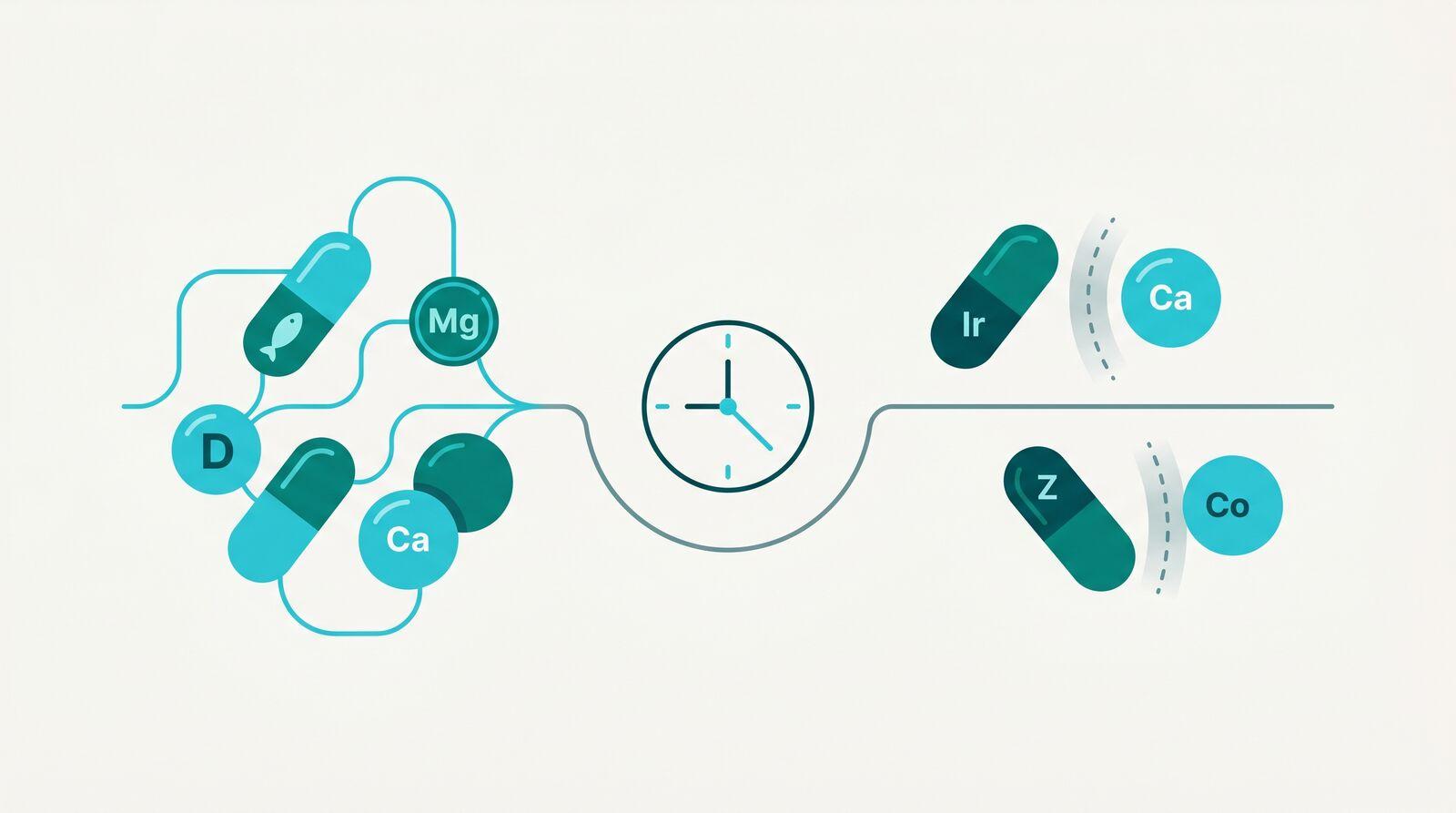
Most people can take iron and magnesium on the same day. The documented concern involves antacid-type magnesium (oxide, hydroxide, trisilicate): in a lab study, oxide and trisilicate neutralized acid and cut dissolved iron, and one case of extreme magnesium oxide overuse was linked to iron deficiency that oral iron did not fix. A soluble magnesium salt did not change iron absorption in volunteers, and glycinate and citrate have not been tested with iron. A simple routine: iron in the morning on an empty stomach, magnesium with dinner or at bedtime. Keep magnesium antacids and laxatives well away from iron, and follow the label timing for antibiotics, levothyroxine and bisphosphonates. A two-hour gap is a cautious habit, not a proven rule.
This content is for informational purposes only and is not a substitute for professional medical advice, diagnosis, or treatment. Always consult your physician or qualified healthcare provider before starting any supplement regimen.
You have just started iron tablets for low ferritin, and a bottle of magnesium glycinate already sits on your nightstand. The NHS page on ferrous sulfate and other medicines suggests a gap between iron and other medicines, and names magnesium supplements, magnesium laxatives and antacids among the products to mention to a pharmacist. So can you take iron and magnesium together, or does the magnesium have to go?
It can stay. Most people can take both on the same day. The documented concern involves the magnesium compounds used in antacids and laxatives (oxide, hydroxide, trisilicate), plus a few prescription drugs that both minerals affect. We found no human study of glycinate or citrate with iron: no evidence of a problem, and no proof that none exists. A gap of about two hours is a sensible habit that nobody has tested as a rule.
How the Interaction Works
The iron salts in most supplements, such as ferrous sulfate, dissolve best in an acidic stomach. The iron fact sheet from the NIH Office of Dietary Supplements (ODS) notes that gastric acid matters for absorbing non-heme iron, and that acid-reducing drugs such as proton pump inhibitors can lower iron absorption. Even so, up to 10 years of their use was not linked to iron depletion in people with normal iron stores.
Antacid-type magnesium works against that acid. In a 1994 laboratory study, magnesium oxide and trisilicate strongly neutralized acid, and in a test that mimicked the gut's pH changes they sharply cut the amount of iron that stayed dissolved; the authors concluded that these poorly soluble compounds also adsorb iron. A readily soluble salt, magnesium aspartate, barely shifted the pH and left dissolved iron unchanged.
So the effect seems to depend on what a magnesium compound does to stomach acid and dissolved iron, not on magnesium as such. ODS groups citrate with aspartate among the forms that dissolve well, which hints that citrate behaves like aspartate here. We found no study testing that, or testing magnesium glycinate and iron together. Magnesium oxide is the awkward one, sold both as a laxative or antacid and as an everyday supplement; the lab finding applies whatever the bottle says (see our glycinate versus oxide comparison).
What the Research Says
Research on magnesium and iron absorption is thin and mostly decades old.
Soluble magnesium. In a 1996 German study, a single dose of iron raised blood iron over three hours by the same amount in healthy volunteers with or without magnesium aspartate. That is one study measuring a short-term rise in blood iron, and aspartate is neither glycinate nor citrate.
Magnesium antacids. The human data are few and mixed. In a 1986 JAMA study, a liquid antacid containing aluminum and magnesium hydroxide did not significantly reduce iron absorption, while sodium bicarbonate and calcium carbonate did. Two emergency-medicine trials gave healthy men overdose-level iron (5 to 10 mg per kilogram of body weight) to test magnesium hydroxide as a treatment for iron poisoning. In one (13 men, Academic Emergency Medicine, 1998), a large dose an hour later made the rise in blood iron over 12 hours about 46 percent smaller; in the other (16 men, Annals of Emergency Medicine, 1999), a dose after 30 minutes made no significant difference. Neither says much about a supplement taken with dinner.
One extreme case. A 2019 case report describes a 28-year-old woman with anorexia nervosa who took 50 to 200 magnesium oxide laxative tablets a day, roughly 10 to 40 grams of magnesium: 30 to 115 times the supplement upper limit. Nine months of oral iron did not fix her iron deficiency anemia. After she stopped the overuse and switched to intravenous iron, the anemia gradually improved; when the overuse resumed, her hemoglobin fell again. The authors wanted clinicians to consider magnesium laxatives when anemia resists oral iron. One case at that dose cannot be generalized to a capsule at bedtime.
The honest summary: the one human test of soluble magnesium found no effect on iron, and the case against antacid-type magnesium rests on lab chemistry, mixed overdose trials and one extreme case. That justifies spacing, not alarm.
Practical Recommendations
This is our suggested routine, not a tested protocol.
- Take iron in the morning on an empty stomach. The NHS advice for ferrous sulfate is 30 minutes before eating or 2 hours after, or with food if it upsets your stomach. A dose you tolerate beats one you skip. Vitamin C may help absorption; see our iron and vitamin C page.
- Move magnesium to dinner or bedtime. That alone keeps them hours apart. If it is a calcium-magnesium blend, the gap helps twice: ODS says calcium might interfere with iron absorption, though that is not settled (see our iron and calcium page).
- Keep your multivitamin as it is. One with small amounts of both minerals is generally fine as directed; we found no evidence that its magnesium matters for iron.
- Keep magnesium antacids and laxatives well away from iron. That means milk of magnesia and oxide or trisilicate remedies. Ask a pharmacist how long a gap you need, as the NHS suggests, and give an everyday magnesium oxide supplement at least two hours.
- Take iron side effects to the prescriber. A magnesium laxative for iron constipation adds the one kind of magnesium with a documented question mark. A prescriber can change the dose or schedule instead; the NHS notes a doctor may suggest alternate days for side effects.
Prescription drugs set their own schedule. Iron and magnesium can both reduce the absorption of some medicines, and those labels carry stricter gaps:
- Tetracycline and quinolone antibiotics such as doxycycline and ciprofloxacin: ODS advises taking them 2 hours before or 4 to 6 hours after magnesium; the US ciprofloxacin label says 2 hours before or 6 hours after magnesium antacids and iron products.
- Levothyroxine: the US Synthroid label says not to take it within 4 hours of iron, calcium supplements or antacids.
- Bisphosphonates such as alendronate: ODS advises keeping magnesium at least 2 hours away, and the NHS flags them for iron too.
Your drug's label or your pharmacist has the final word.
Dosage Considerations
Iron: ODS notes that 45 mg a day or more may cause nausea and constipation. In small isotope studies of women with low iron (published in Blood, The Lancet Haematology and Haematologica), doses of 60 mg or more raised hepcidin, the hormone that limits iron absorption, for about a day. Taking iron on alternate days increased the share absorbed; splitting a daily dose in two did not. These studies measured absorption, not hemoglobin recovery, so change your dosing only with your prescriber.
Magnesium: the upper limit for supplemental magnesium is 350 mg a day for adults, counting supplements and medicines but not food, according to the NIH magnesium fact sheet. Too much tends to show up as diarrhea, and the forms most often reported to cause it are carbonate, chloride, gluconate and oxide. Laxative doses sit in another category: one tablespoon of milk of magnesia provides 500 mg of magnesium.
Who should check first: people with kidney disease, since impaired kidneys clear magnesium less well; people with hemochromatosis, for whom ODS cites guidance to avoid iron and vitamin C supplements; anyone taking iron for months without a confirmed deficiency, who should get tested (ODS notes that a serum ferritin below 30 mcg/L suggests deficiency); and pregnant people on prescribed iron, who should follow their prescriber's schedule.
When iron is not working: tell the prescriber about every magnesium product you use, antacids and laxatives included, and any acid-reducing medicine; ODS notes that people with iron deficiency on proton pump inhibitors can respond less well to iron supplements.
Key Takeaway
Most people can take iron and magnesium on the same day. The documented concern is antacid-type magnesium; glycinate and citrate are untested rather than suspect. Morning iron and evening magnesium keep them apart without effort, and the spacing rules that matter most belong to magnesium antacids, laxatives and a few prescription drugs.
Track Your Timing
Supplement Tracker lets you log iron and magnesium as separate doses at different times of day, with a reminder for each. Your history then shows whether the gap you planned is the gap you kept, and when a prescriber asks what you take and when, the answer is on your phone.