Choline is essential, but missing the 425-550 mg adequate intake is not the same as a clinical deficiency. The liver makes some choline on its own (more when estrogen is high). Food first: one large hard-boiled egg has about 147 mg. Mixed diets with eggs or meat usually close the gap; vegans without eggs, pregnancy (450 mg, and most prenatals skip choline), and postmenopausal women are the groups where a capsule earns its place. Buy milligrams of choline, not milligrams of choline bitartrate (bitartrate is only about 41% choline). Alpha-GPC and citicoline are priced as nootropics, not as the cheapest way to hit the AI. Stay under the 3,500 mg upper limit. Fishy odor, sweating, and low blood pressure show up at very high supplemental doses, not from eggs. Log the form and the elemental choline so the dose you check off is the dose you swallowed.
Walk the brain-and-liver aisle and choline is having a moment. Alpha-GPC tubs sit next to citicoline. Prenatal influencers suddenly care about a nutrient that never made the front of the bottle. The marketing implies that almost everyone is running on empty and that the right capsule will fix memory and a fatty liver in one scoop.
The quieter version is closer to vitamin B12: choline is essential, most mixed diets already supply a useful amount, and a smaller set of people actually need a bottle. Missing the official intake target is common. Frank deficiency, with fat stuck in the liver or muscle damage that reverses when choline comes back, is not.
What Choline Actually Does
Choline is a vitamin-like essential nutrient. Your liver can make some of it through the phosphatidylethanolamine N-methyltransferase (PEMT) pathway, but not enough to cover daily needs. The Food and Nutrition Board of the Institute of Medicine (now the National Academy of Medicine) set an Adequate Intake in 1998 because there was not enough data for a full RDA. The target was chosen to prevent liver damage, not to optimize a brain-stack.
Inside the body, choline is doing three jobs that matter:
- Cell membranes. Most of the choline in tissues sits in phosphatidylcholine, the phospholipid that makes up a large share of every cell membrane.
- Moving fat out of the liver. Phosphatidylcholine is required to assemble VLDL particles. Without enough of it, fat and cholesterol stay in the liver instead of leaving. That is the mechanism behind choline-deficiency fatty liver, which is a real lab finding, not a "detox" slogan. If you have been shopping milk thistle and liver-cleanse blends, read the honest version of that aisle in our liver detox guide first.
- Acetylcholine and methyl groups. Choline is a precursor for the neurotransmitter acetylcholine and, via betaine, a methyl donor that helps recycle homocysteine. That is the biology the focus supplements are selling.
You do not feel choline the way you feel caffeine. When intake is adequate, membranes get built and fat leaves the liver. When it is not, the damage shows up on labs, not as an afternoon crash.
If you're still deciding which app to trust with your routine, our guide to the best supplement tracker apps compares the leading options honestly.
The Intake Target Is Not a Deficiency Diagnosis
For adults 19 and older, the Adequate Intake is 550 mg per day for men and 425 mg per day for women. Pregnancy is 450 mg. Lactation is 550 mg. The Daily Value printed on US labels is 550 mg. The Tolerable Upper Intake Level for adults is 3,500 mg per day. Those numbers come from the NIH Office of Dietary Supplements choline fact sheet.
Most people in the United States eat less than the AI. That sentence gets used to sell capsules. Harvard's Nutrition Source is more precise: most Americans sit below the AI, and a true deficiency is still rare in healthy people because the liver keeps making some choline. Falling short of a target that was set to prevent liver damage in depletion studies is a dietary gap. It is not, by itself, a disease.
The depletion evidence is specific. In a controlled feeding study of 57 healthy adults on choline-deficient diets, 77% of the men, 80% of the postmenopausal women, and 44% of the premenopausal women developed fatty liver, liver damage, and/or muscle damage. The signs reversed when choline was restored. Estrogen stimulates PEMT, so premenopausal women can often get away with less dietary choline. Some PEMT gene variants raise the requirement. That is not a reason to buy a methylation panel before you have looked at your plate.
Who Actually Needs a Supplement
Four groups have a clean case. If you are not in one of them and you eat eggs, meat, fish, or dairy most days, food is probably doing the job.
1. Pregnant and breastfeeding people
The AI rises to 450 mg in pregnancy and 550 mg while breastfeeding. Fetal brain development uses choline, and breast milk is a choline delivery system. The practical problem is the prenatal aisle: standard prenatal vitamins often contain little or no choline. Harvard's Nutrition Source flags this directly. Food still counts (eggs, dairy, meat), but a pregnancy diet that skips yolks and lean on a choline-free prenatal is a gap you can close with a modest, labeled choline supplement plus food, not with a "brain" tub of Alpha-GPC.
Dose, form, and how it sits next to folate in the prenatal should be one conversation with a clinician, not a Reddit stack.
2. Vegans and vegetarians who skip eggs
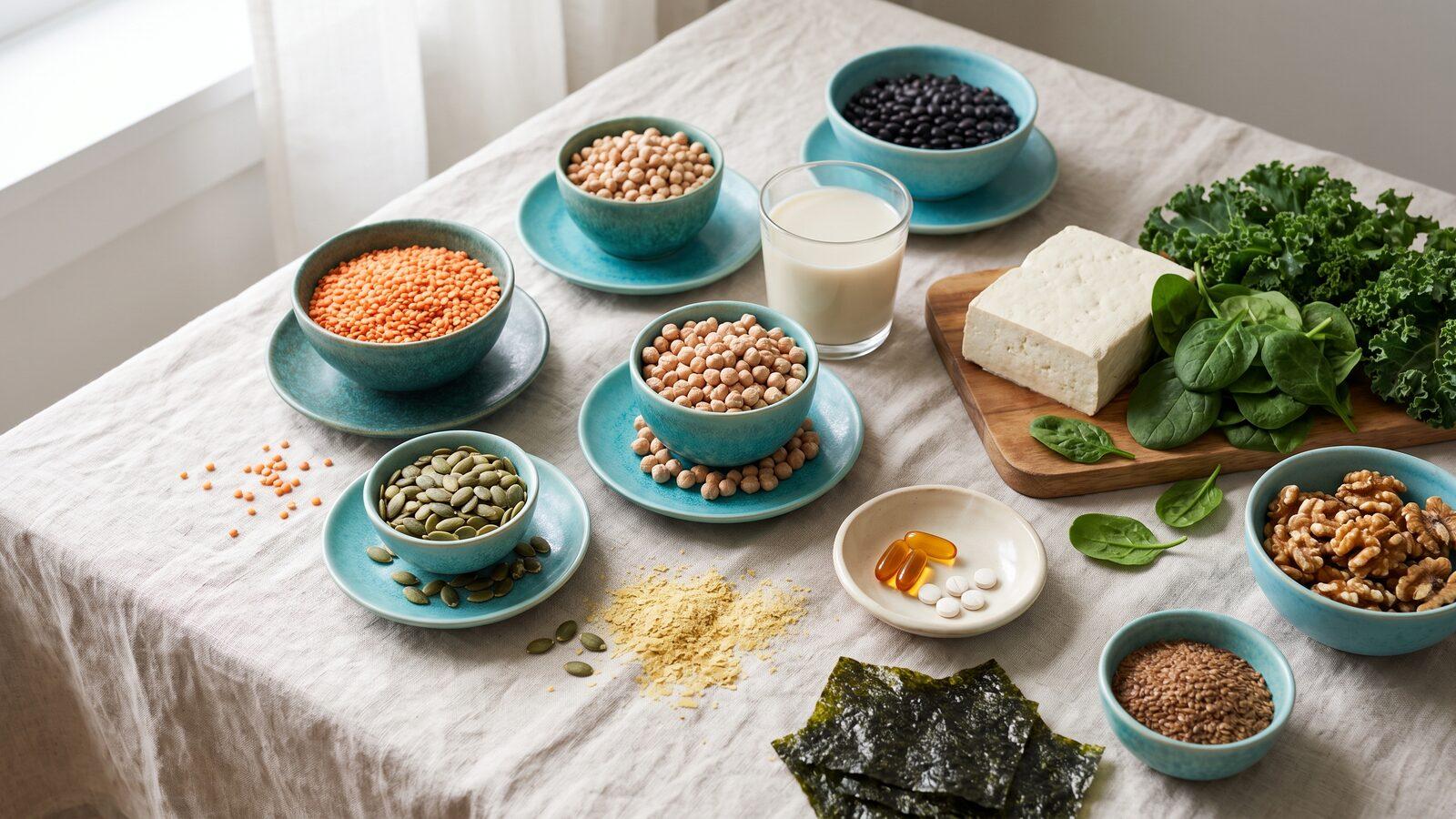
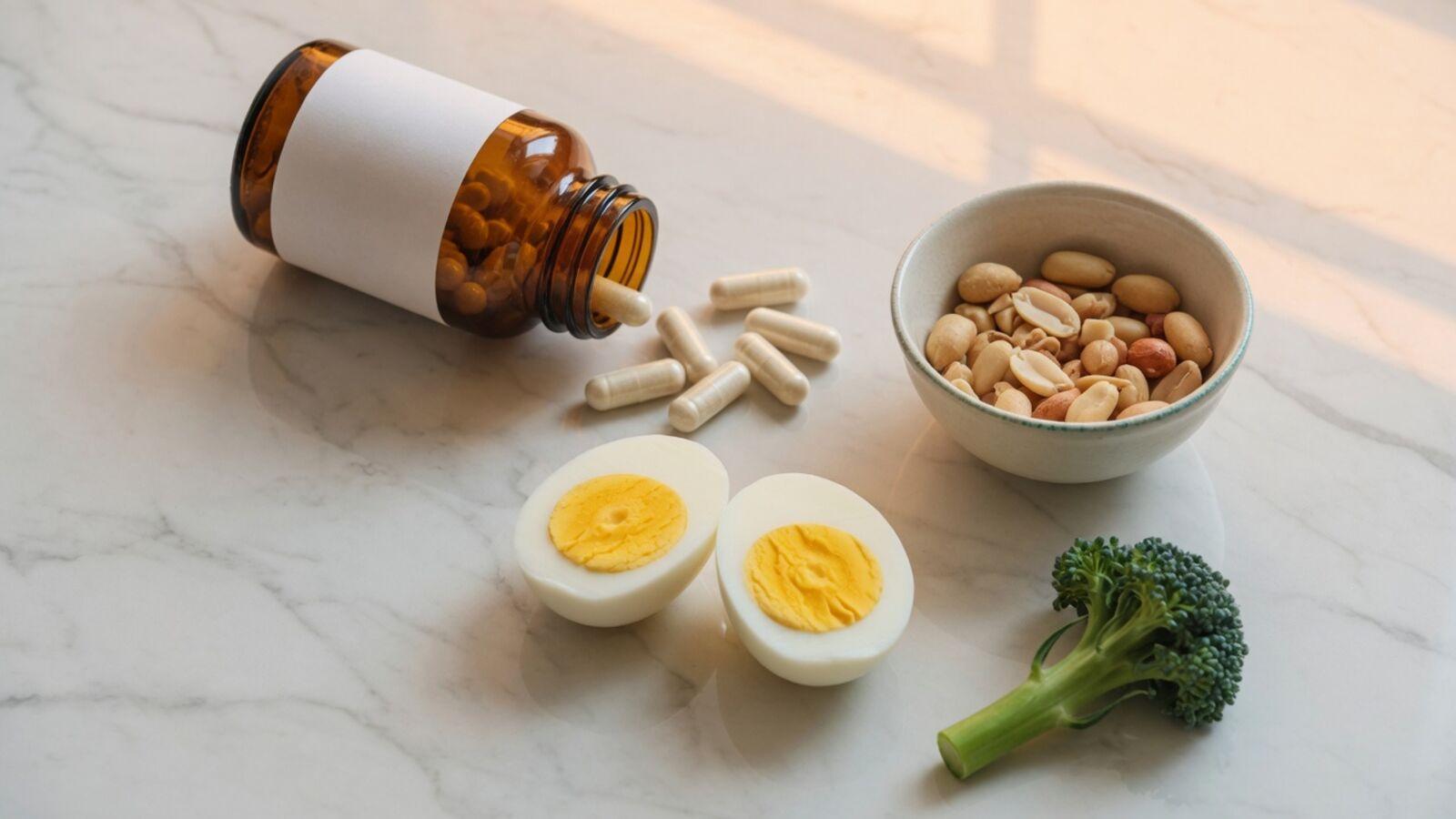
Eggs are the convenient choline food. One large hard-boiled egg has about 147 mg. Two eggs and a mixed plate get a lot of people near the women's AI. Take eggs off the table and the remaining plant sources (cruciferous vegetables, beans, peanuts, potatoes) are real but thinner. Strict vegans already have a non-negotiable B12 requirement. Choline is the next nutrient that diet-alone optimism tends to miss. Our vegan and vegetarian supplement guide covers B12, iron, iodine, and algae omega-3; choline belongs on that same short list if eggs are not in rotation.
3. Postmenopausal women
When estrogen drops, PEMT makes less choline in-house. That is why postmenopausal women in the depletion study looked more like the men than like the premenopausal group. Food-first still applies. If the diet is light on eggs and meat, a basic choline bitartrate or phosphatidylcholine supplement is a more honest experiment than a liver-cleanse blend.
4. People who cannot eat enough choline-rich food
Very low-calorie diets, egg-free "clean eating," and medical diets that strip animal foods all cut the easiest choline sources. If those foods are gone, the capsule is doing food's job.
If you eat a mixed diet with eggs or meat most days, you are probably not in these groups. A standard multivitamin will not save you either: choline is usually absent from that bottle too.
The Label Trap: 500 mg of What?
This is the section that saves money.
Choline bitartrate is the cheap, common salt. It is not 100% choline. By weight it is only about 41% choline. A capsule that says "choline bitartrate 500 mg" is delivering roughly 200 mg of choline. A capsule that says "choline 500 mg (as bitartrate)" is the number you actually wanted. Read the Supplement Facts line for choline, not the compound name in the ingredient list. Our label buyer's guide is the same habit for every bottle.
Phosphatidylcholine / lecithin. This is choline already sitting in a phospholipid, closer to how it appears in eggs. Milligrams of lecithin are not milligrams of choline. Sunflower or soy lecithin granules can help you nudge intake, but you have to check the choline line or you are guessing.
Citicoline (CDP-choline) and Alpha-GPC. These are the nootropic-aisle forms. Citicoline is about one-fifth choline by weight; Alpha-GPC is roughly 40%. They are studied more for cognition and training than as a cheap way to hit 425 mg. If the goal is the AI, bitartrate or phosphatidylcholine is the rational buy. If a clinician recommended citicoline, buy citicoline and log that.
Third-party testing still matters. NSF, USP, or ConsumerLab beats a brain-graphic label.
How Much to Take If You Supplement
Match the gap, do not flood it.
- Diet gap, mixed eater: 150 to 300 mg of actual choline per day, with food, is usually enough to bring a low-egg diet toward the AI without stacking on top of three daily omelets.
- Vegan / egg-free: 300 to 400 mg of actual choline per day as bitartrate or phosphatidylcholine is a reasonable starting range while you keep plant sources in the rotation.
- Pregnancy / lactation: Food first, then enough supplemental choline to approach 450 mg (pregnancy) or 550 mg (lactation) from food plus capsule combined. Do this with the prenatal, not as a secret extra.
- Do not chase the UL. 3,500 mg is the ceiling, not a performance target. High supplemental doses can cause fishy body odor (trimethylamine), sweating, nausea, and low blood pressure. Those effects show up with gram-level supplements, not with eggs.
Timing is boring on purpose. Take choline with a meal. There is no meaningful pre-workout versus bedtime split for the nutritional dose. Put it on the same plate as the rest of the stack you already remember.
Eggs, TMAO, and the Heart Scare
Gut bacteria can turn unused choline into trimethylamine, which the liver oxidizes to TMAO. Higher blood TMAO has been linked with cardiovascular events in some observational work, and that finding launched a decade of "eggs will clog your arteries via choline" headlines.
The honest summary, from Harvard's Nutrition Source and the Linus Pauling Institute, is that the TMAO story is not settled. Some cohorts associate higher phosphatidylcholine intakes with more cardiovascular deaths. Others find no link between choline intake and coronary disease. TMAO may be a marker of an underlying process rather than the thing you fix by dropping eggs. Trials have not shown that choline capsules improve memory the way the labels imply, and they have not shown that ordinary food-level choline is a heart toxin.
Practical translation: do not megadose choline for the brain, and do not panic about an egg. If you already have a clinician's lipid plan, bring the supplement question to that visit instead of stacking Alpha-GPC on top of it.
How to Know If the Experiment Is Working
Choline is a poor "do I feel it?" nutrient. Useful checks:
- Audit food for a week. Count eggs, meat, fish, dairy. If you already average two eggs a day plus a mixed diet, a capsule is probably redundant.
- Read elemental choline. Whatever you buy, log milligrams of choline, not milligrams of bitartrate, Alpha-GPC, or lecithin.
- Give it a month. Liver-related effects, when they happen, are not a same-week mood shift. If you started choline because of a clinician's concern about fatty liver, follow their labs, not a Reddit timeline.
- Stop if you smell like fish. That is the high-dose side effect telling you the dose is past useful.
A tracker cannot tell you whether PEMT is keeping up. It can stop you from double-counting a prenatal, a "focus" capsule, and lecithin powder as three different nutrients when they are all choline. Log the form and the elemental milligrams.
The people who benefit are the ones whose diet actually lacked it, taking a labeled dose, every day. For everyone else, the evidence-based answer is still the one the nootropic aisle does not print: eat the eggs, skip the tub.