A well-planned plant-based diet is healthy, but a handful of nutrients are genuinely hard to get from plants alone, and the list differs for vegetarians versus vegans. Vitamin B12 is the one non-negotiable: it is effectively absent from plant foods, so every vegan needs a reliable supplement (around 50 to 250 mcg daily, or 1,000 mcg two to three times a week), and most long-term vegetarians benefit too. Omega-3 EPA and DHA come next, because the body converts plant ALA from flax and chia very poorly; an algae oil supplying 250 to 500 mg of combined EPA and DHA solves it without fish. Iron matters because plant (non-heme) iron is absorbed less efficiently and blocked by tea, coffee, and calcium, though pairing it with vitamin C helps a lot; supplement based on bloodwork rather than by default. Iodine is the commonly overlooked one: vegans who avoid iodized salt, dairy, and seaweed can fall short, and a modest 150 mcg dose covers it. Zinc absorption is reduced by phytates in whole grains and legumes, so vegans sit at the lower end and a 100% RDA dose is sensible insurance. Vitamin D matters for everyone in winter, and vegans should choose lichen-derived D3. Calcium is usually fine for vegetarians but vegans need fortified plant milk, tofu, or a supplement. Protein, by contrast, is rarely the problem people fear. The smart approach: cover B12 and omega-3 by default, confirm iron and vitamin D with a blood test, and track intake so gaps do not go unnoticed for months.
A well-planned plant-based diet is one of the healthiest ways to eat, and the research on that is not really in dispute. But "well-planned" is carrying a lot of weight in that sentence. A few nutrients are genuinely difficult, and in one case impossible, to get from plants alone, and the standard advice to "just eat a varied diet" quietly fails on exactly those few.
The good news is that the list is short and the fixes are cheap. You don't need a cabinet full of pills to eat plant-based safely. You need to cover a small set of specific gaps, and you need to know which gaps are yours, because a lacto-ovo vegetarian and a strict vegan are not facing the same problem.
First: vegetarian and vegan are different problems
This distinction gets skipped constantly, and it changes almost everything.
Lacto-ovo vegetarians still eat dairy and eggs, which quietly patch several of the hardest gaps: eggs and milk supply some B12, dairy covers calcium and iodine, and eggs contribute a little DHA. Their real weak spots are omega-3, iron, and sometimes zinc and vitamin D.
Vegans remove those backstops entirely. Every nutrient below is genuinely in play, and B12 moves from "probably fine" to "non-negotiable."
So as you read, sort yourself. If you eat dairy and eggs regularly, you can relax about a few of these. If you're fully plant-based, assume the whole list applies until a blood test says otherwise.
Before you commit to one app, it's worth reading our honest comparison of supplement tracker apps.
1. Vitamin B12: the one you cannot skip
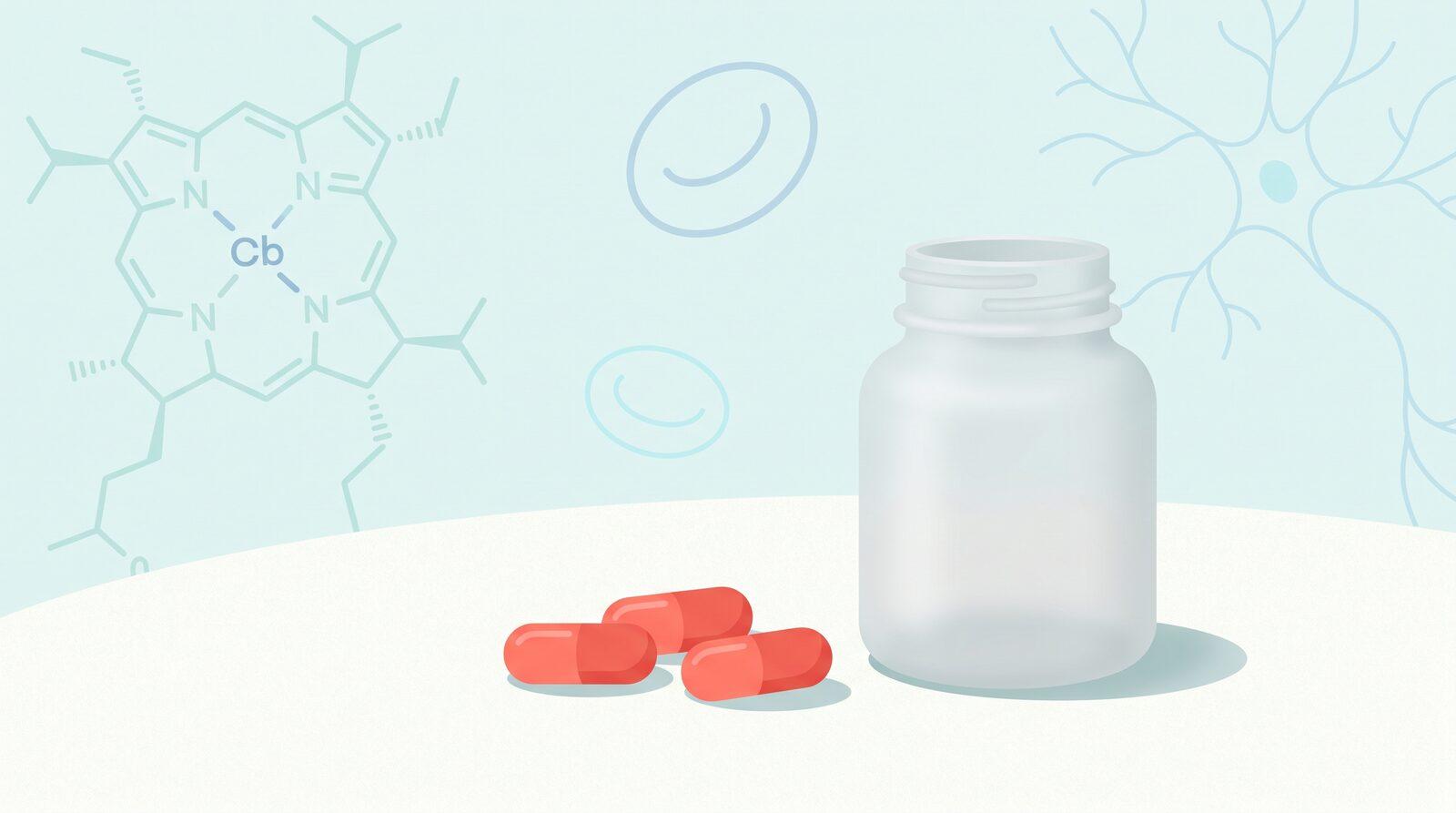
This is the single most important supplement in this entire article, and it is not optional for vegans.
B12 is made by bacteria, not plants or animals. Animals accumulate it, which is why meat, fish, eggs, and dairy contain it and unfortified plant foods essentially do not. Spirulina, nori, tempeh, and "B12-rich" mushrooms are a trap: much of what they contain is inactive B12 analogues that can even interfere with the real thing. There is no reliable plant food source. Full stop.
The stakes are high because deficiency is sneaky. Your body stores B12 for years, so a new vegan can feel perfectly fine while levels slowly drain, then develop fatigue, anemia, tingling in the hands and feet, and, if it goes on long enough, nerve damage that may not fully reverse. This is the one gap that causes real harm when ignored.
The fix is simple and cheap. Because absorption drops as the dose rises, you can either take a smaller daily dose or a larger intermittent one:
- Daily: 50 to 250 mcg of cyanocobalamin or methylcobalamin
- Two to three times per week: around 1,000 mcg
Every vegan should take B12, no exceptions. Long-term vegetarians should get their levels checked, since many run lower than they assume. We go deeper into who needs it and how to read your labs in our guide to who actually needs a vitamin B12 supplement.
2. Omega-3 (EPA and DHA): skip the fish, not the fat
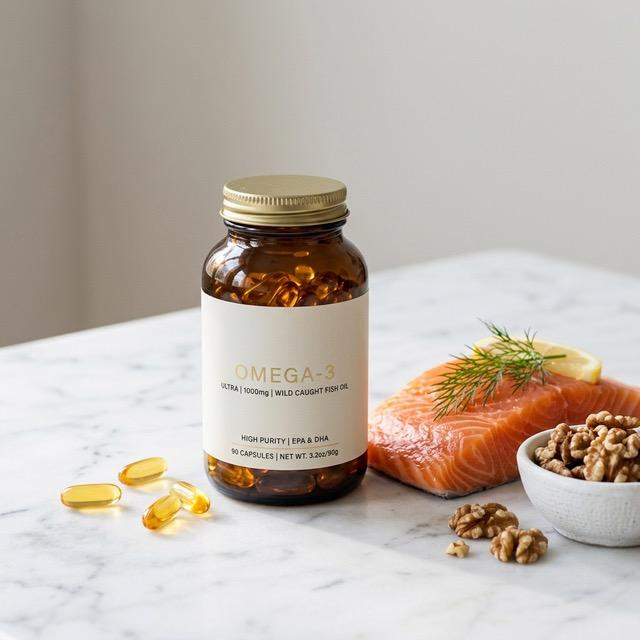
Plants do provide an omega-3 called ALA, found in flaxseed, chia, walnuts, and hemp. The problem is that your body converts ALA into the two forms that actually matter for the brain, eyes, and heart, EPA and DHA, at a dismal rate: often under 10% for EPA and only a few percent for DHA. Eating more flax does not fix this, because the conversion bottleneck is enzymatic, not a matter of supply.
For years the only direct source of EPA and DHA was fish, which put plant-based eaters in an awkward spot. The clean answer now is algae oil: fish get their omega-3s from algae in the first place, so algae oil skips the fish entirely and delivers EPA and DHA directly, without the ocean-contaminant or sustainability concerns.
Look for a supplement providing roughly 250 to 500 mg of combined EPA and DHA per day. Keep eating your ground flax and chia for the fiber and ALA, but treat algae oil as the part that does the real work. For how these numbers are set and why more isn't better, see our omega-3 dosage guide.
3. Iron: the bioavailability problem, not the intake problem
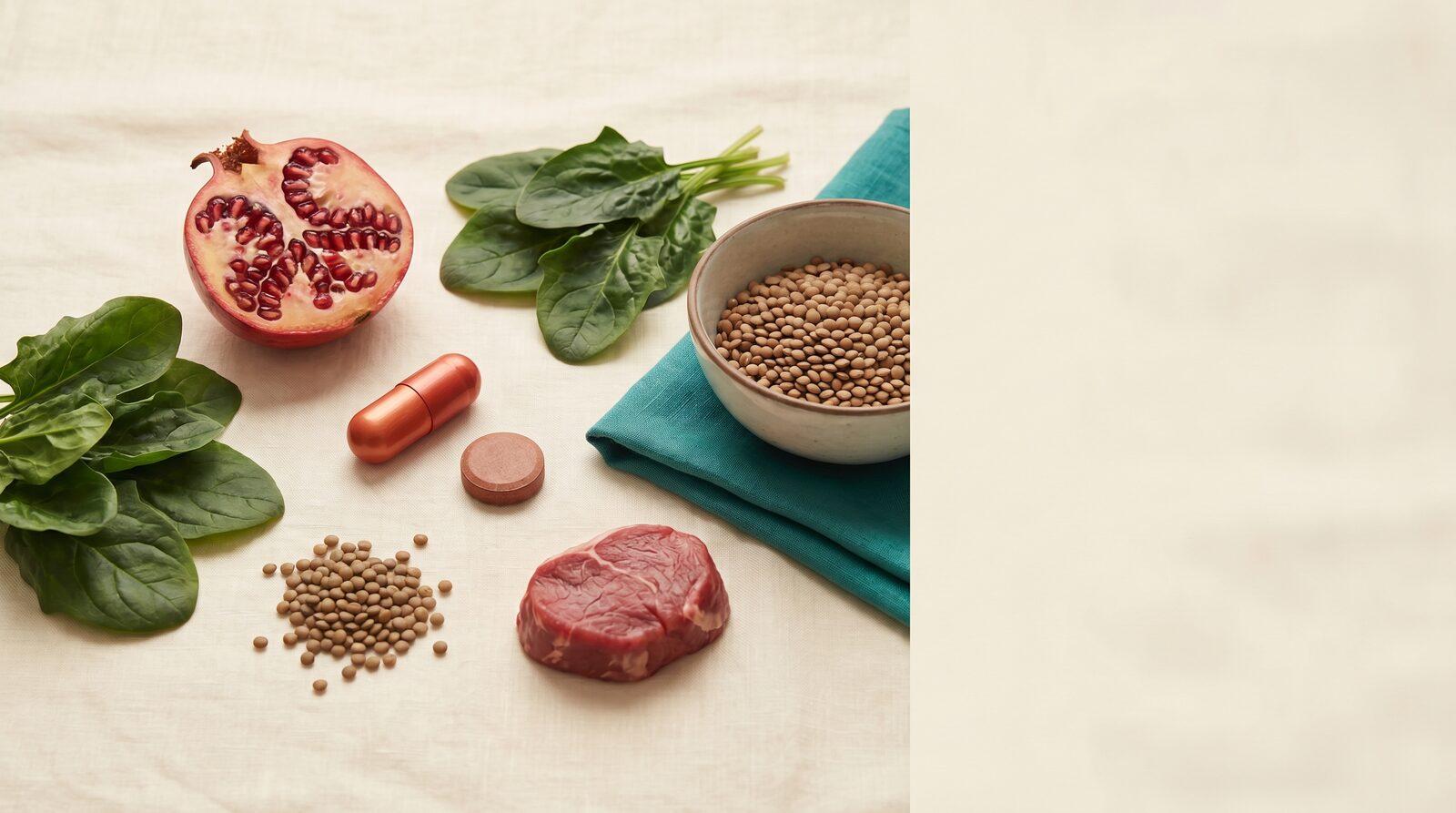
Plant-based diets are often not low in total iron. Lentils, beans, tofu, and dark greens can supply plenty. The catch is that plant iron is non-heme iron, which the body absorbs far less efficiently than the heme iron in meat, and its absorption is actively blocked by the tannins in tea and coffee and by calcium taken at the same time.
This is why blanket iron supplementation is the wrong move. Non-heme iron absorption is highly adjustable:
- Pair iron-rich meals with vitamin C (bell peppers, citrus, tomatoes). This can multiply absorption several times over and is the single most effective trick.
- Keep tea and coffee away from your main iron meals, ideally by an hour or so.
- Don't take a calcium supplement alongside your iron (more on that pairing in our note on taking iron and calcium together).
Menstruating women, endurance athletes, and pregnant women are at genuinely higher risk and should pay attention. But iron is not a supplement to take on autopilot: too much causes constipation, nausea, and, over time, real harm. Check your ferritin with a blood test and supplement based on the result, not on the assumption that plant-based automatically means low. Our guide on who actually needs iron supplements walks through the numbers.
4. Iodine: the overlooked one
Iodine rarely makes the headlines, and that is exactly why it slips through. Your thyroid needs it to make the hormones that regulate metabolism, and the usual dietary sources, iodized salt, dairy, and seafood, are precisely the ones a vegan may not eat. Sea salt, Himalayan salt, and the salt hidden in processed food are mostly not iodized, so it's easy to think you're covered when you aren't.
Two clean fixes: a supplement providing around 150 mcg of iodine (often included in a vegan multivitamin), or a measured, modest amount of seaweed. Modest is the key word, because seaweed swings wildly in iodine content and kelp in particular can deliver a wild overdose. Iodine has a narrow window: too little and too much both stress the thyroid, so aim for the RDA rather than megadosing.
5. Zinc: quiet insurance
Zinc follows the same pattern as iron. Plant sources exist, beans, nuts, seeds, whole grains, but the phytates in those same foods bind zinc and reduce how much you absorb. Vegans tend to sit at the lower end of the healthy range rather than in outright deficiency, so this is insurance rather than an emergency.
Techniques that help: soaking, sprouting, and fermenting grains and legumes lower their phytate content and free up more zinc. If you'd rather not rely on food alone, a supplement at around 100% of the RDA (roughly 8 to 11 mg) is sensible and safe. Avoid the high-dose 50 mg lozenges as a daily habit, since chronic high zinc intake depletes copper. We cover the dosing and the copper trade-off in our piece on zinc for immunity.
Two more to keep on your radar
Vitamin D. This one isn't vegan-specific, almost everyone runs low through the winter, but there's a plant-based wrinkle: standard D3 is derived from lanolin (sheep's wool). Choose a lichen-derived vegan D3, which is now widely available and more effective than the older plant-based D2. Most people benefit from 1,000 to 2,000 IU daily in the darker months; a blood test tells you where you actually stand, as we explain in how much vitamin D you need.
Calcium. Vegetarians who eat dairy are usually fine. Vegans need to be a little deliberate: fortified plant milks, calcium-set tofu, tahini, and leafy greens can cover it, but if your intake is patchy, a modest supplement protects your bones. Just don't take it at the same time as your iron.
What you can stop worrying about
Two reassurances, because plant-based eaters often stress about the wrong things.
Protein. The "but where do you get your protein" question is largely a myth for anyone eating enough total food with a spread of legumes, soy, grains, and nuts. You almost certainly don't need a supplement for adequacy. A protein powder can be convenient for athletes or big appetites, but it's a convenience, not a deficiency fix, as we discuss in do you need protein powder.
Everything else. You do not need a 30-ingredient "vegan superfood" blend. The gaps that matter are the specific ones above. Money spent on exotic powders is money not spent on the boring supplements that actually close real gaps.
Build a simple stack, then confirm it with a test
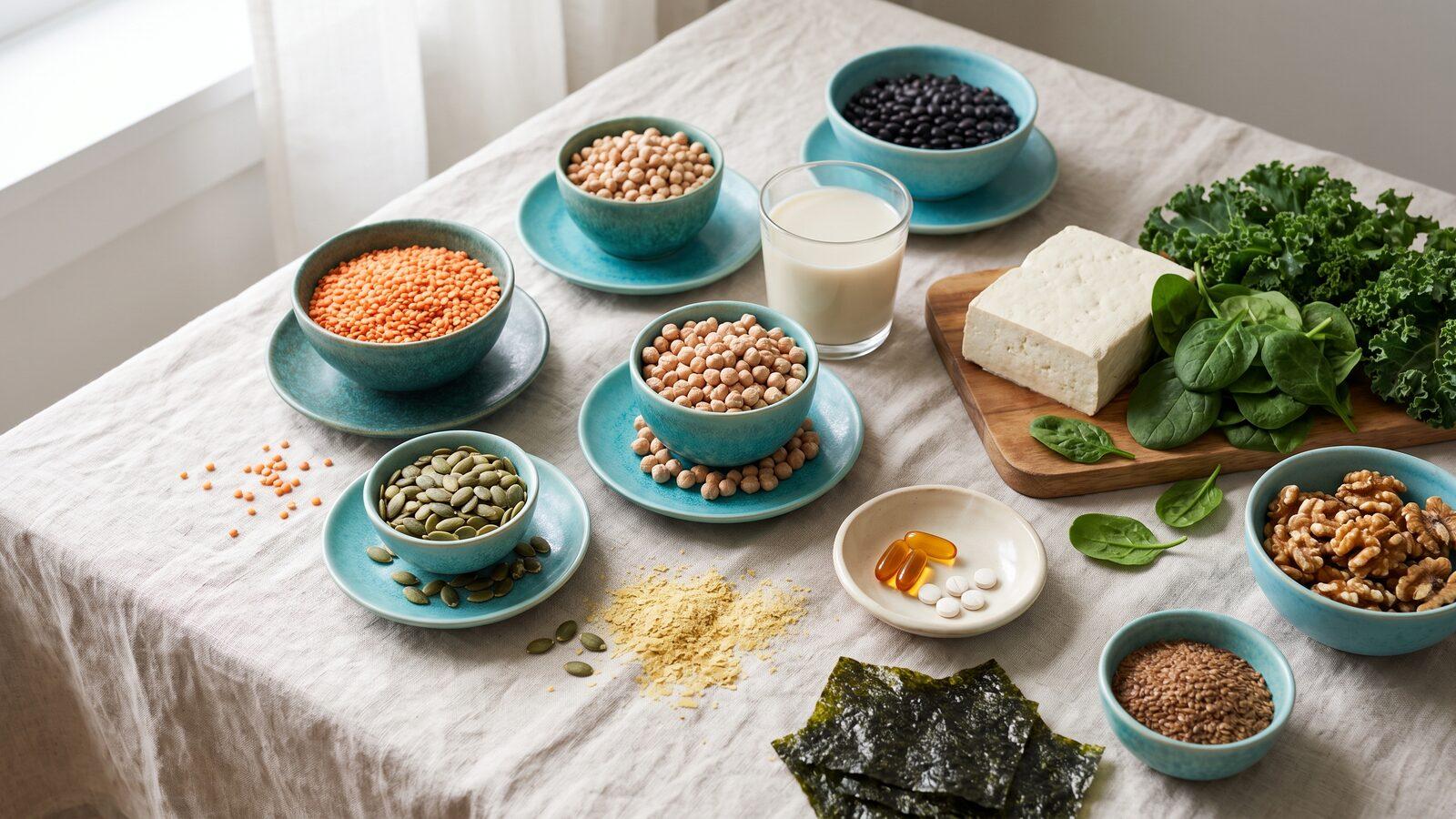
Here's the whole article as a routine. A vegan default looks like: B12 (daily or a couple of larger doses a week), algae oil for EPA/DHA, a vegan D3 in winter, and iodine, either via a supplement or measured seaweed. Add iron and zinc based on diet and bloodwork rather than by default. A vegetarian who eats dairy and eggs can often trim this to omega-3 and vitamin D, plus iron if labs call for it.
The two nutrients truly worth a blood test are iron (ferritin) and vitamin D, because both cause problems in either direction and both are easy to get wrong by guessing. B12 is worth checking too if you've been plant-based for years without supplementing.
None of this works if you take it inconsistently, and that is the real-world failure point. A new omega-3 or B12 habit is invisible: you can't feel it working day to day, so it's the first thing to slip. Logging your doses in a supplement tracker turns an easily forgotten routine into a streak you can actually see, and gives you an honest record to bring to your next checkup. Pair that with the label-reading and quality checks in our guide to choosing a quality supplement, and the whole plant-based nutrition question shrinks to something you can manage in about thirty seconds a day.
Plant-based eating doesn't require heroics or a wall of pills. It requires closing five or six specific gaps, ignoring the noise, and checking the two or three things worth checking. Do that, and "well-planned" stops being a caveat and becomes just how you eat.
This article is for educational purposes and does not constitute medical advice. Talk to a qualified healthcare provider before starting any new supplement, and ask for a blood test to check B12, iron, and vitamin D if you have followed a plant-based diet for an extended period, are pregnant or breastfeeding, or are raising children on a vegan diet.