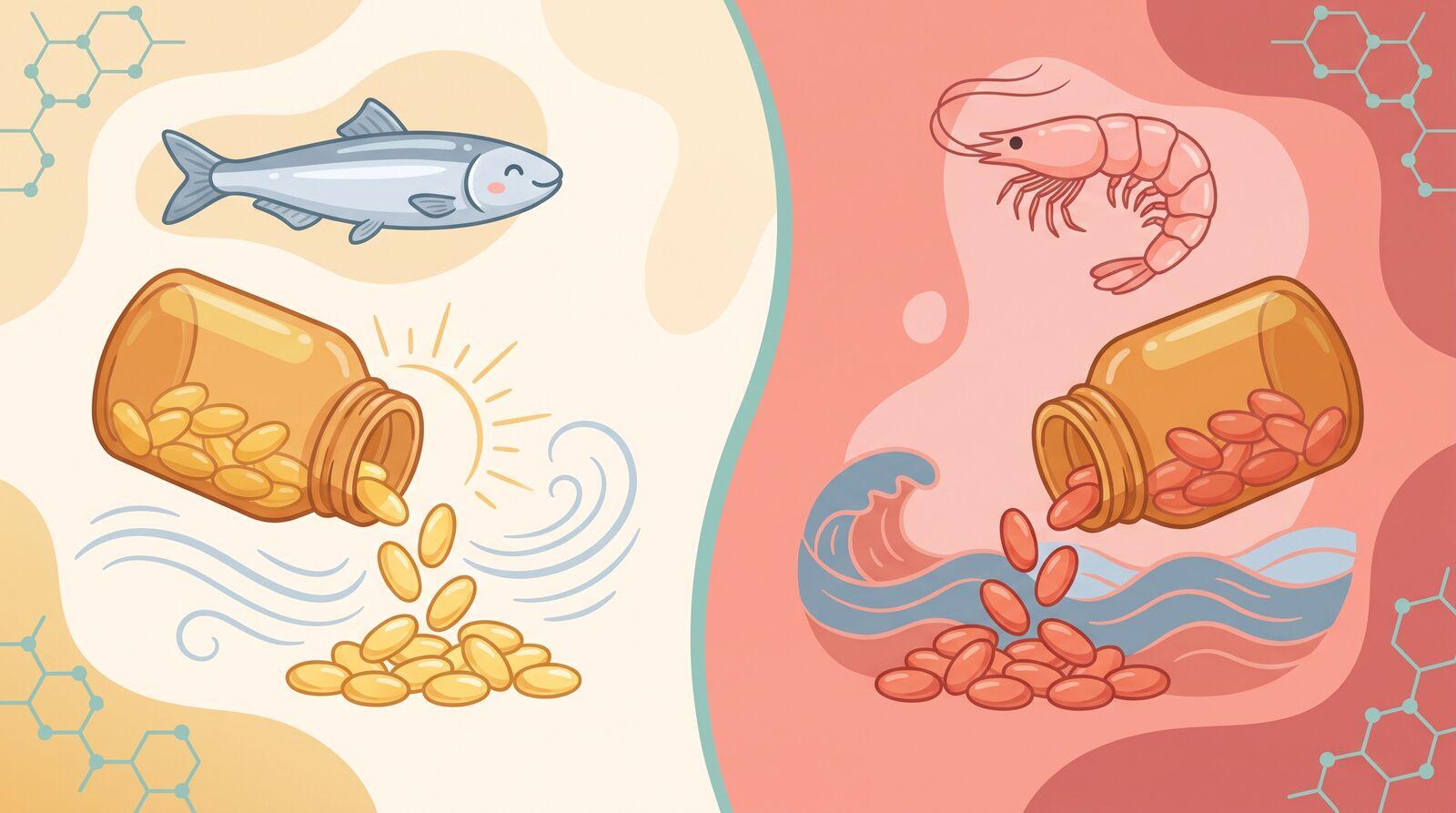
Krill oil and fish oil deliver the same two omega-3 fatty acids, EPA and DHA, but krill carries a portion of them as phospholipids and adds a small amount of the antioxidant astaxanthin. The claimed absorption advantage comes from small, short, mostly industry-funded studies that rarely matched doses fairly, and even a generous reading does not offset the price: per milligram of EPA and DHA, krill oil typically costs 3 to 10 times more. Every major cardiovascular outcome trial was run on fish oil or prescription fish oil derivatives, not krill, and the one large krill oil drug program produced mixed results and was never approved. A typical krill capsule contains 100 to 150 mg of EPA and DHA versus around 300 mg in a standard fish oil softgel and 600 mg or more in a quality concentrate, so reaching an evidence-backed 1,000 to 2,000 mg daily dose with krill is impractical and expensive. Choose a triglyceride-form fish oil concentrate for meaningful doses, algae oil if you are vegan, and krill only if you take a small maintenance dose, hate fishy burps, and accept the premium. Skip krill entirely if you have a shellfish allergy.
Stand in front of the omega-3 shelf and you will see the same standoff in every store: a big bottle of fish oil for the price of a sandwich, and next to it a smaller, redder, considerably more expensive bottle of krill oil promising superior absorption, cleaner sourcing, and an antioxidant bonus. The krill bottle usually costs two to four times more while containing a fraction of the omega-3s. That only makes sense if the marketing claims hold up.
This article puts the two head to head the way the label never does: what is chemically different, what the absorption studies actually showed, where the outcome evidence lives, and what a milligram of EPA and DHA really costs from each source. By the end, the choice is not close.
What Is Actually Different
Both oils exist for the same reason: to deliver EPA and DHA, the two long-chain omega-3 fatty acids your body uses for cardiovascular, brain, and anti-inflammatory functions. If you want the dosing details by health goal, our omega-3 dosage guide covers them; the short version is that meaningful benefits start around 1,000 mg of combined EPA and DHA per day.
The differences are in the packaging, in both senses of the word:
- Fish oil comes from small fatty fish such as anchovies and sardines. Its EPA and DHA arrive as triglycerides (in natural and "TG" or "rTG" products) or as ethyl esters (in cheaper concentrates).
- Krill oil comes from Antarctic krill, a small crustacean. Roughly 30 to 65 percent of its EPA and DHA is bound to phospholipids, the same molecule class that builds cell membranes. It also contains astaxanthin, a red carotenoid antioxidant that gives krill oil its color and keeps it from oxidizing as quickly.
That phospholipid structure is the foundation of nearly every krill oil marketing claim, so it deserves an honest look.
Staying consistent with a daily supplement routine is much easier with a dedicated app, and we have compared the leading supplement tracker apps to help you pick the right one.
The Absorption Claim, Examined
The pitch is that phospholipid-bound omega-3s absorb better than triglyceride-bound ones, so you can take less krill oil and get the same effect. There is a real mechanism behind this: phospholipids are water-dispersible, mix more readily with bile, and may incorporate into cell membranes somewhat differently.
The clinical support, however, is thinner than the labels suggest:
- The studies most often cited are small, typically 10 to 80 participants, and run for days to a few weeks, measuring blood levels rather than health outcomes.
- Several of the best-known ones were funded by krill oil manufacturers.
- Crucially, many did not match doses. Comparisons frequently gave the krill group a different amount of EPA and DHA than the fish oil group, then reported relative absorption in a way that flattered the phospholipid form.
- When researchers have compared forms at equal EPA and DHA doses, results ranged from "modestly better" to "no meaningful difference." Meanwhile, the absorption of any omega-3 improves dramatically when you simply take it with a fat-containing meal, an effect large enough to swamp the form question entirely.
A fair summary: krill oil may have a modest bioavailability edge, but it is nowhere near the 2x or 3x advantage that would be needed to justify its price per milligram. If absorption is your concern, taking a triglyceride-form fish oil with your largest meal solves it for far less money.
Where the Actual Evidence Lives
Here is the argument that should end most debates: essentially all of the meaningful clinical evidence for omega-3s was generated with fish oil or fish-oil-derived prescription drugs.
The large cardiovascular outcome trials, including the ones we discussed in our heart health supplement review, used fish oil capsules or purified EPA ethyl esters. The trials that established triglyceride lowering, the studies behind the American Heart Association's recommendations, the mood and joint research: fish oil, almost every time.
Krill oil's outcome record is short and not encouraging. The most serious attempt, a pharmaceutical-grade krill oil program tested for severe hypertriglyceridemia in phase 3 trials, produced mixed results and never reached approval. Beyond that, krill research consists mostly of the small absorption studies above and modest lipid-marker studies at doses too low to compare against the fish oil literature.
This does not mean krill oil does nothing. EPA and DHA are EPA and DHA. But if you are taking omega-3s because of the evidence, it is worth noticing that the evidence was built with the cheaper product.
Astaxanthin: A Real Antioxidant at a Decorative Dose
Krill oil marketing leans heavily on astaxanthin, and the molecule itself is genuinely interesting: it is a potent carotenoid antioxidant, and it does help protect the oil in the capsule from going rancid.
The problem is arithmetic. Studies exploring astaxanthin's effects on skin, exercise recovery, and oxidative stress markers typically use 4 to 12 mg per day. A standard krill oil capsule contains roughly 0.05 to 1.5 mg. You would need to swallow a fistful of krill capsules daily to reach the doses those studies used. As shipped, astaxanthin in krill oil is a preservative with good PR, not a therapeutic ingredient.
If astaxanthin interests you, buy it as its own supplement at a studied dose. Do not pay a krill premium for a trace of it.
The Math That Decides It: EPA and DHA per Dollar
The front of the bottle advertises "1,000 mg fish oil" or "500 mg krill oil." Neither number is the one that matters. As we explain in how to read a supplement label, the only figures worth comparing are the milligrams of EPA and DHA in the supplement facts panel.
Here is what typical products actually deliver:
| Product | Per capsule | Typical EPA + DHA | Capsules for 1,000 mg |
|---|---|---|---|
| Standard fish oil | 1,000 mg oil | ~300 mg | 3 to 4 |
| Fish oil concentrate (TG/rTG) | 1,000 to 1,400 mg oil | 600 to 900 mg | 1 to 2 |
| Krill oil | 500 to 590 mg oil | 100 to 150 mg | 7 to 10 |
| Algae oil | 800 to 1,300 mg oil | 300 to 600 mg | 2 to 3 |
Now add prices. Krill oil bottles routinely cost as much as or more than quality fish oil concentrates while containing a fifth of the omega-3s per capsule. Run the numbers on almost any pair of real products and krill oil lands between 3 and 10 times more expensive per milligram of EPA and DHA. Even granting krill a generous absorption bonus, you are paying concentrate prices for starter doses.
This is the same trap we flagged in our cheap supplements guide from the other direction: the sticker price of a bottle tells you nothing until you divide it by the active dose inside.
Sustainability and Purity: Closer Than the Marketing Says
Krill oil advertising leans on two more points, and both deserve a fair hearing:
- Contaminants. Krill sit near the bottom of the food chain and accumulate very little mercury. True. But reputable fish oil is made from short-lived species like anchovies and is molecularly distilled, with third-party certificates showing heavy metals below detection limits. Both products are clean when made properly; check for testing seals either way, as covered in how to choose a quality supplement.
- Sustainability. The Antarctic krill fishery is tightly managed and much of it is MSC-certified, which is genuinely good. But krill are also the food supply for whales, penguins, and seals, and conservation groups continue to debate expanding harvests in a warming Southern Ocean. Fish oil's reduction fisheries have their own problems. Neither side holds the moral high ground; if this issue drives your choice, algae oil sidesteps it entirely.
Who Might Still Reasonably Choose Krill
An honest comparison should name the cases where krill oil defensibly wins:
- You take a small maintenance dose. If your target is 250 to 500 mg of EPA and DHA and money is not a concern, one or two krill capsules cover it without the larger softgels some people dislike swallowing.
- Fishy burps ruin fish oil for you. Phospholipids disperse in the stomach differently, and many people report fewer aftertaste problems with krill. That said, rTG concentrates taken with food, enteric-coated capsules, or simply freezing fish oil capsules solve the same problem more cheaply.
- You value the built-in oxidation resistance. Astaxanthin does keep krill oil fresher longer. A quality fish oil with vitamin E and a purchase date you actually track accomplishes the same thing.
And two groups should specifically avoid krill:
- Anyone with a shellfish allergy. Krill are crustaceans. This is an absolute stop, not a caution.
- Anyone on blood thinners should treat krill with the same respect as fish oil: omega-3s have mild antiplatelet effects regardless of the form, so clear meaningful doses with your doctor.
The Verdict
For the central job of an omega-3 supplement, delivering an evidence-backed dose of EPA and DHA at a sane price, fish oil wins and it is not close. A triglyceride-form fish oil concentrate with third-party testing delivers 600 mg or more of EPA and DHA per capsule at a fraction of krill's cost per milligram, in the same molecular family the major trials actually used. Vegans and the sustainability-minded have an excellent third option in algae oil.
Krill oil is not a scam; it is real EPA and DHA in a well-preserved, easy-to-tolerate package. It is simply a luxury version of a commodity, sold on an absorption story that the dose-matched data does not support and an antioxidant present at a decorative amount.
Whichever bottle you choose, the variable that dwarfs form, brand, and marketing is whether you actually take it every day with a meal that contains fat. Omega-3 tissue levels build over weeks of consistent use, and a dose you forget three times a week quietly becomes half a dose. A daily reminder and a simple log in Supplement Tracker make the consistency part automatic, so the money you spend on either oil actually turns into results you can measure at your next blood test.
This article is for educational purposes and does not constitute medical advice. Omega-3 supplements have mild blood-thinning effects and can interact with anticoagulant and antiplatelet medications. Talk to a qualified healthcare provider before starting krill oil or fish oil if you take any medication, have a bleeding disorder, are scheduled for surgery, have a shellfish or fish allergy, or are pregnant or breastfeeding.