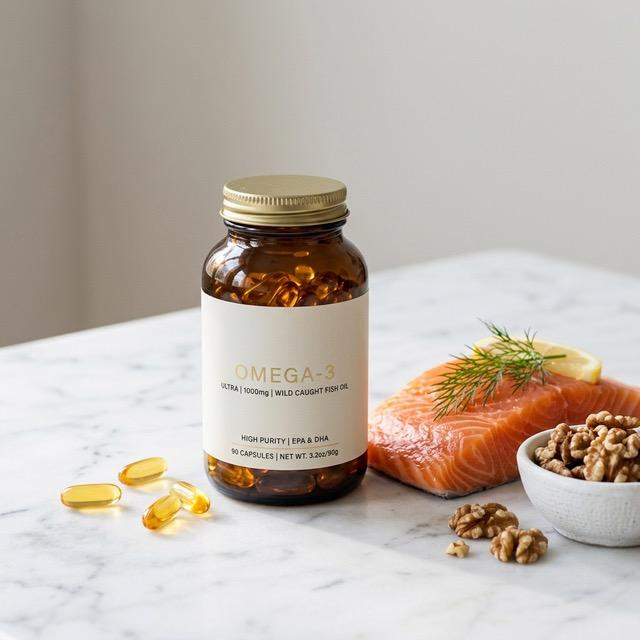
Yes, you can take zinc and omega-3 (fish oil) together, at the same meal. We found no study of the pair and no documented conflict between them: fish oil's omega-3s are fats, and nothing we found suggests they compete with zinc for absorption. A meal suits both, since fish oil is normally taken with food and zinc can upset an empty stomach. Zinc's spacing rules involve other minerals, so keep it apart from iron and calcium supplements. The adult upper limit for zinc is 40 mg a day, and 50 mg or more for weeks can inhibit copper absorption. EPA and DHA up to about 5 g a day appear safe long term, and fish oil side effects are usually mild. On an anticoagulant such as warfarin, ask your provider before starting fish oil.
This content is for informational purposes only and is not a substitute for professional medical advice, diagnosis, or treatment. Always consult your physician or qualified healthcare provider before starting any supplement regimen.
Check your whole list, not just one pair
Supplement Tracker reminds you of each dose, and its interaction check looks at every supplement you take, with sources from the NIH.
The first time you took zinc, it went down with black coffee before work, and by the time you reached your desk you felt queasy. The fish oil softgels have been part of dinner for a year without trouble, so the obvious move is to put the zinc next to them. Can you take zinc and omega-3 together like that, or does one of them need a meal of its own?
Yes, move the zinc to dinner. We found no study that tested zinc and omega-3 together and no documented conflict between them; neither is known to block the other's absorption. A meal suits both: fish oil is normally taken with food, and zinc may be gentler on a stomach that has food in it. What zinc does need is distance from iron and calcium supplements, and an eye on the dose, since high doses taken for weeks can inhibit copper absorption.
Do Zinc and Omega-3 Interfere?
Not in any source we found. The supplement conflicts that shape a zinc routine involve other minerals. The iron fact sheet from the NIH Office of Dietary Supplements (ODS) notes that iron and zinc compete for absorption, which is why our zinc and iron page suggests spacing them. Calcium supplements are the other reason to give zinc a different meal; our calcium and zinc page weighs that evidence. Copper is a question of dose rather than timing, covered below.
Fish oil does not belong on that list. Its omega-3s are fats, not minerals, and nothing we found suggests they compete with zinc for absorption the way iron does.
The one place they meet is your stomach. The ODS omega-3 fact sheet says the commonly reported side effects of omega-3 supplements are "usually mild" and lists unpleasant taste, bad breath, heartburn, nausea, gastrointestinal discomfort, diarrhea, headache and odoriferous sweat. Zinc can upset an empty stomach, which is why our zinc guide suggests taking it with a meal. A shared symptom is not an interaction, and we found no study suggesting that either one makes the other harder to tolerate. It does mean that if you start both in the same week and feel sick, you have two suspects instead of one.
What Each One Does
The ODS zinc fact sheet notes that zinc lozenges or syrup taken early in a cold can reduce how long the symptoms last. That is narrower than it sounds: a daily tablet taken all season in the hope of avoiding colds is a separate question, and the finding does not answer it. Our zinc for immunity guide goes through what zinc can and cannot do for colds.
Fish oil supplies the omega-3 fatty acids EPA and DHA. If your omega-3 comes as cod liver oil, ODS notes that it also provides vitamin A and vitamin D. That matters if a multivitamin or a vitamin D capsule is already in your routine; our omega-3 and vitamin D page shows how to count it.
Putting omega-3 and zinc at the same meal is a matter of convenience. We found no trial that gave the two together, so a label promising they work better as a pair claims more than we could find evidence for. Keep or drop each one on its own merits.
Practical Recommendations
This is our suggested routine, not a tested protocol.
- Take both with the same meal. Our omega-3 guide suggests taking fish oil with a meal that contains some fat, and the zinc gets food under it at the same sitting. Dinner is the easy choice if breakfast is only coffee.
- If zinc still makes you queasy with food, check the dose. A meal may settle zinc nausea, but it does not change how much zinc you take. Add up the zinc in every product, including a multivitamin and any lozenges, and compare the total with the zinc upper limit below. Our page on zinc nausea walks through the checks.
- If both bottles are new, start them a few days apart. Nausea is on the list of fish oil side effects too, so a staggered start tells you which one to blame.
- If fish oil gives you fishy burps, take it at the start of the meal. That is one of the tips in our omega-3 guide, and it costs nothing to try.
- Keep zinc away from iron and calcium supplements. Iron can take the morning while zinc and fish oil share dinner. Give a calcium supplement a meal of its own as well.
Dosage Considerations
Zinc: the upper limit for adults is 40 mg a day, according to the ODS zinc fact sheet. The same sheet warns that "doses of 50 mg of zinc or more over a period of weeks can inhibit copper absorption, reduce immune function, and lower high-density lipoprotein cholesterol levels." If your cholesterol is already something you and your doctor watch, that last item is worth knowing. Our zinc and copper page covers the copper side.
Omega-3: according to the European Food Safety Authority, as cited by ODS, long-term use of EPA and DHA supplements at combined doses of up to about 5 g a day appears to be safe. The FDA considers supplements that provide no more than 5 g a day of EPA and DHA safe when used as recommended. Read EPA and DHA off the label rather than the total weight of the oil; our omega-3 dosage guide shows how. Five grams is an outer bound, not a goal: ODS describes two large trials in which 4 g a day for several years slightly raised the risk of atrial fibrillation in people who had cardiovascular disease or were at high risk of it.
Who should check first:
- Anyone taking an anticoagulant such as warfarin. ODS notes that fish oil can have antiplatelet effects at high doses and might raise INR (a blood test of clotting time) in people on warfarin, though most research indicates that 3 to 6 g of fish oil a day does not significantly affect their anticoagulant status. Talk to your provider before you start; our page on fish oil and blood thinners has more detail.
- Anyone taking 50 mg of zinc or more for weeks, or planning to. Ask a doctor about copper before you settle into that dose.
Key Takeaway
You can take zinc and omega-3 together, and a meal suits both: fish oil is normally taken with food, and zinc may sit easier on a full stomach. We found no conflict between them and no study of the pair, so sharing dinner is a convenience rather than a strategy. The spacing that matters keeps zinc away from iron and calcium supplements. The adult limits to remember are 40 mg of zinc a day and about 5 g of EPA and DHA combined. If you take an anticoagulant, ask your provider before starting fish oil.
Track Your Timing
In Supplement Tracker, zinc and fish oil can share a dinner slot while an iron tablet keeps a morning slot, each slot with its own reminder time. Check off each dose as you take it, and your dated history lets you count how many weeks you have actually taken a given zinc dose, which is the number the copper warning turns on.