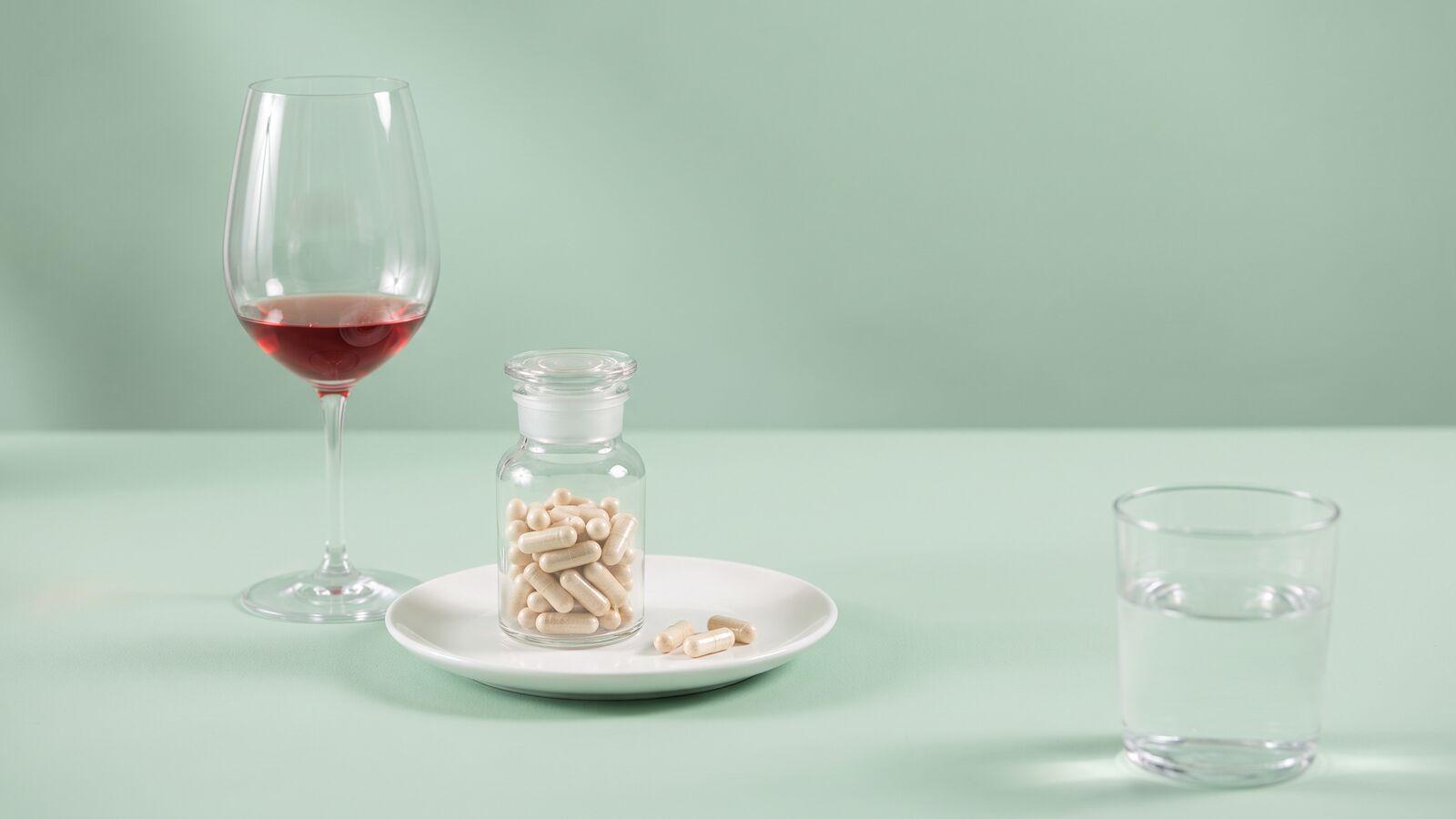
Alcohol costs you nutrients through three mechanisms that all scale with how much you drink: it damages the intestinal surface that absorbs thiamine and folate, it drives urinary losses of magnesium, zinc, and potassium, and it makes the liver deprioritize everything else while it clears ethanol. Thiamine is the headline casualty, with low levels reported in 30 to 80 percent of alcohol-dependent inpatients and body stores that last only weeks. Folate, B6, magnesium, zinc, and vitamin D all follow. Three groups of supplements are worth actively avoiding around drinking. Sedating products stack with alcohol's own depressant effect: melatonin, valerian, kava, ashwagandha, high-dose magnesium, and CBD. Liver-loaded products raise a risk that alcohol already raises: kava has been implicated in serious liver injury on its own, gram-level niacin is hepatotoxic, concentrated green tea extract has a track record, and high-dose vitamin A and beta-carotene are actively potentiated by ethanol, with animal work showing beta-carotene worsening alcohol-induced liver injury. High-dose fish oil plus alcohol plus an anticoagulant compounds bleeding risk. The hangover aisle is weaker than it looks: DHM is the most-studied ingredient and a 2024 randomized placebo-controlled trial reported a large benefit, but the human trials are small and often tied to the products being sold; the best-known NAC trial found no significant difference in overall hangover scores across 49 people; prickly pear extract reduced nausea and dry mouth but not headache. Electrolytes and a B-complex are the most defensible purchases because they address what drinking actually does. Alcohol is a sedative, not a sleep aid: it suppresses REM early and fragments the second half of the night, and melatonin will not repair that. The routine matters most when you are cutting back, where repletion, sleep, and time do the work, and where anyone drinking heavily and daily needs medical supervision to stop rather than a supplement plan.
You have a routine that finally works. Then there is a wedding, or a Friday, or a week in which both happen, and you end up standing in the kitchen at midnight holding a magnesium capsule, wondering whether taking it right now is pointless, unwise, or both.
Two different questions are hiding inside that moment, and most articles answer neither. The first is whether alcohol interacts badly with anything on your shelf, which for a specific and predictable handful of products it genuinely does. The second is whether drinking quietly undoes the routine you have been building, which depends almost entirely on how much and how often you drink, and barely at all on whether you swallowed the capsule that night.
The good news is that both questions have concrete answers. The less good news is that the most effective intervention in this entire article is not a supplement.
What Alcohol Actually Does to Your Nutrient Status
Three mechanisms, and all of them scale with intake rather than switching on at some threshold.
It damages the absorptive surface. Ethanol and its metabolites irritate the lining of the small intestine and interfere with the active transport systems that pull in thiamine and folate specifically. Less nutrient crosses from the gut into you, regardless of what the label promised.
It increases what you lose. Alcohol suppresses antidiuretic hormone, which is why you make so many trips to the bathroom, and magnesium, zinc, and potassium leave with that fluid. This is a direct urinary loss, not a rounding error.
The liver reprioritizes. Clearing ethanol takes precedence over almost everything else the liver does, and a great deal of nutrient handling happens in the liver: converting vitamin D toward its active form, storing vitamin A, taking up folate, converting B6 into the active pyridoxal phosphate your enzymes actually use. Acute alcohol reduces hepatic folate uptake and hepatic accumulation of active B6.
One calibration point before the list, because this is where health writing usually loses the plot. The dramatic depletion figures you will see quoted come from studies in people with chronic heavy use, often hospitalized. Two glasses of wine with dinner twice a week does not put you in that population. But these mechanisms are dose-responsive rather than binary, so moderate drinking produces a smaller version of the same effects rather than none of them.
Staying consistent with a daily supplement routine is much easier with a dedicated app, and we have compared the leading supplement tracker apps to help you pick the right one.
The Nutrients Drinking Actually Costs You
Thiamine (B1). The headline, and the one with real clinical weight. Alcohol reduces thiamine absorption, reduces its conversion to the active form, and body stores are small enough to run down in weeks rather than years. Deficits in circulating thiamine have been reported in 30 to 80 percent of alcohol-dependent inpatients. Severe deficiency causes Wernicke's encephalopathy, a genuine neurological emergency. There is a related clinical detail worth knowing even though you should never act on it yourself: giving carbohydrate to a thiamine-depleted person can precipitate the crisis, which is why hospitals give thiamine first. That is a reason to take heavy drinking to a doctor, not a reason to improvise at home.
Folate. Hit from both directions, with reduced intestinal absorption and reduced hepatic uptake. Folate status is also the reason this section is not purely academic: the observational literature on alcohol and breast cancer risk consistently finds the association is attenuated in people with adequate folate intake.
Vitamin B6. Alcohol reduces the liver's accumulation of the active form. The correct response is a normal B-complex, not a megadose, because high-dose B6 carries its own well-documented nerve-damage problem and it is exactly the kind of nutrient that quietly accumulates across several products at once, as covered in how many supplements is too many.
Magnesium. Both total and ionized circulating magnesium come out markedly reduced in chronic alcohol use. Notice that low magnesium and a hangover share a symptom list: headache, nausea, muscle twitching, poor sleep, irritability. Some of what people attribute to dehydration is closer to this.
Zinc. Increased urinary excretion combined with the reduced food intake that tends to travel with heavy drinking.
Sodium, potassium, and water. The suppressed antidiuretic hormone response means you lose more fluid than you took in, along with the electrolytes dissolved in it. This is the most immediately fixable item on the list, and worth reading do you need electrolyte supplements before you buy the sweetened version by mistake.
Vitamin D. Heavier drinking is associated with lower vitamin D status, partly through liver involvement in its activation and partly through the lifestyle patterns that travel with it. If you already supplement, keep going rather than compensating upward, and see how much vitamin D do you actually need for what a sensible dose looks like.
The Combinations Worth Avoiding
This is the part that matters most, because unlike the depletion story, these are real same-night decisions. Three buckets.
Sedating supplements
Alcohol is a central nervous system depressant. So is much of the sleep and calm aisle, and the effects add up.
- Melatonin. There is no dramatic pharmacological clash here, but alcohol blunts melatonin's effect on sleep while adding its own sedation, so you get more grogginess and less benefit. Dose creep makes this worse, which is the subject of how much melatonin is too much.
- Valerian. Alcohol amplifies its drowsiness, dizziness, and impairment of judgment. This one is a clear skip.
- Kava. Additive sedation plus a liver problem, covered below. Skip it entirely on a drinking night.
- Ashwagandha. Mildly sedating for many people, especially at evening doses, and worth moving to a night you are not drinking. Our ashwagandha guide covers timing.
- High-dose magnesium, glycine, GABA, and CBD products. Each is mild alone. Stacked on alcohol they are not.
Liver-loaded supplements
Your liver is already busy. Four products in particular make that worse.
Kava is the clearest case. It has been implicated in serious liver injury on its own, without alcohol in the picture, and every safety source treats concurrent alcohol as an aggravating factor.
High-dose niacin, meaning the gram-level nicotinic acid doses used for cholesterol, not the few milligrams in a B-complex. It is hepatotoxic in its own right and alcohol worsens both the flushing and the liver load.
Concentrated green tea extract in capsule form, which has an established record of idiosyncratic liver injury at high doses. Drinking green tea is a different thing entirely.
High-dose vitamin A and beta-carotene, which is the one that surprises people. Retinol has intrinsic liver toxicity that alcohol potentiates, and beta-carotene, long assumed to be the harmless version, turned out to interact with ethanol as well. Animal work found beta-carotene beadlets potentiating alcohol-induced liver injury rather than protecting against it. The multivitamin-level dose is a different scale of question, but a standalone high-dose vitamin A or beta-carotene product plus regular drinking is a pairing to avoid.
While we are here: the whole idea that a capsule can "detox" the liver after a night out is marketing rather than physiology, which we took apart in do liver detox supplements work.
One non-supplement worth naming. Acetaminophen, also sold as paracetamol, is what many people reach for the next morning, and it hides inside combination cold, flu, and "recovery" products. Alcohol induces the enzyme pathway that produces acetaminophen's toxic metabolite while depleting the glutathione that neutralizes it. This is a pharmacist conversation, not a guess.
Bleeding risk
High-dose fish oil has a mild antiplatelet effect. Alcohol has its own. Add an anticoagulant or regular aspirin and you are stacking three things in the same direction. Occasional drinking with a standard omega-3 dose is not the concern; the combination matters most for anyone already on blood thinners, which is covered in more depth in supplements you shouldn't take together.
The Hangover Aisle, Honestly
This category sells extremely well and the evidence behind it is thinner than the packaging suggests.
DHM (dihydromyricetin). The most-studied ingredient in the category, and a 2024 randomized, double-blind, placebo-controlled trial reported a large reduction in overall hangover severity versus placebo. That is a genuinely encouraging result. The caveats are real too: the human trials are small, short, frequently connected to the companies selling the product, and they do not all point the same way. Promising, not settled.
NAC (N-acetylcysteine). The mechanism is appealing, since NAC supports glutathione and glutathione is what handles acetaldehyde's damage. The best-known trial, a randomized double-blind crossover study in 49 people using 600 to 1800 mg, found no significant difference in total hangover scores. A subgroup difference favored women for nausea and weakness, which is the sort of finding that needs replication before it means anything.
Prickly pear extract. One frequently cited trial found a modest reduction in nausea, dry mouth, and appetite loss, with no effect on the headache. A real but narrow result, and worth knowing that headache is the symptom most people are actually buying relief from.
Milk thistle. Does not do what the marketing implies, for the reasons in our liver detox article.
B-complex and electrolytes. The most defensible items in the aisle, not because there is impressive trial data behind them, but because they address what drinking demonstrably does: fluid and electrolyte loss, and increased B vitamin turnover. Expect a modest effect, not a rescue.
The uncomfortable summary is that the only intervention with a large, reliable effect size on hangover severity is drinking less.
Sleep Is the Part People Get Backwards
Alcohol is a sedative, not a sleep aid, and the difference is the entire second half of the night.
A few drinks shorten the time it takes to fall asleep, which is why the myth persists. But alcohol suppresses REM sleep in the first half of the night, and as it clears, you get a rebound period of light, fragmented sleep, more awakenings, more time spent staring at the ceiling at 4 a.m., and additional trips to the bathroom from the diuretic effect. Total time in bed can look fine while the sleep itself was poor, which is precisely the pattern people then try to fix with a stronger sleep supplement.
Adding melatonin does not repair sleep architecture, and stacking sedatives to override a sedative is a bad trade. The productive move is to invest the sleep routine on nights you are not drinking, where magnesium glycinate and consistent timing actually have something to work with. On a drinking night, water, food, and a realistic bedtime outperform anything you could buy.
So Should You Skip Your Stack That Night?
Mostly no, with three exceptions.
Skip the sedating ones. Melatonin, valerian, kava, ashwagandha, high-dose magnesium. Move them to a non-drinking night rather than doubling up.
Skip the liver-loaded ones. High-dose vitamin A or beta-carotene, gram-level niacin, concentrated green tea extract, kava again.
Skip what your stomach will regret. Zinc, iron, high-dose vitamin C, and magnesium citrate all irritate a stomach that alcohol has already irritated. Zinc in particular is the most reliable way to turn a mildly bad morning into a worse one.
Everything else is fine. Fat-soluble vitamins taken with the meal alongside the drinks absorb normally, since what they need is dietary fat, not sobriety, as covered in supplements with food vs empty stomach. Your multivitamin is not going to save the night, but it is not going to hurt it either.
If You Are Cutting Back or Quitting
This is where nutrition stops being a footnote and starts genuinely mattering, because now you are repleting rather than defending.
The pattern in the first few weeks is fairly consistent: disrupted sleep, elevated anxiety, low and unstable energy, and a sugar craving that arrives from nowhere. Most of that is neurological adjustment and it resolves with time. Some of it is nutritional, and the nutritional part is worth addressing because it is the part you can act on.
A sensible foundation is unglamorous: a B-complex containing real thiamine rather than a token amount, magnesium glycinate in the evening for sleep and muscle tension, adequate protein and actual meals, and vitamin D if your levels warrant it. Our guides to supplements for stress and anxiety and supplements for energy and fatigue cover the realistic options and, more usefully, the popular ones that do not survive scrutiny. Set expectations honestly: sleep quality typically takes several weeks to normalize, which is roughly the timeline described in how long supplements take to work.
If you are tracking alcohol-free days alongside your supplement routine, our sister app Sober Tracker handles that side of it, including the sleep and anxiety patterns of the first few months, while Supplement Tracker handles the doses.
One thing that is not a supplement question. For someone drinking heavily every day, stopping abruptly is a medical event rather than a lifestyle change. Alcohol withdrawal can involve seizures and delirium and can be fatal without supervision. That situation needs a doctor, and no combination of B vitamins substitutes for one.
Quick Reference
| Supplement | On a drinking night | Why |
|---|---|---|
| Multivitamin, B-complex | Fine | No interaction, replaces what drinking costs |
| Vitamin C, D, K2, omega-3 | Fine with food | Standard absorption rules still apply |
| Electrolytes (unsweetened) | Helpful | Directly offsets the diuretic effect |
| Creatine | Fine | No interaction |
| Probiotics | Fine | Alcohol is hard on the gut, this is not the fix |
| Zinc, iron, high-dose C | Skip | Stomach irritation on an already irritated stomach |
| Magnesium citrate | Skip | Laxative effect plus alcohol is a bad combination |
| Melatonin | Skip | Blunted effect, added sedation |
| Valerian, GABA, CBD, glycine | Skip | Additive central nervous system depression |
| Ashwagandha | Skip | Sedating, move to a non-drinking night |
| Kava | Avoid entirely | Serious liver injury risk plus heavy sedation |
| High-dose niacin (grams) | Avoid | Hepatotoxic on its own |
| High-dose vitamin A, beta-carotene | Avoid | Alcohol potentiates liver toxicity |
| Concentrated green tea extract | Avoid | Established liver injury record at high doses |
| High-dose fish oil | Caution | Compounds bleeding risk with anticoagulants |
The Practical Version
If you drink occasionally, almost nothing changes. Take your routine as normal, move the sedating items to another night, drink water alongside the alcohol rather than after it, and eat a real meal.
If you drink regularly, the depletion list is worth taking seriously, and the single highest-value response is a decent B-complex with real thiamine plus magnesium, rather than an expensive hangover product bought on the way home.
If you are cutting back, the nutrition work is genuinely useful, and it is also the moment when tracking pays off most, because two things are changing at once. You are removing alcohol and adjusting supplements in the same fortnight, and when your sleep improves in week three, you will want to know which change to credit. Logging what you took and when, alongside the nights you drank, turns that from a guess into something you can read back, which is the whole argument in how to track supplements consistently.
The short version: alcohol does not react with most of your shelf, it reacts sharply with the sedating and liver-loaded corner of it, and the real cost is a slow drain on thiamine, folate, magnesium, and zinc that no capsule fully offsets. Skip the sedatives, respect the liver list, keep the boring foundation running, and spend the hangover-supplement budget on drinking a bit less instead.
This article is for educational purposes and does not constitute medical advice. Alcohol withdrawal can be medically dangerous and requires professional supervision for anyone drinking heavily or daily. Talk to a qualified healthcare professional before starting, stopping, or changing supplements, particularly if you take prescription medication, have liver disease, or are pregnant.